
Lake Dauphin is part of a unique prairie watershed. It is the wind-worked home to pickerel and pike surrounded by wetlands and peaty sedge meadows. The lake represents a mature ecology bounded by strong parkland features and clearly influenced by the seemingly unending prairie to the south and west. The northern-influenced climate and relatively sparse human population present a persona still wild in its soulful inner self but outwardly, a place of calm and quiet strength.
This account of place could just as easily describe one of the region’s residents: five-book author Gregg Norman. I’ve had the good fortune to stumble onto Gregg’s writing and just as enjoyably, his cordial, affable, and knowledgeable personality. After a few years of comments and emails, reading each others’ work and becoming online friends it’s time to write a proper review.
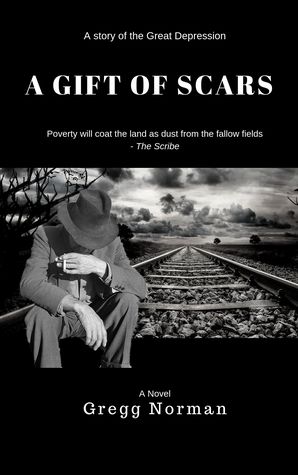
Drawing from two of Gregg’s novels—A Gift of Scars and Bingo at the Legion—here’s a summary that offers an overview of author Norman’s overall skills and attributes as a writer, as well as commentary on these two excellent reads.
In Gregg Norman’s books, we find a stabilizing foundation beneath the storytelling. Part of his underlying prose meter is to allow readers to view life and its intricacies, complexity, and sudden reversals almost exclusively through the experiences of the characters. As a result, fiction readers looking for an escape from their own day-to-day entanglements will find in these books a place where transportation into a virtual world is pleasingly easy and without the slippery footing so common in current literary fiction. Norman’s gripping realism feels exacting and personal even if it is drawn from places and characters that could be right next door. The scenes arrive, ruddy-cheeked and vital, from any one of a number of common memories and experiences that the author provides. Common only in their familiarity; uncommon in their singular personality and well-delivered descriptions. Norman steeps his stories in slowly revealed character studies, influenced as they should be, as they must be, by landscapes and neighbourhoods and relationships that this strong, characterful author knows well. Knows in his bones and his scars and his mature sensibility. He communicates fluidly, with the firm hand and big heart we desire from a storyteller.
Even treacherous ground like a failed high school romance renewed does not succumb to treacle or overwrought plotting and stilted dialogue. Instead, the relationship is renewed with subtle vibrancy, coming off the page and drawing us in with the feelings and emotions we know to be true to the situation. Norman has that deep well to draw from:
“The supreme question about a work of art is out of how deep a life does it spring. Paintings of Moreau are paintings of ideas. The deepest poetry of Shelley, the words of Hamlet bring our mind into contact with the eternal wisdom; Plato’s world of ideas. All the rest is the speculation of schoolboys for schoolboys.” —James Joyce, Ulysses
Norman adheres to this Joycean ethic without seeming as though he is trying to. His books about average, flawed people are indeed, “paintings of ideas;” word paintings, cut carefully with dialogue, imagery, word craft and the caring of a fully-invested artist.
Sometimes the characters may at first appear bleak or we find they are placed on stoney emotional ground. But unfailingly, they evolve at a pace well controlled—never contrived. Feelings furrow the ground, turning aside our first inclinations towards the character and revealing the core individual Norman has created. By allowing the characters to emerge more fully, the reader is brought along without effort or disbelief.
Families behave like families do: there is a hint of dysfunction and imperfection, even if the core is based on love and respect. Friendships have rough spots. Cars don’t always start when you need them to. If there was a rocket ship or a superhero or a cataclysmic event in a Norman book, it would sputter or flutter or remind you of butter—this author is simply not tempted by overkill and literary hyperbole. Rather than depend on mighty but unlikely events or personalities, Norman’s stories move along in less imposing circumstances and arrive where they should, after a satisfying and trying struggle. The author leaves the reader—and often the main character—worse for wear, but better for the experience.
People fall in love. They become ill. Some recover and others die. Dreams die too, though somehow we know that among those dreams, even those belonging to characters we first believed to be weak or ignoble, might be given a second chance.
A Gift of Scars: Gritty, untarnished realism with the deftly applied fictional touch of an observant and world-wise writer. At times darkly shaded, in the end, Scars leaves us with the feeling that perseverance, emotional honesty and the ability to keep striving despite our despair will serve us well.
In Bingo at the Legion, we think we have happened upon a quotidian gathering of “ordinary folks.” While this is not untrue, the underpinning fact is that there are no ordinary lives and that life is both fickle and generous. We know from watching Brenna, Grady, and Jasper that past missteps can be retaken and it is within our scope to alter what fate has given us no matter how unlikely it seems.
The lessons available through these enjoyable contes de vie are provided with a delicate touch—no authorial overburden. The characters become known to us and real in our minds. When we reach the tightly written conclusions, we may be surprised but never shocked or taken outside of the story. The characters reveal what we have been skillfully led to see in them.
The perfect Christmastime getaway? Travel to Lake Dauphin and back via Bingo at the Legion, Oz Destiny, Not My Dog, A Gift of Scars, and Lovely Way to Burn. https://greggnormanauthor.com/books/
“

 Mitchell Toews