Blog

Print Catalogue

As this rabid cannibal of a year winds down, I wonder about my writerly struggle and the artistic return on investment for me as a writer, 2015-2020.

ROI, baby.

Aside from all the “hard work is its own reward,” kind of sentiment, to which I subscribe and to whose driving power I owe one of the best periods of my redheaded life (apart from the baby powder tinged, little league coaching, proud dad/granddad parts), I wondered about how much of an imprint I’ve been given/achieved so far.

What is my gravitas quotient, or lack of same?

Am I #futility or do I stand a chance? There’s no punter (in the UK slang sense) who knows how to handicap me, there’s no Vegas line on my puny literary squirming, like the last water bug of the season making a tiny ripple that no one else notices.

An editor commented recently that I had a unique voice worth publishing. I fought back the urge to argue with her, and in that moment of cessation, found a glimmer. A glimmer not of hope — that sworl of Van Gogh luminant turbulence is still light years away — but a lifeline thrown out to me in the cold, deep water by a compassionate friend.

When I look at my C-V, I see a lot of online acceptances, a lot of out-of-province markets, and several repeat markets. This is telling of the state of the world of fiction, my preferences, my ability, my relative reputation in a world of water bugs, and my inclination to spend the years on the far side of three score with friends and heroes, not the miserable and the banal.

Anyway… I noticed that the attention of the curator for a certain specific geschichte writer list is focused solely on PRINT. I accept that. There’s so much online writing that it makes sense to begin your list with those in print. Not that I’m not proud (and more than a little) of many of my online publications, but, you know — I get it.

So here fellow water bugs, punters, friends, heroes, banal high-horsers out for a romp among the plebs… is my 2015-2020 Print Catalogue, based on about 100 distinct flash fictions and short stories sent out in over 400 submissions all over the English language literary world.

Ca — “A Fisherman’s Story” Rhubarb Magazine Issue 39 2016
Ca — “So Are They All” Voices Vol 16 No.2 2016 Anthology
India — “I am Otter” The Machinery – A Literary Collection 2017
UK — “Nothing to Lose” The Best of Fiction on the Web 1996-2017 2017 Anthology
Ca — “Sweet Caporal at Dawn” Blank Spaces Magazine 2018 Pushcart Prize Nomination
Ca — “Away Game” Pulp Literature Issue 20 2018
Ca — “Sweet Caporal at Dawn” Just Words, Volume 2 2018 Anthology
US — “Groota Pieter” River Poets Journal Special Themed Edition: “The Immigrants” 2018 Anthology
US — “Peacemongers” The MOON magazine: “Out of This World” The Best Short Stories from the MOON Volume 1 2019 Anthology
Australia/US — “Groota Pieter” Pact Press “We Refugees” 2019 Anthology
Ca — “Fast and Steep” Riddle Fence Issue 34 2019
US — “The Log Boom” River Poets Journal Special Themed Edition: “A Fork in the Road” 2020 Anthology
Ca — “My Life as a Corkscrew” (CNF) Blank Spaces Magazine 2020
Ca — Piece of My Heart” Pulp Literature Issue 27 2020 Winner of the Editors’ Choice in the 2020 Bumblebee Flash Fiction Contest
US — “Away Game” Quail Bell Magazine 2020
Ca — “My Life as a Corkscrew” (CNF) Just Words Volume 4 2020 Anthology
US — “The Sunshine Girl” Cowboy Jamboree Magazine John Prine Tribute Issue 2020
Ca — “The Margin of the River” Blank Spaces Magazine 2020 Pushcart Prize Nomination

(Updated 12.4.20)

A few of these are printed on a rolling basis and so may not be out in the wild yet.

I also have 65 stories in various online publications in the US, the UK, and Canada.

The Tree of Life- Poems by Sarah Klassen

Sitting and drinking coffee just after sunrise. I’m watching a kingfisher in the branches above the shallow water near the shore. Mary Lou Driedger’s thoughtful observations of Sarah Klassen’s new book of poetry–many of the poet’s verses a loving look at the natural world–make the perfect complement to my morning and add another book to my buy list.

The Tree of Life (Turnstone Press)

What Next?

 In a book chat featured on the 2020 Thin Air Writers Festival site, Sarah Klassen and Sally Ito talk about Sarah’s latest volume of poetry The Tree of Life published by Turnstone Press 

Since I had just read The Tree of Life I was interested to learn from their discussion that many of the poems in the section of the book titled Ordinary Time were inspired by things Sarah observed in nature while standing on the balcony of her fourth-floor apartment.  

Sarah introduces us to a convoy of geese as they “contemplate, courageously, the next long flight,” the sparrow with its “claws like little commas”, the hawk that “hovers, hungry, wings wide open as if in benediction,” and the bald eagle “in transit across the sky’s blue canopy.”

Readers are enchanted by foxes “yelping, chasing, wrestling on the grass like children unrestrained by fear of predators or vixen…

View original post 565 more words

Gregg Norman — Interview & Novel Excerpts

A writer whom I’ve connected with often on the internet — but not yet in person — is Gregg Norman. He’s an interesting guy and like me, comes to fiction as more of a “second act” but in Gregg’s case he absolutely hit the prose trail running hard and fast, lean and loping.

Gregg and wife Jenine reside in western Manitoba and like Janice and I, they spend a lot of time staring out at open water, or seasonally adjusted, an expanse of snow-covered ice.

I invited him to answer a couple of questions and provide writing from his recent work. Here goes:

MJT — “What has shaped and influenced your writing? Life experiences, places, reading, movies, people?”

Gregg —

I was a bookish type as a child though I grew up in a virtually bookless home. I credit my love of the written word to a wonderful librarian in my hometown and some inspirational English teachers and professors in high school and at university. I read voraciously and eclectically. Beyond all that the biggest influence on me as a writer is my wife, Jenine, who is intimately involved in many aspects of the creation of my novels and who believes in what I do (which puts her at the top of my list of morale supporters).

MJT — “In reading your work, I get a sense of Elmore Leonard’s idea that the ‘writing should disappear.’ Is this intentional or is that just a part of your natural style? Would you care to illustrate with an excerpt?”

Gregg —

Elmore Leonard was a wise man. He said, “If it sounds like writing, I rewrite it.” I think that is good advice. A writer needs to know when and how to stay out of his own way. The idea is for the writer to be hidden in the background, out of sight. Tell the story, paint the picture, but keep out of it. My style is fairly spartan, I think. I try to resist the urge to write run on or complex sentences or to use too many adjectives.

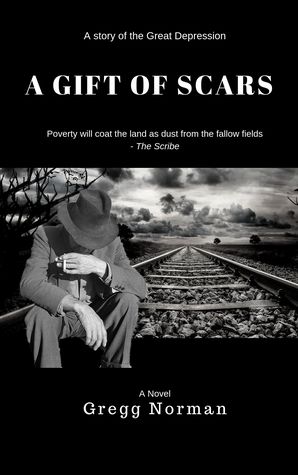
Excerpt from “A Gift of Scars”

The line of pot-beaters advanced quickly to close the gate. They cast aside their sticks and tin and took up bats and clubs and ax handles. One man carried a knobbed shillelagh, another a golf club, while others wielded hoes or shovels. They entered the pen, spread themselves out among the carpet of rabbits and started killing. The killers were tentative at first, feinting this way and that at the moving mass of animals. Then they swung their weapons with deliberate aim, encouraged by the skulls crushed, backs broken, eyes popped and guts oozing out between legs still kicking. They settled to their work quickly enough, killing methodically and with grim satisfaction.

One man swung a piece of lumber studded through with nails to which the rabbits became impaled, the better to confirm his kills as he flung them away and counted them aloud. Another man was stomping and crushing rabbits with both booted feet while swinging an ax handle in each hand, his arms and legs jerking wildly like the dancing of some mad marionette.

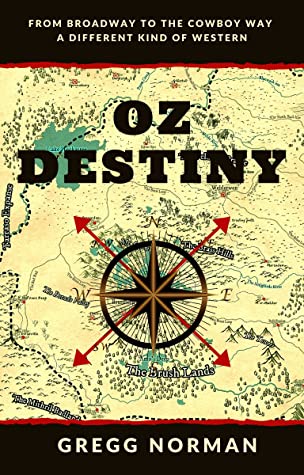
Excerpt from “Oz Destiny”

          Keeping her eyes downcast, she slowly removed her hat and leaned to set it on the ground. Then, with movements slow and easy, she toed off her boots and slipped out of her horsehide jacket and trousers. She wore a man’s undershirt and drawers and she removed these too. She stood naked with her head down, eyes averted. The stallion arched his neck and took a step toward her. By inches she turned away from him, lowered herself to her hands and knees, and bent her head to the ground, presenting herself to him.

          Jesus, Rat rasped, I can’t believe what I’m seeing.

          Neither can I, Oz said in a hoarse whisper.

          I’m not sure I want to see what might happen next.

          Then quit watching.

          I can’t, dammit!

          The stallion came forward haltingly, a few paces at a time, snorting and skittering in sidelong steps. At a distance of ten yards, he lowered his head, sniffed and blew twin clouds of dust below his muzzle. He lifted one front hoof as if he might advance further, but then abruptly whirled and charged off at a gallop to harry his mares into flight away down the valley until they were just dust and the dying sound of hoofbeats.

          While they watched her dress and begin to climb back toward them, Oz and Rat shared an uneasy silence until Rat finally said, She’s completely gone in the head.

          I’m not so sure of that, Oz said thoughtfully.

          All I can say is it’s a helluva way to try to catch a wild horse.

          She wasn’t trying to catch one.

          No?

          She was trying to be one.

~ ~ ~

Follow Gregg Norman Author on Facebook: https://www.facebook.com/gregg.norman.5015

on WordPress: https://greggnormanauthor.com/

on goodreads: https://www.goodreads.com/author/show/19130607.Gregg_Norman

Tweet from Charlie Fish (@FishCharlie)

Charlie Fish (@FishCharlie) Tweeted: In Mennonite Manitoba, hard-up teenager Diedrich Deutsch is getting bullied at school, and tries his hand at basketball. Read Mitchell Toews at https://t.co/dO9tFIbTVq https://t.co/Sgx6bczYGX https://twitter.com/FishCharlie/status/1309550748854878209?s=20

The School of Forgiveness

One of the joys of writing is meeting and connecting with other writers. It’s interesting in a capitalist context to see us buzzing together like communist bees to build a plenary body of literary work: Fiction, Essay, Journalism, Criticism, Opinion, Poetry, Theater, and so on. All done in what are often intensely personal moments of recollection, self-awareness and exploration.

We band together in critique groups, associations and guilds, in events, readings, book launches and on the internet.

Since March 2020, a LOT of internet.

A pleasure and a point of professional courtesy that (no surprise) pays off as much for the giver as the receiver is to read and review work in progress. I’ve been both beneficiary and provider in this regard—giving an increasing amount of effort to reading and less to being read. (Those who regularly get my feckless Momma’s boy pleadings for them to read a story and report back may disagree… You know who you are. But in my defense, we built a loft on the water just to bribe you, so, you know, soldier on.)

Here is a fresh-voiced realist who walks the streets of Every Damn Day Another THING and knows how to tell it on the mountain. I’m pleased to give you one of her stories, below. A pick-up truck with a rose-hued patina on the outside powered by a Boeing jet engine and driven by a hot-rod pilot with one elbow poking casually out the window, even around the bends.

The School of Forgiveness

by Ramona Jones

Electives or required courses? Forgiveness and Patience, two subjects failed time and time again, reappearing and taken until I get them right. I wouldn’t have to study these if I had majored in something quantifiable. Forgiveness paired with betrayal…Do I have to sit here until the class is over? Ramona, pull your head out of the emotion and recount the facts. I don’t like going to hard places in my head without good reason, because those subjects are really tough.

I understand why people block out memories and shore them up behind facades and alcohol. I just forget, or replay parts, over and over until they wear out. Maybe this time I can turn a few off.

In 1981, I lived in a house in Vancouver with my boyfriend, a medical student, and four other students, paying ridiculously low rent. So low in fact that Ron and I saved enough money for a road trip to San Francisco. Two days before departure the phone rang, connecting me to my unpleasant family life in Toronto.

“Mom’s had a stroke.” I could hear the tearful catch in my brother’s voice. There was no choice but to go. No time to do anything but book a hotel. I could not stay with my father, where my strength would be drained to construct mental defences and avoid, whatever.

Clint told me to come quick, this was very serious. I took a cab from the Toronto airport, straight to Saint Michael’s Hospital where my mom lay fresh from surgery. The smell hit me first, alcohol fumes rising through the air to my nose. The next thing—the visual—reminded me of Egypt. Her head was swathed in bandages, a lot of white bandages in a turban. In the peripheral view, tubes entered and exited her body.

I don’t remember the last time I spent conscious time with my mom before that day. My memories of commonplace days with my family of origin blur and soften. That day I only had love. I reached for her hand because she could not see me.

“Mom, it’s me.” I held a swollen hand. It had to be the right hand, because her left hand remained paralyzed  for the rest of her life. She squeezed me back, releasing some of my numbness.

My dad was very upset that I would not stay with him and my brother, but Jacqueline—my dad’s cousin, a school counsellor living in BC—supported my decision to go solo. The hotel offered refuge and calm space at night, while part days were spent shopping and walking on Yonge Street, waiting to see if my mom would make it. Saint Michael’s is downtown, 30 Bond Street, to be exact. I had access to record stores and the Hudson’s Bay bargain floor. I bought a size 10 navy skirt, a red sweater and brown shoes, with gracefully thin straps and low but stylishly flared heels, perfect for my job in a Vancouver government office. I wanted badly to go home, to work, as soon as possible.

I scold myself for being so self-centered. No thought of Clint or my aunts and cousins, who are just as upset, maybe more, as me. Two of my mom’s sisters flew from Manitoba to be there. Neither travelled much—living pure, simple lives in the country, but they came, like me, knowing we were all near death in Toronto.

Only, it didn’t happen. I have a comforting memory of sitting with a nun at the Catholic hospital. She never preached or told me anything about God, just offered me a mug of hot chocolate. So sweet, in the midst of everything. I found out more about what they did and thought about my mom’s cerebral aneurysm after I got home. Dr. Howard, who is my cousin, and is renowned in his specialty, Geriatric Medicine, told me afterwards that he arranged for my mom’s stay in Riverdale Hospital. In her situation, with inadequate support at home, she lived in rehab for an entire year.

I used to think, Eva, my mom, was a bit of a chicken—always anxious, always evading the direct questions I would fire at her from my position as her dependent but selfish child. The stroke threw back the covers, exposing her truth. My mom worked so hard in rehab, she became the bravest woman I ever met. She learned to walk again.

Every challenge was met with a search for a personal solution, not complaining or blaming. With her new outlook, she went shopping, once a week to a mall, travelling by a bus for handicapped people, for treasured time outside of the house.

She never took another drink and assumed a mental independence she never had before, returning home where she relished every minute until the day she died, 26 years later.

My brother had a huge part in her story, but not mine. He told me he prayed hard, hours on end, begging God not to let her die. There is more to what he told God, but that is not mine to share. Clint told me Mom had a dream before the stroke. Jesus appeared to her. He told her, “Eva, Life is going to get very hard for you, but you are going to be alright.”

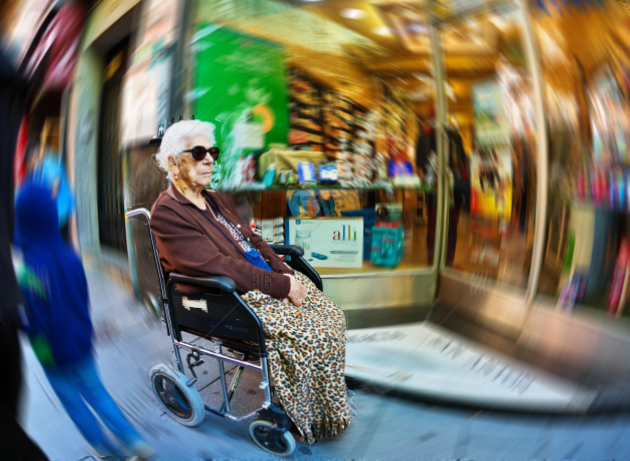
What did I make of that? This: Forgiveness does heal. My mom showed me how it is done but I am still working to graduate from that course. Patience? If you saw what I felt, watching Mom navigate from a wheel chair, in a walking world, you might not have enough either.

British Columbia’s Dr. Bonnie Henry has nailed this now, in Covid context, but my mom learned it, miles back:

Be calm, be kind, stay safe.

~ ~ ~

Thanks, Ramona!


Imposterism and Perspective

A quick ramble through the blackberries: I write about my Mennonite and my secular experiences–what I love and what I disrespect–as it occurs to me and in roughly equal measure. As a non-baptised cultural Mennonite, and a self-named Mennonite imposter, I am outside of the permission loop that may constrain others who write about the same topics.

But I’m not immune to restraint and inhibition just because I don’t surf the hemlock pews on Sunday morning. (Another one of those surf-slash-theological and pinophytically-correct metaphors, dudes.) Externality, it could be argued or at least considered, gives me and those like me the freedom to be hyper-critical.

In fact, I am rigorously beholden to all of my personal relationships, long held and cherished, with those who DO “surf the hemlock.” Seriously, a perceived outsider (or imposter) has internal motivation–not church-imposed–when speaking out. An equivalent influence? Sometimes jo, sometimes nay.

So… audible inhalation… I would like to and should make it my professional beeswax to know what has gone on in various church groups, conferences, etc. in the history of Mennonite writing. I need to understand those who held or now hold formal rank and wield the power of censure or absolution. The fact that those bodies-politic were, or still are, all-male and seem as intellectually homegenous as those identical rows of psuedotsuga benches upon which they, uhh, ‘hang ten’ bugs me not a little and diminishes their validity in my view. But still.

So, yeah… I’ll work to enhance my knowledge of the history of “insider” writing in the Mennonite fiction canon. It will enhance my POV even as I see my externality as an equally worthy, and perhaps in the final analysis, less incumbered point of origin. My lifetime of personal experiences continue to kick me “right in the back pocket” and won’t allow me to ignore their painful presence. Plus, considering the depth and context of my personal Mennonite experience–with both a Russian delegate and a shunning in my antecedents–and my 50-years in one of the central milieus and eras of Mennonite evoloution… I feel I should tell the stories I have lived.

Flash Fiction and The Group of Seven

Winnipeg blogger and author MaryLou Driedger (“What Next?”) had this interesting post on her site recently: Flash Fiction and The Group of Seven. I’ve re-blogged it here partly because she mentions me in her post.

.

She has pointed out that photographic artist Phil Hossack and I will draw from people and places in Manitoba to create an ekphrastic prose-filled artbook. The photography will offer one interpretation and prose another.

.

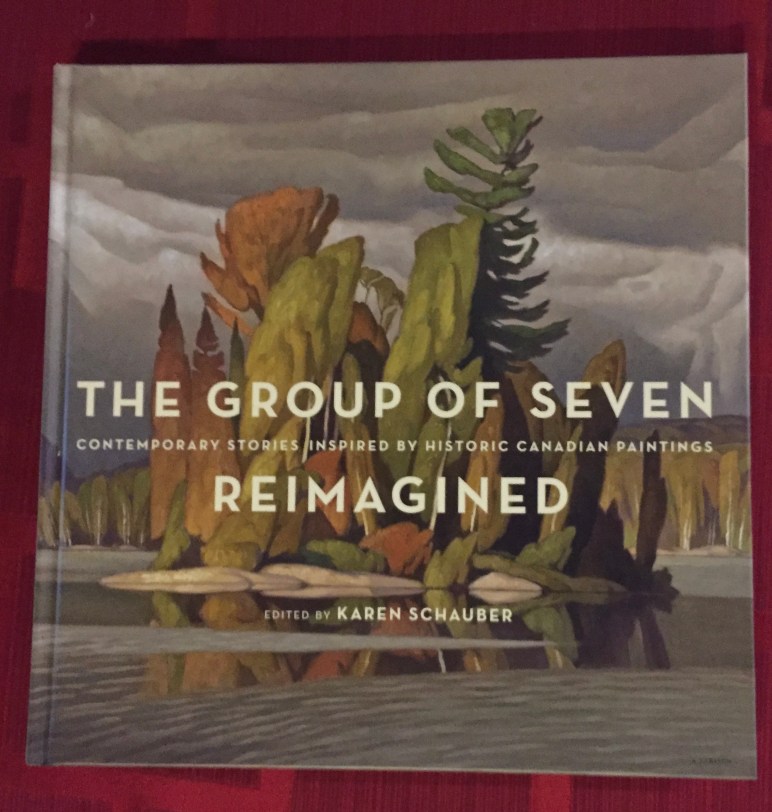
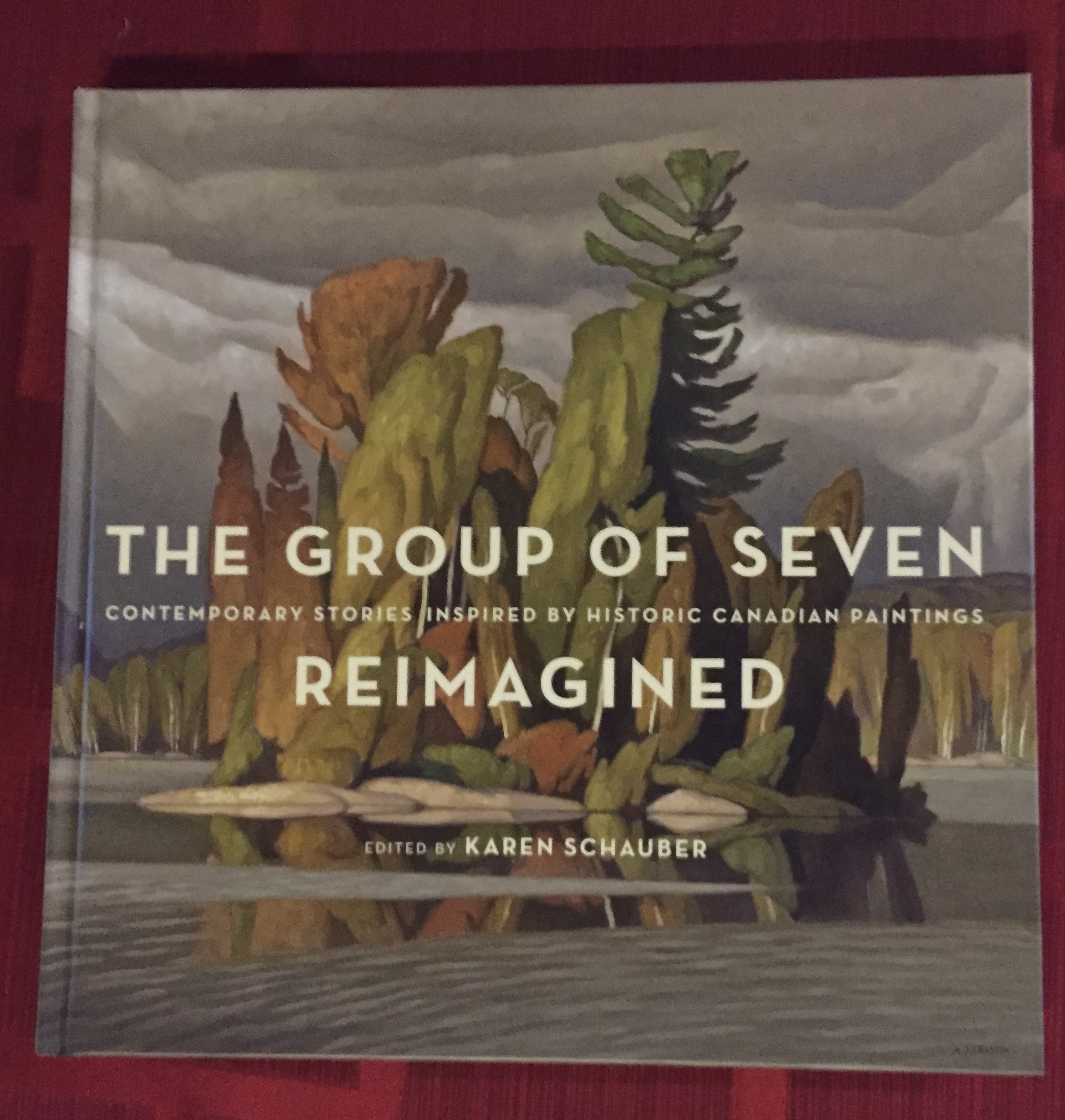
MaryLou accurately points out some similarities between our concept and the excellent new book, The Group of Seven Reimagined published by Heritage House in Victoria and edited by Karen Schauber.

.

Like the Group of Seven book and other artbooks that combine visual art and the written word, we too will be called upon to create an aesthetic that is worthy of the subject matter. Our “design charette” has paid attention to the design on the printed page. Some benchmarks: Unity & Variety; Balance; Emphasis & Subordination; Directional Forces (visual flow of pages, spreads, covers, bleeds, etc.); Contrast; Repetition & Rhythm; Scale & Proportion.

.

Leading our design… the recurrent themes or stepping stones will be People, Places, and Light. Phil and I are excited, eager to begin, but we’ll wait for the all-clear Covid siren to sound before we hit the road.

.

Below: One of Phil’s evocative images, Roseisle artist Stephen Jackson near the Sourisford Linear Burial Mounds. This photo provides a possible example of how People, Place, and Light might combine to suggest a fictional narrative with a distinctive Manitoba inflection.

Roseisle artist Stephen Jackson soaks up the lush landscape at the Souris Ford Mounds, a National Historic site in the far south west corner of Manitoba.

This project, with the working title, “People, Places, and Light — a Manitoba journey” is assisted by a “Create” grant from MAC | CAM.

What Next?

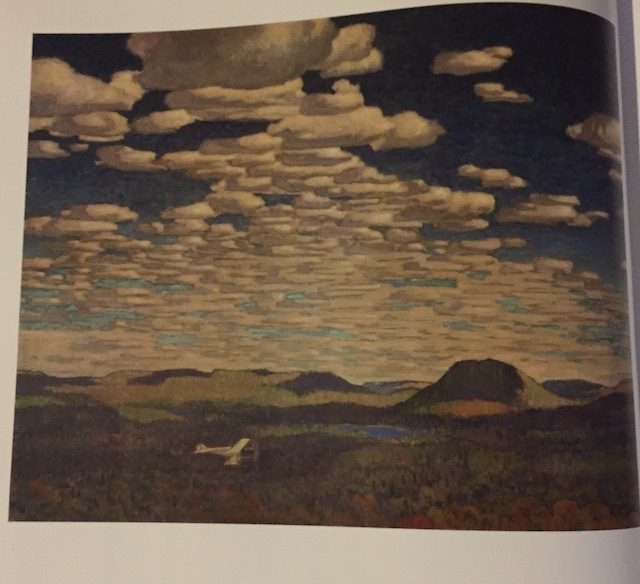
The Fire Ranger by Franz Johnston -1921- National Gallery of Canada

A man guides his plane over the burning forest, scanning the horizon for a place he might land. As he does so he tries to comfort the little girl who is his passenger. 

Little Island by Alfred J. Casson -1965- McMichael Canadian Art Collection

A young woman becomes so engrossed by a painting at the art gallery that she is oblivious to the man accompanying her, a man she connected with on a dating app. 

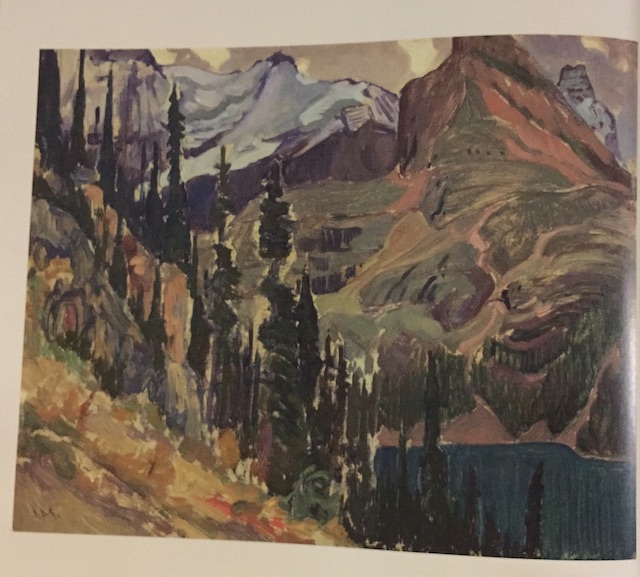
Lake O Hara by J.E.H. MacDonald -1928-McMichael Art Collection

A woman who has been travelling the universe in her spaceship finally arrives at a place she can call home. 

Those are just a few plotlines from the short stories featured in a new book called The Group of Seven Reimagined published by Heritage House in Victoria.  

Cove by Emily Carr- Collection of the…

View original post 364 more words

What Leda Knows

This thought has been irritating me, like a pebble in my shoe — a squarish pebble lodged where it cannot be reached. It has bothered me all day and the only way to get rid of it is to jot this down. Barefoot, maybe. Toes wiggling.

Whether it is Irish writing or Jewish writing or Indigenous writing… or even if it is Mennonite writing, I think the full complement needs to be part of the accounting. All constituents must be consulted to speak their unquiet peace. Not only the praise-makers, the honouring, the apologists, the happy-talkers, and the yammering wholly satisfied but most importantly perhaps, all of the others.

All the others.

Who would best know the naked truths and speak freely about what they know? Do the rich paint their discontent on the subway walls? How many fat cats walk a beat on city streets, risking rubber bullets or worse? No, They cause resentment, they don’t suffer from it.

Go ask these: The fallen. The betrayed and the shunned. The aggrieved. The marginalized, the disavowed, the once-close — now distant. The ambivalent who hang suspended still from the ties that bind, but who would cut them if need be… if they had no other choice.

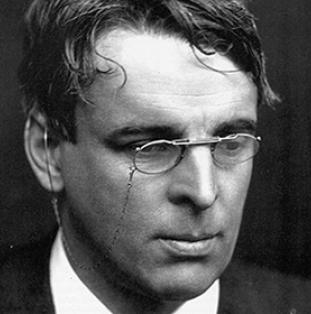
In W.B. Yeats’s dark masterpiece, Leda and the Swan, we are told that Leda could feel the swan’s strange heart beating, “where it lies,” as if it was somehow disembodied, no longer a part of the bestial being.

Does this mean that to capture the truth, we don’t go to the apparent source? Go rather to those who offered up a sacrifice and received aggression in return. Or something sadly “indifferent” as the poet suggests.

The presence of indifference might reveal more than all the rest combined.


Writer Resume, Un-boring-ed

Yuck. Here’s an un-boring-ed one. I have more, some without F-bombs. (The focus group hated those.)

Writer Resume Toews

“May all your lorems be ipsumed to the dolor…”—famous writers’ blessing


The Quatrefoil

In art and design the quatrefoil is an important and frequently used element. I don’t know too much about them but I enjoy them for their simultaneous blend of simplicity and complexity. A quatrefoil consists essentially of four overlapping equal-sized circles, with variants on that theme. Like a meander or a spiral, there is an innate optical pleasingness in looking at a quatrefoil and that is one of the reasons why it is a fundamental of visual art and design.

ancient-greece-meander-ancient-greek-cuisine-geometric-art-ancient-greek-architecture-meander
Meander

Both the quatrefoil and the spaces between its evenly aligned ranks and files are visually soothing. Looking at these shapes scratches an itch in your brain, the one you did not realize you had until it got scratched.

Large Quatrefoil Wall Stencil: Amazon.ca: Home & Kitchen
Quatrefoil

I think. I did not look all of this up on Wikipedia, nor have I studied this in the past nor do I have special intuitive knowledge powers (“super genius stuff”), like some C- grade undergrads from Wharton. Wharton is in Pennsylvania. I think.

Four. 4. Quarters. Quatro. Four anything can be represented by a quatrefoil. Four lads from Liverpool, the Ninja Turtles, four ripe plums, or four asteroids in orbit around one of the nine moons of Endor…

Today, I have four good things to talk about. I have listed them as Quatrefoil One through Four:

Quatrefoil One.

Nice people are overrepresented in the business of fiction. Thank goodness. If it wasn’t for the nice people, I would lose my mind because this writing shit is super genius stuff and that means, for me—a non-graduate of Wharton undergraduate studies, Cambridge University or Endor (or any of its moons)—it is hard as f*ck!

Quarrel One. The diamond-shaped pieces between adjacent quatrefoils are sometimes called “quarrels”, especially in a description of fenestration — like the stained glass windows in the King’s College at Cambridge. (A place, like Endor, where actual “super genius stuff” takes place.) Quarrel is a fine word and so I’ll use it here to describe the fillers I have inserted into each space between my four good things. Each of the three quarrels will describe something about quatrefoils. There is no extra charge for these trequarrels of sublime, intermediary (or interlocutory, cuz that is also a fun, six-syllable word) information.

Quatrefoil Two.

I am able to enjoy the lake we live next to in almost any condition. If it is warm, I can swim in it. There’s fishing, but somehow I don’t get around to that much. In summer, on calm mornings, I can row across its surface. When it’s really windy, I can windsurf. Windsurfing is basically a showing-off activity so when I am out windsurfing I am thinking super genius stuff like: “I bet those people sitting on the dock over there would be prett-ty-prett-ty impressed if they knew that I’m a GD pensioner!” Meanwhile, the person on the dock is actually busy wondering if Regina really does rhyme with “vagina” or whether that Canadian guy was just having them on…

If it is just a little windy I can windsurf on a board equipped with a hydrofoil. This is a new windsurfing invention and it really ramps up the “bet those people are impressed” thoughts in my show-offy brain. It may also increase the shoreline spectator consideration of other Canadian city names like Moose Jaw, Upper Rubber Boot, Crotch Lake, Dildo, and Climax.

The strangest place names in Canada | Cottage Life
This is a real place name. It’s in Newfoundland and Labrador.

Quarrel Two. A quatrefoil arch is a common feature in gothic architecture. Cathedrals are loaded with ’em.

Quatrefoil Three. I have work out soon in three exceptional Canadian publications and one based in the U.S.:

Shape Outline Clipart - Quatrefoil Png , Transparent Cartoon, Free ... On Sunday, July 19th, at 2pm Pacific time, I’ll be part of a virtual (online) launch for Pulp Literature Issue 27.  The launch will be on PL’s Discord server channel, and I hope you’ll be able to join in. Just like an in-person launch, there will be door prizes and chances to chat with the authors, who will be reading from their work. The event has contributions from Denmark to Western Australia. But none from Elbow. (Saskatchewan… there may be one from Elbow, Ontario, though — home of the Elbow Roughriders.)

bumblebee1
My story, “Piece of My Heart” was awarded the Editors’ Choice award in the 2020 PL Bumblebee Flash Fiction competition.

Shape Outline Clipart - Quatrefoil Png , Transparent Cartoon, Free ... August will see the launch of a new issue of Agnes and Truean exceptional Canadian online literary journal. I’m super genius excited to be in this market and can’t wait for folks to read my story, “The Grittiness of Mango Chiffon”, a tale of fashion, warmth, and redoubtable resolve.

agnes about

Shape Outline Clipart - Quatrefoil Png , Transparent Cartoon, Free ... I’ll be returning to Just Words, the annual anthology of fiction, CNF, and poetry from Blank Spacesa production of Alanna Rusnak Publishing. This compilation will be out in September. https://www.facebook.com/blankspacesmag

blank spaces team

Shape Outline Clipart - Quatrefoil Png , Transparent Cartoon, Free ... My pick-up truck saga, “The Sunshine Girl” will shine its ever-lovin’ light on Cowboy Jamboree, sometime this fall. “An interesting slice-of-life vignette…” according to Editor Adam Van Winkle. 

cowboy jamboree
“A grit lit rag promoting fiction in the vein of Donald Ray Pollock and Larry Brown and Dorothy Allison and the like.”—Cowboy Jamboree, About.


Quarrel Three. Are quatrefoils lucky? Do they have special, magical powers? Do they stay crunchy in milk? I don’t want to influence your religious beliefs or otherwise stray onto private property but I’d say quatrefoils are never considered unlucky.

Quatrefoil Four. Drumroll, please. My grant application to the Manitoba Arts Council | Conseil des Arts du Manitoba has been accepted! My proposal to produce a Manitoba artbook will be going ahead as soon as Covid-19 allows free travel around the province. My collaborator, photographer Phil Hossack, and I will work together to create an ekphrastic collection of Manitoba-based short fiction and photography. The three-part theme we want to focus on: People, Place, Light. We’ll travel the province to gather extraordinary stories and pictures from ordinary folks.

mac logo

More on this project soon, but for now, please let me know if you have a Manitoba location, a person, a story, or if you know someone with a printing press sitting around not doing much. These are all things we could use!

PEOPLE | PLACE | LIGHT

Manitoba is endowed with remarkable people. From Louis Riel to other famous individuals like Gabriel Roy, Cindy Klassen, Miriam Toews, and many, many more, there are lots to choose from. There’s also a plethora of the not-so-famous—but just as interesting. It’s predominantly this latter group we hope to meet and share with our readers, though story-telling and visual arts.

.

Our province is one of diversity not just in the origins of its people, but in its geography too. The North, the prairies, the boreal, rivers, lakes, a great city and numerous smaller communities with singular stories to tell and show. Manitoba places make for fascinating discovery and study.

.

Sunny Manitoba. As every Manitoban who has spent time out of the province knows, it is our light, both in terms of the vast size of the sky over the flat prairie landscape, and its year-round abundance that makes the sun’s absense felt most acutely when we are away from home. Whether it’s sitting on a Whiteshell dock in the unfading light of a late June evening, or waiting impatiently for the sunrise on a frozen January morning, Manitobans’ relationship with daylight—with the sun—is special and unlike any other place. So too, light plays a dominant role in the art of photography and we believe that by paying special attention to light in our photos (and in our fiction!) we’ll uncover truths that may otherwise have gone, uh… unilluminated.

So that’s it. Four cool things. A quatrefoil.

allfornow,
Mitch