
My attendance at literary meetings is rewarding (and nerve-wracking). From a coffee shop tête-à-tête, a living room get-together, a workshop, or a formal literary festival, I advocate these gatherings despite their introvert-daunting nature. 🙂 The blend of writers, published authors, publishers, readers, editors, librarians, booksellers, critics, literary academics, and educators can take many forms, all invigorating,
Here is a summary of my experiences based on my professional journey and what I can offer as a literary speaker, panelist, or workshop presenter for literary events.
(March 30, 2024) Parable Addendum: “An enterprising individual is on a Trans-Atlantic ocean crossing, heading for Halifax. The ship strikes an iceberg and sinks. The entrepreneur survives by floating atop a wooden grand piano lid and immediately upon being rescued and reaching Canada, opens a grand piano lid floatation device manufacturing company. . . “
What I’m saying is that my experiences are just that: my experiences. I am—like raccoons, cockroaches, and many entrepreneurs—a born survivor. Survival instincts ain’t always pretty and depend on circumstances: what you encounter and the resources you can use to overcome your challenges. As in the story of the piano lid, I’m not advocating you follow my specific path. I’m only saying that I did what I felt was best at the time and in my circumstances. I sought as much, and the best professional assistance I could get. Craft is not everything but it is a huge component. The way I approached my literary career as a writer was—and is—constrained by, among many things, talent, location, my age, time, and financial resources.
(Thanks to writer-friend Doug Hawley for his note reminding me to explain the underlying truths of my “curriculum.”)
Mitchell Toews: A Grass Roots POV
- Background in advertising and corporate communications. Persuasion, copywriting, ad copy, marcom: a perspective on the differences and the similarities vis à vis creative writing and fiction.
- Writing practice grounded in Canada, small towns, the prairies, the boreal, and the Canadian Mennonite community.
- Bootstrap artistic journey: shifting from corporate and marketing communications to creative writing—keeping the good, identifying the irrelevant (and the problematic).
- Returning to early ambitions to write professionally and facing the difficulties of an “Act II” existence.
- Overcoming ageism and the bias against older emerging writers in CanLit: staying positive and stoic in a challenging environment and resisting the slide into victimhood.
- Journeyman’s approach: over 800 submissions to the “slush piles” of literary periodicals, contests, and anthologies. (With over 120 resultant publications.)
- Self-promotion within the context of the small press and independent (non-agented) landscape within Canadian literature.
- The importance of independent bookstores, libraries, and museums.
- The Open Mic for writers: more than just a chance to hang out with musicians.
- Book launches, readings, panel discussions, and book club author nights.
- Workshops and critique groups.
- Working with freelance editors (*see Sidebar), press editors, publishers, and publicists.
- Working with Writers in Residence.
- Social Media vs. “Shut up and write.”
- Acquiring blurbs and reviews.
- Literary and Arts organizations: Guilds, Unions, Councils.
- Grant writing. Keep it short.
- Professional development for the rural writer.
- Creating a personalized workshop topic: seeing your strength. (Mine is “Writing your Culture.”)
- Paying it forward: building your allyhood, being an artistic comrade.
- AI: the dog that bites its owner.
- Wealth: the unspoken truth.
- Thoughts on “tarnishment” and the personal authorial voice.
*Sidebar. Early on, I was introduced to a young, male author from England with an impressive resume. We struck a deal and he instructed, mentored, and edited me for two years. I invested over $2000 in our online interactions (about 900 emails!!) and this was a transformational step for me—both the commitment and the results.
The right person and work arrangement are critical; James Mcknight was the appropriate choice for me. After our engagement ended, I extended my reach to study with other instructors and mentors, but James was a true lifesaver in my case.
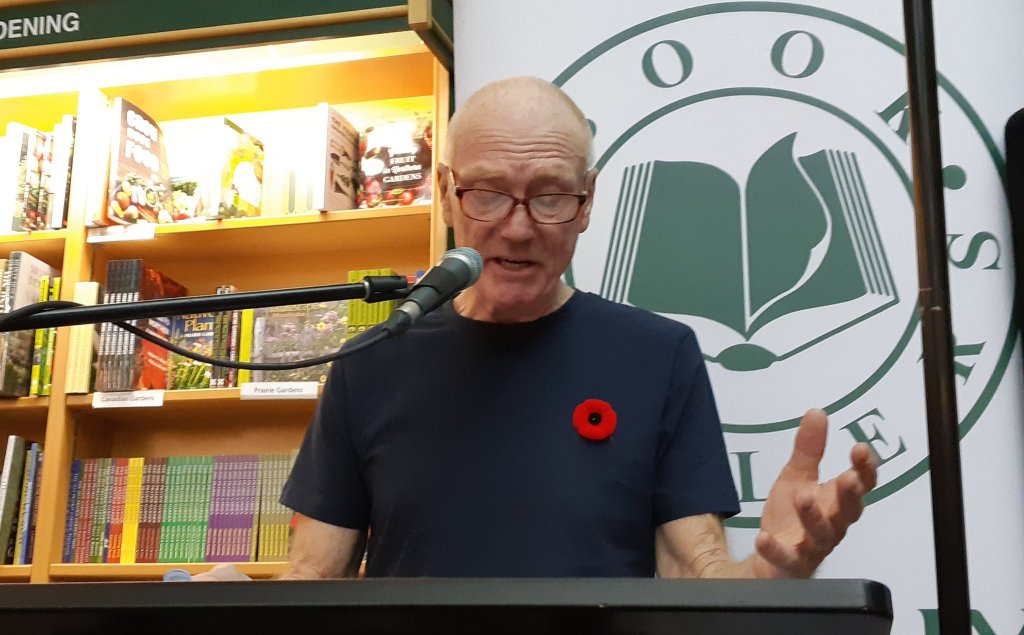


 Mitchell Toews