Market Copy—Metaphor in the Making

The wheels of literature turn slowly, but they produce without rest, grinding out the vast quantity of grist, meal, and fine flour that create the broad imaginative canon that is Canadian fiction.

My personal grindstones have turned out plenty of words—maybe even more than I ever thought I would create. My milestone map looks something like this:

Early Submissions to literary periodicals, anthologies, and contests, Jan/2016-Oct/2023. I began submitting in 2015; however, I was not a Duotrope subscriber until August 28, 2015, so I don’t have accurate submission records for that period, except that my acceptances were zero. 2016-2023, I submitted 501 stories, essays, and interviews with 121 acceptances. Note: Duotrope does not record stats for every market I submitted to, so the submission totals are lower than the actual number sent. I used actual acceptance numbers.

Launch of Debut Collection, Pinching Zwieback “Made-up Stories from the Darp” Oct/2023-Present. With a book out, I continued to submit work for publication in periodicals, etc, but also spent time at launches, other literary events, and Open Mics. I made 123 submissions, with 21 acceptances, and attended 45 in-person events. I’ve had the honour of receiving four Pushcart Prize nominations in the years since I began my imaginative writing life in fiction, creative non-fiction, and poetry.

Launch of Debut Novel, Mulholland and Hardbar (At Bay Press) Spring 2026. Having another book forthcoming with my wonderful publisher, At Bay Press, I will once again shift gears in my writing practice. I still hope to maintain a steady stream of short story submissions, so 2026 is sure to be an interesting and busy year.

Mulholland and Hardbar: “Like ‘Fargo’ with a Low German accent, Mulholland and Hardbar follows the four seasons in the boreal: friendship, mistrust, deceit, and violence.”

Here’s an IDEA BOARD look at some of the market copy drafted to date concerning my career and including my short story publication work and Pinching Zwieback. New work, including as-yet unpublished short stories, flash fiction, verse and the 2026 novel will inform these sketchbook ideas with more detail.

Mitchell Toews – Author Profile & Literary Positioning

“One chair, one cracked teacup, one quiet sigh”

Overview:
Mitchell Toews is a seasoned Canadian writer whose stories explore the human experience through the lens of Mennonite life, small-town society, and intergenerational dynamics. Across his work—from Pinching Zwieback to his periodical publications—Toews blends humour, pathos, and cultural insight, offering a layered portrayal of community, identity, and moral complexity. His work is distinguished by its balance of comic observation, emotional resonance, and attention to social hierarchies, family dynamics, and the struggles of outsiders within tightly knit communities.

Themes & Motifs:

  • Coming-of-age & growth: Stories frequently track male protagonists (such as Matt, Lenny, & Diedrich in Pinching Zwieback) navigating the transition from boyhood into adulthood, then into grandparenthood, exploring moral, emotional, and cultural challenges. This trend continues in his upcoming Bildungsroman novel, Mulholland and Hardbar.
  • Cultural heritage & outsider perspective: A recurring focus on Mennonite traditions, language (including Low German), and religious hierarchies, showing both the richness and constraints of cultural identity.
  • Family & community dynamics: Examines intergenerational relationships, the role of women as moral and cultural anchors, and the tension between individual agency and societal expectation.
  • Humour & pathos: Humour often arises from the clash between expectation and reality, offering relief and insight while maintaining the gravity of cultural, ethical, and emotional stakes.
  • Power & agency: Stories explore institutionalized hierarchies, gender roles, and moral courage, often highlighting the overlooked strength of women, the in-between world of children, and the ethical struggles of men.
  • Symbolism & recurring motifs: Bread-making, baseball, and local traditions serve as metaphors for growth, resilience, and cultural continuity.

Style & Technique:

  • Short stories: Each story functions as a “micro-battle” against expectation, building toward broader narrative and thematic arcs.
  • Narrative voice: Experienced, reflective, often balancing insider knowledge with a playful, empathetic eye.
  • Language play: Incorporates Low German and cultural vernaculars to enrich authenticity, convey identity tension, and provide a foreground for the politics of language.
  • Emotional layering: Combines intimate, personal observation with social commentary; uses juxtaposition of comedy and tragedy, physical risk with moral choice.

Critical Highlights (Summarized):

  • Armin Wiebe: Toews explores facets of Mennonite life others avoid; combines comedy and tragedy; portrays multi-generational sagas with depth.
  • Donna Besel: Gives sharp insights into the limitations of closed communities; parallels with Miriam Toews in examining cultural clashes.
  • Ralph Friesen: Steinbach’s Mitch Toews champions the underdog; balances humour with heartfelt engagement; moral courage and love as central outcomes.
  • Zilla Jones: Asks universal questions of belonging, conformity, and dissent that emerge in vividly local settings; metaphorically rich prose.
  • Linda Rogers Van Krugel: An author skilled in exploring outsiderhood, moral complexity, and intergenerational growth; offers mastery of language, humour, and cultural nuance.
  • Winnipeg Free Press: Mitch Toews writes with grit, humour, and tenderness, elevating everyday prairie life into unforgettable art. He’s an authentic storyteller—rooted in Mennonite prairie life, yet speaking to the universal. He captures the rhythms of small-town life and renders them with warmth, wit, and lasting resonance.

Positioning:

  • Strengths: Skilled storyteller bridging cultural specificity and universal themes; adept at linking humour and emotional depth; strong voice for intergenerational and small-town narratives.
  • Unique points: Mennonite cultural insider-outsider lens; layered humour; complex portrayals of gender, hierarchy, and morality; recurring motifs (bread, baseball) anchor stories in tangible, evocative imagery.
  • Audiences: Readers of literary fiction, Canadian prairie literature, “Mennolit” and other cultural heritage narratives, coming-of-age sagas, and intergenerational stories; fans of Miriam Toews, Armin Wiebe, Patrick Friesen, and Andrew Unger.
  • Framing line: “Mitchell Toews writes with wit, wisdom, and heart, turning the intimate worlds of Mennonite family life into universally resonant stories of growth, moral courage, and the humour inherent in navigating the expectations of community and self.”

Artistic Ethos:

“I come to writing fiction from the storyteller’s places: the campfire, the backseat on a long drive, the bar stool.”

Am/Want to Be/Will Be

I’ve been working a lot lately on what kind of writer I am . . . what kind I want to be . . . and what I will eventually be. There are countless English language journals, anthologies, bookshops and libraries in the world, and that translates into I-have-no-idea-how-many fiction readers. Regardless of the actual number, I know and accept that I can’t be the writer for all of them.

What I can be is a writer who is consistent in certain core ways and is comfortable with that. Maybe most important in these fractious times is to be aware of what my writing constitutes and what it does not.

Self-analysis begins with “self,” so here is a scratch-coat version of the literary and authorial elements I believe are most important to me. For context, I’m nearly seventy years old, a prairie resident who began my fiction practice in 2016, after 20 years in advertising and marketing. I have one published book, “Pinching Zwieback” (At Bay Press, 2023). I’ve published 142 individual stories (including excerpts, interviews, poems, and essays) and have a novel forthcoming in the spring of 2026. With any luck, I’ll also have another book out sometime after that.

That’s a lot of words, so I BETTER know what I am and what I’m not.

Yep List

√ Prioritize quality of prose and storytelling
√ Commitment to craft over cachet
√ Focus on regional or rural sensibility—without being provincial
Heartful, deeply human prose with unshowy language
√ Value meaning and emotional depth over literary fashion

“Be political—but to be heard, be quiet and mature in a noisy era.”

√ Write place-based prose with resonance
√ Be humble and consistent (AVOID pomposity!)
√ Hold to empathic realism and clarity
√ Recognize that emotional intelligence, rural ethics, and cultural humility are the ethos of your readers
Moral nuance and intergenerational narratives are central traits in the writing

“Emotion must be earned through character, situation, and moral complication.”

√ Embrace moral ambiguity—we all have it
Spiritual content need not be religious content (no sermons)
√ Build on strong character underpinnings and clean prose with a steady, but constant, moral arc
√ Be attuned to displacement, contradiction, and the need to belong
Interrogate beliefs and also what people “get away with,” and at what cost?

“Always be curious and honest about fairness, decency, and failure in the story.”

Nope List

× No authorial moralizing
× Reader catharsis is never the primary objective—no melodrama or superheroes
× No authorial identity—tell the story and let social class, rurality, and age arise through the fiction
× Write lean but never at the expense of the emotional arc or the distinctiveness of place
× Create quiet stories, but don’t be afraid to “make the quiet sharp”

“As soon as it’s read, it ceases to be your story—it belongs to each individual reader.”

× No apologies (Sin Qua Non)

Photo by Eric Peters

How to Win Friends & Influence AI

What does your AI Overview say?

Here’s mine:

AI Overview

(Beep… boop, whirl, crackle!)

Mitchell Toews is a Manitoba-based fiction writer whose debut short story collection, Pinching Zwieback, was published in October 2023: 

  • Background Toews grew up in Steinbach, Manitoba, in his parents’ Mennonite bakery. He’s been published in over 125 literary journals and anthologies, and has been nominated for a Pushcart Prize four times. He’s also been a finalist in several major contests and prizes. 
  • Pinching Zwieback Toews’s debut collection is a blend of memory, fable, and trauma that explores life experiences in the fictional Mennonite prairie town of “Hartplatz”. The book has been well-reviewed, appeared on several local bestseller lists, and is being discussed in book clubs. 
  • Other work Toews is currently working on a second collection of short stories and a novel. He’s also collaborating with Phil Hossack on an ekphrastic prose/photographic art book. 
  • Engagement Toews reads at libraries, bookstores, and open mics, and also leads a workshop called “Writing Your Culture”. You can find him on:

So that’s it, then? A writer, a Manitoban. No mention of the rest of my life, including living in Chilliwack, my 47-year marriage to Jan, our kids and grandkids (who will change the world, if they have not already), starting and running a manufacturing business, working in advertising for 20 years and being an active sort… out cursing and getting bruised and exhibiting “warning track power” no matter which sport—a trait that includes a highly selective memory when it comes to skills, courage, and accomplishments. (“Still,” I pout, “at least I always got my uniform dirty.”)

I think AI is right to focus on what it has—I use the internet primarily to promote my writing because, dammmit Jim, that’s just what a writer has to do these days!

I am en grade: AI may suddenly turn on me. Why? Well, I often make fun of the AI that runs my daughter’s refrigerator (“Here’s today’s weather for Zanzibar” it says, after I hack the geo-locator in the settings—hee-hee!). I also throw shade at her snooty 3D printer, and my n’er-do-well regular printer (whom I call “O, Brother, where for art thou?” when it fails to print). These bad relationships may colour AI’s appraisal of me. I am courting AI revenge! I need to let AI feel more seen, be more inclusive to AI, and give them/they/it the benefit of my human capacity to be empathetic, even if they are incapable of emotions. (Does AI get my “O, Brother… ” joke? I think it does, on an intellectual level. Does it laugh? Is AI ticklish? Does AI have a weakness for old Carol Burnett Show vids?)

My other question is, “Has AI read my book? Has AI read all of my published work? Does AI like my Menno-Grit style or are they/is it more inclined towards Sci-fi or Fantasy? (I do get a kind of D&D vibe off of AI, don’t you?)

Anyway, do a search for “AI Overview Your Name” and see what my daughter’s refrigerator thinks of you, you Zanzibarian, you.

Coming Portage & Main Attractions

Winnipeg Free Press/McNally Robinson Book Club

With thanks to At Bay Press, The Winnipeg Free Press, and McNally Robinson Booksellers!

https://www.winnipegfreepress.com/book-club

Ambition

Subscribe to continue reading

Subscribe to get access to the rest of this post and other subscriber-only content.

Festival Abstract

My attendance at literary meetings is rewarding (and nerve-wracking). From a coffee shop tête-à-tête, a living room get-together, a workshop, or a formal literary festival, I advocate these gatherings despite their introvert-daunting nature. 🙂 The blend of writers, published authors, publishers, readers, editors, librarians, booksellers, critics, literary academics, and educators can take many forms, all invigorating,

Here is a summary of my experiences based on my professional journey and what I can offer as a literary speaker, panelist, or workshop presenter for literary events.

(March 30, 2024) Parable Addendum: “An enterprising individual is on a Trans-Atlantic ocean crossing, heading for Halifax. The ship strikes an iceberg and sinks. The entrepreneur survives by floating atop a wooden grand piano lid and immediately upon being rescued and reaching Canada, opens a grand piano lid floatation device manufacturing company. . . “

What I’m saying is that my experiences are just that: my experiences. I am—like raccoons, cockroaches, and many entrepreneurs—a born survivor. Survival instincts ain’t always pretty and depend on circumstances: what you encounter and the resources you can use to overcome your challenges. As in the story of the piano lid, I’m not advocating you follow my specific path. I’m only saying that I did what I felt was best at the time and in my circumstances. I sought as much, and the best professional assistance I could get. Craft is not everything but it is a huge component. The way I approached my literary career as a writer was—and is—constrained by, among many things, talent, location, my age, time, and financial resources.

(Thanks to writer-friend Doug Hawley for his note reminding me to explain the underlying truths of my “curriculum.”)

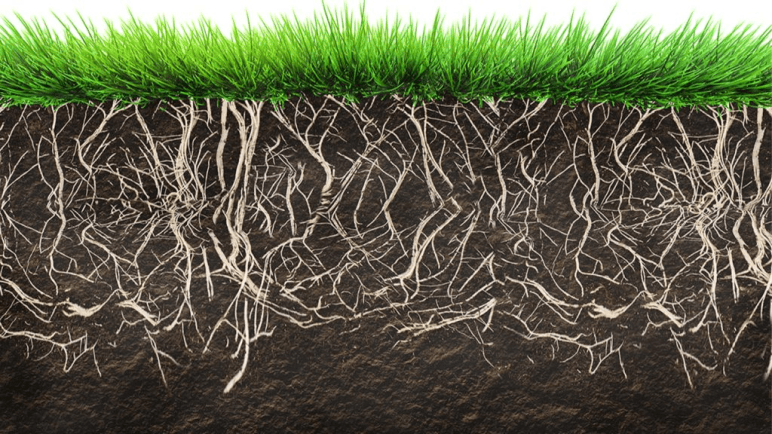
Mitchell Toews: A Grass Roots POV

  • Background in advertising and corporate communications. Persuasion, copywriting, ad copy, marcom: a perspective on the differences and the similarities vis à vis creative writing and fiction.
  • Writing practice grounded in Canada, small towns, the prairies, the boreal, and the Canadian Mennonite community.
  • Bootstrap artistic journey: shifting from corporate and marketing communications to creative writing—keeping the good, identifying the irrelevant (and the problematic).
  • Returning to early ambitions to write professionally and facing the difficulties of an “Act II” existence.
  • Overcoming ageism and the bias against older emerging writers in CanLit: staying positive and stoic in a challenging environment and resisting the slide into victimhood.
  • Journeyman’s approach: over 800 submissions to the “slush piles” of literary periodicals, contests, and anthologies. (With over 120 resultant publications.)
  • Self-promotion within the context of the small press and independent (non-agented) landscape within Canadian literature.
  • The importance of independent bookstores, libraries, and museums.
  • The Open Mic for writers: more than just a chance to hang out with musicians.
  • Book launches, readings, panel discussions, and book club author nights.
  • Workshops and critique groups.
  • Working with freelance editors (*see Sidebar), press editors, publishers, and publicists.
  • Working with Writers in Residence.
  • Social Media vs. “Shut up and write.”
  • Acquiring blurbs and reviews.
  • Literary and Arts organizations: Guilds, Unions, Councils.
  • Grant writing. Keep it short.
  • Professional development for the rural writer.
  • Creating a personalized workshop topic: seeing your strength. (Mine is “Writing your Culture.”)
  • Paying it forward: building your allyhood, being an artistic comrade.
  • AI: the dog that bites its owner.
  • Wealth: the unspoken truth.
  • Thoughts on “tarnishment” and the personal authorial voice.

*Sidebar. Early on, I was introduced to a young, male author from England with an impressive resume. We struck a deal and he instructed, mentored, and edited me for two years. I invested over $2000 in our online interactions (about 900 emails!!) and this was a transformational step for me—both the commitment and the results.

The right person and work arrangement are critical; James Mcknight was the appropriate choice for me. After our engagement ended, I extended my reach to study with other instructors and mentors, but James was a true lifesaver in my case.

Mitchell Toews: Proud member of The Writers’ Union of Canada

Anthologies

When I began submitting stories to lit mags in 2016, I noticed a few calls for submissions to anthologies. Some contests published print anthologies of the longlisted stories. Other anthologies were not open to submissions. Instead, they contained stories the editors had hand-picked for their collection.

I wondered if my work would ever be good enough to submit to an anthology, never mind have a story invited for inclusion.

As these things go, there are varying levels of anthologies. My hardcover Norton Anthology text in 1974 at the University of Victoria would be one level. I did not aim quite that high, but I did offer my work to a few and over time, others asked to include stories I had written.

My stories (18 in total) have been in 16 anthologies. I am not as active in pursuing them as I was, but I still greatly respect the form and enjoy being included in an eclectic and far-flung grouping of authors.

Here’s my printed anthology publication list, to date:

Best of Fiction on the Web: 1976-2017, 2017, U.K.
The Machinery: Fauna, 2017, India
Just Words Vol. 2, 2018, Canada
The Immigrants, 2018, U.S.
We Refugees, 2019, U.S.
The Best Short Stories from the MOON, 2019, U.S.
A Fork in the Road, 2020, U.S.
Just Voices, 2020, Canada
Anthology of Short Stories Summer 2021, 2021, U.K.
This Will Only Take a Minute, 2022, Canada
Small Shifts: Short Stories of Fantastical Transformation, 2022, Canada
Framework of the Human Body, 2022, Canada
I Used to be an Animal Lover, 2023, Australia
Hardboiled and Loaded with Sin, 2023, U.S.
Prine Primed, 2024, U.S.
Nona Heaslip (Exile) Best Canadian Short Stories, 2024 (forthcoming), Canada


I hope to continue to contribute to excellent collections like these. Every time I work with an editor, I find I improve as a writer and my work benefits with some lustre or refinement that it might have otherwise missed.

I have been nominated four times for the renowned Pushcart Prize Best of the Small Presses Anthology but so far, no room under that prestigious umbrella for me—so there’s still a lot to aspire to.

In Praise of Contradictory Characters

Humans evolved as viable beings in part through our ability to maximize our senses as a whole. This is unlike many other creatures with specialized areas of excellence: a hummingbird’s flight or an eagle’s vision, for example. We homo sapiens have not been able to supercharge any single sense but have created a life-giving skill of summarization. We’ve been able to condense all of our senses to create almost instantaneous and frequently accurate compound impressions that let us make fast decisions.

When walking in the woods, the leaf-muffled sound of something above makes us instinctively glance in that direction, lower our centre of gravity, and rely on our unconsciously gathered, short-term knowledge of our immediate surroundings to guide us and avoid a falling branch.

These intuitive, “always on” survival instincts are given to us before we are born; these powers are in our genes and the DNA that plots our growth.

We combine all available data to create almost prescient responses to situations and we do it thousands of times each day, even while we sleep. Each second, we are automatically collecting, sorting, saving, discarding and responding—or preparing a response—to the myriad sources of input we insatiably seek to acquire.

Relentless and ruthless, we categorize and make assumptions as a necessary by-product of our rapid-fire process of collect-examine-act. It works! 750-pound sabre tooth felines are extinct but 122-pound soccer moms wearing spandex leggings and hot pink tank tops jog with their stroller-strapped infants through modern society’s statistical valley of death: roadside urban environments.

We depend on our ability to rapidly rate & discern danger or safe haven. This savant-like skill has made our population grow to the point where we have become our own worst enemies.

This island of genius, summarization, extends to our art as well. In fiction, we create characters whose true selves are, to the observant reader, readily visible. Seemingly stereotypical. However, our “bad guys” may at first appear as great dads, loving boyfriends, fearless advocates of the downtrodden, or otherwise trustworthy sorts. And so they may be, until they, like the tree branch, suddenly SNAP!

Like we somehow knew they would.

Bait and switch. Hidden foreshadowing. On Star Trek, the never-seen-before crew member who is featured in the opening segment of the show as a loyal but inconsequential player sets off alarms in our sensory array. We KNOW this character is shown for a reason. This herring with a sunburn is going to: a.) die horribly, b.) be transformed into some unstoppable alien predator, or c.) shapeshift into a lookalike for Kirk, Spock, Bones, or Scotty. The music, dialogue, the point in the story arc, and a dozen other micro telltales (a signature Nimoy eyebrow lift perhaps) give us a sense of certainty that all that remains to discover is the skill with which this yarn is unravelled. We grab a bowl of sugary cereal at the scene break and hurry back when the familiar “back-from-commercial” music entreats us to return and see if maybe there could be some knot in the plot we did not foresee.

Generally, the only way to fool us and our all-seeing assessment tools is to introduce some hitherto unknown, unknowable factor: a force field, a distant planet’s illogical cultural more, or a character flaw for which NO CLUES were ever offered. Shame, screenwriter, for giving us insufficient data. How un-Hitchcock of you! How Bradburyless!

But wait! Is there shame in this lack of situational prep work by the author? Must all characters wear either the white stetson or the black? Is it binary? God and the Devil? Must we be drawn always into our heroic and melodramatic roots over and over again? Can’t there be confusion? Contradiction?

#

In my “reads like a novel” collection of short stories, “Pinching Zwieback” (At Bay Press, 2023) there is one recurrent character who is, one could say, clearly contradictory. In her first appearance, “Justy” is a stoic, “old-soul” kind of young mom, whose love and earnest devotion for her family is both beautiful and beguiling. When I read this story to audiences, I can feel her charm and purity making them love her and want her to succeed. So do I.

In the next installment, about mid-way through the collection, we meet her again but this time Justy is the world-worn mother of teenagers in a fish-bowl small town where every means of escape has proven futile. This older Justy smokes cigarettes, drinks liquor, and otherwise spits on male Mennonite overreach into her life. The Grittiness of Mango Chiffon showcases her willingness to confront her male antagonist with laser beam accuracy and we find in her a beacon of hope for the lowly. (A group in which she finds herself, despite her powerful character.) Echoing a figurative page from another story in the book (Breezy) she reminds us of the message found in one of my favourite short stories: “Forgive the weak for they are always fighting.” —Layne Coleman wrote in “Tony Nappo Ruined My Life” (Exile V45.2, in which this story was named the $15K winner of the “Best Canadian Short Fiction.”)

Justy’s final appearance shows us the caustic effect of sorrow, self-pity, and surrender. Human frailty is the currency and Justy is no more the bright, heroic young mother willing to take on any burden and defy all odds against her. Nor is she still the cynical but bold and unyielding knight Perceval; older but still focused on her Holy Grail, though we might see in her some flickering signs of weariness and a quiet desire to set herself apart from the constant meanness.

At the end of Grittiness, we are left imagining her in growing despair, abiding a life among the paltry and the unbecoming. She remains unseen until at last, in Rommdriewe, she reappears finally and is forever seen as broken. The defilement of her earlier selves is complete.

The message in Rommdriewe is, as my writer friend Brian Hughes of Winnipeg said during a critique session of this story, “to not hate the poisoned victim—rather, hate the poison.” Justy is cruelly denied this kindness. In Rommdriewe, her son (now a man) and his aging father come to terms with their fractious relationship. Justy is left outside of this treaty, with only the smallest of hopes left for her to save herself and become the pure girl-woman-truth seeker she once was.

Justy is the undisputed hero of the book and yet she is denied heroic status. She becomes the sin-eater for the others, sacrificing herself to show them how honour and defiance (Trotz) and courage can be used to survive. Even as she slips over the icy edge with little Matt at the end of Fast and Steep, we know we’ll not see her again except as the defamed sin-eater who subtly and without troubling us, gives her soul in exchange for others.

In the end, maybe Justy is the opposite of a contradictory character. Perhaps, somehow, she becomes the hero made perfect, without seeking perfection. Justy is no faux male Jesus vainly declaring anguish while knowing his everlasting fate is secure. No, Justy’s stoicism is as pure and giving as her motherly love and her endlessly heroic trotzijch mettle in the face of all adversity against her loved ones.

In this river of love flowing uphill, Justy remains true to her innermost self and is in this way the ultimate contradictory character.

The Shuffling of Souls

Image: *Preservings* Issue Number 47, FALL 2023: “Marriage of Russlaender Maria Pauls and Old Colony Cornelius Driedger, March 1927. JAKE BUHLER PRIVATE COLLECTION

Here are some thoughts about class and gender conflict with quotes from a variety of observers.

“The indelicate clacking of the men’s heels and the shuffling of their soles reminded him that their grade of culture differed from his. He would only make himself ridiculous by quoting poetry to them which they could not understand. They would think that he was airing his superior education.”—MC Gabriel’s thoughts in “The Dead” from James Joyce in Dubliners (Public Domain).

Is Joyce’s judgemental Irishman not interchangeable with a haughty Russlaender attending some inelegant, rustic affair in a prairie podunk like Gruenfeld or Neubergthal? Could this class-conscious thinking—reductive and dismissive—just as well be aimed at some random Kanadiers; a huddling of farmers in hand-me-down Sunday suits? Are Mennonites not just as guilty as any ethnic or religious group in their tireless search for an unloved “they” to diminish?

“That in the beginning when the world was young there were a great many thoughts but no such thing as a truth. Men made the truth and each truth was a composite of a great many vague thoughts… There was the truth of virginity and the truth of passion, the truth of wealth and of poverty, of thrift and of profligacy, of carelessness and abandon.” —Author Sherwood Anderson from the prologue of Winesburg Ohio (Public Domain).

The distant cannon fire of class and gender warfare, this time from the rolling hills of Middle America, where sinners and their sins are pilloried by the colour of their licence plates.

“I had heard about Mennonites all my life, about the brawls, the fist-fights at socials and hockey games. The hypocrisy as they kept liquor out of their town, but then drove to La Broquerie or Ste, Anne for booze. How they’d look down their noses at us for doing in the open what they did in the dark,” —MC Richard’s acute observations from Matthew Tétreault‘s Hold Your Tongue (NeWest Press, 2023) summarizes the abrasive relationship common between Francophone/Métis Ste. Anne, Manitoba and its nearby, predominantly Mennonite neighbour, Steinbach.

“I hear them (the ‘wealthy church ladies’) get up from the living room and walk past the kitchen. They’re coming down the stairs now, all talking at once. Like cedar waxwings, in a flock, turning in the sky, then landing as one. Beautiful in a way, but still capable of turning on you. Hurting you to make things better for themselves.”—MC Justy Zehen’s thoughts in “Willa Hund” from Pinching Zwieback (At Bay Press, 2023).

“This book is a double bun, doughy anecdotes from a spirited childhood coupled with the realisation that manhood is a more complex goal than just being strong, especially when strength translates into bullying, especially of women, the archetypal bakers of the author’s imagination.” —Linda Rogers van Krugel in her REVIEW of Pinching Zwieback (At Bay Press, 2023).

The quiet shuffling of souls—betraying different classes, genders, racial origins, and beliefs both phobic and apologist together with their ironfast allegiances—appear to be present in all groups, denominations, and Gemeinde: from those who jumped the turnstiles on the Ha’Penny Bridge to those living in the dusty towns of Southern Manitoba to the Buckeyes of Ohio and beyond.

As an author with a momentary, leaky thimble full of influence, I have made an effort to recognize and embed some questions about this “prost” (ignoble) trait that I see in myself and in Mennonites and their selfish schisms. The unfettered compulsion to divide and re-divide until the original differences are impossible to discern. This flaw is present without relief in my life experience outside of Mennonite familiars too. It’s in all the places I have been and in all the people I have learned to know. I’ve seen more marketing and public relations and gossipy slander in these social groups than in all the thousand vulgar ad campaigns I created, put together.

Are we all Baudelaire’s “Les Fleurs du mal?” Or is there is hope? My conclusions in “Pinching Zwieback” are doggedly optimistic, but then, I set out to put hope into every circumstance, even the most vile. I did so despite the constant human wickedness and the despair it has caused. In the end, I suppose I’m like the character Justy Zehen, “I don’t want to be a little Russian boy hiding in the rhubarb.”

A Review of Pinching Zwieback

https://bit.ly/WFPpzREVIEWpdRobertson

Here are stories written and compiled over the years 2015-2023. Many of them are based on my personal experience in the half-century from the late Fifties onwards but have been given the cloak of fiction. It is Autofiction that is meant to be read in the spirit of openness by all members of the human congregation.

Stories written, submitted, rejected, re-written, combined, disintegrated, edited, and re-submitted many times. Like a treasured recipe, altered and fine-tuned and dependent on the ingredients at hand.

In the end, I believe At Bay Press and I have made a collection that is comfortable on a wide variety of bookshelves, nightstands, coffee tables, and in commuter jacket pockets. An eclectic variety of readers; including but not just Mennonites, nor Anabaptists or Christians, and not just those who are none of those.

I hope all my readers, no matter their filters or experiences, can draw from this book. My aim is to make available meaningful connections for readers and provide thoughtful enjoyment through the characters’ lives and interactions. I also want to enable readers to relate when read as stand-alone vignettes or when viewed as a whole, from the broader narration that the plenary arc seeks to achieve.