“Bike Killer” Translator-Curator Sam Kandej in Conversation with Contributor Mitchell Toews

As a fellow contributor and Canadian, Kathy Steinemann puts it: “Over the years, I’ve interacted with Sam Kandej, an Iranian teacher, translator, and writer. He’ll be releasing a fiction anthology this summer, titled “Bike Killer.” Each story, originally written in English, will be published in Farsi.” My experience is identical and like Kathy, I’m publishing Sam’s interview and my responses today. A link to Kathy’s interview is found below.

Sam Kandej of Iran asks English language author Mitchell Toews of Canada SIX QUESTIONS about writing. Mitch is the author of Pinching Zwieback (At Bay Press, 2023). He has a novel (also with Winnipeg’s At Bay Press) forthcoming this spring and a second collection will be introduced later in 2026, on Canada’s west coast. Mitch has a considerable periodical footprint with well over 150 publications in Canada, the US, the UK and elsewhere around the world. The recipient of a Journey Prize nomination and four Pushcart Prize nominations, Mitch has been writing professionally since 2016.

Mitch’s contributions for Bike Killer are:

Fast and Steep: First appeared in Riddle Fence magazine (CA, November 2019) and is also included in Mitch’s 2023 collection of short stories, Pinching Zwieback (At Bay Press, 2023). The Farsi version of Fast and Steep appears in “Bike Killer” by permission of At Bay Press.

I am Otter: First published in a print anthology, “Fauna” by The Machinery (India, February 2017).

The Seven Songs: First published online by Fictive Dream (UK, 2017).

Sam’s Farsi ebook will contain work by Ambrose Bierce, Doug Hawley, Suzanne Mays, Bill Tope, W. C. McClure, and Kathy Steinemann.

Interview:

1. What inspired you to start writing short stories, and what was it like seeing your first story published?

Why write? That really is a key question, Sam.

I returned to fiction late, after a working life in manufacturing and the building trade, then twenty years in advertising and marketing. As I neared sixty, I felt an urgency I couldn’t ignore — partly ambition, but more the sense that time was narrowing. Writing mattered to me, and I wanted to do it seriously: to learn the craft and commit myself to it. I carried a lifetime of experiences — work, family, failure, compromise, and joy — and I wanted the chance to express them honestly, in my own voice.

Short fiction became the natural form. Short stories allowed me to engage immediately and bring lived experience to the page. Submitting to journals and contests wasn’t just a route to publication; it was a way to enter a public conversation and learn through dissent, criticism, and occasionally, success.

Over time, and through many refusals, I am beginning to understand what stories really do. They entertain, but more importantly, they apply moral pressure. They place characters in demanding situations — often drawn from the author’s life — and allow actions, rather than explanation, to reveal who those characters truly are. I’ve learned that depth comes from brief, revealing moments that expose both strength and weakness and invite empathy.

When my first story was published, I was surprised by how quickly it stopped being mine. Once others read it, the story belonged to them, shaped by their own experiences and interpretations. That realization startled and humbled me — and lent direction to why I write: not to control meaning, but to share something honest.

~

2. Do you have a daily routine for reading and writing? What are some of your writing habits?

I don’t keep a rigid writing schedule. My days are often shaped by season and weather; living in a sparsely populated boreal forest comes with obligations that can’t be postponed. Even so, I write or edit most mornings. I pay little attention to the clock or the calendar, except to prioritize the work in front of me. Tasks like submissions, marketing, and organizing readings happen around that, as time allows.

Reading is constant. I read a large volume of short fiction, though lately I’ve been returning to novels. Some of my reading is professional — judging, writing blurbs or reviews, responding to advance copies — and that inevitably shapes what and how I read. I’m attentive to work that instructs or inspires, especially prose that shows me another way of handling voice, structure, or restraint. Reading for pleasure, along with literary events and conversations, tends to happen in the evenings.

I also write poetry freely and without expectations. I find it helps my mental state and sharpens my prose. Similarly, I often reread work I know well to reconnect with what I learned from it earlier. Miriam Toews’s novels, for example, remind me how courage and clarity can coexist on the page. Hemingway’s Nick Adams Stories continue to teach me how action and description can carry emotional weight without explanation.

When I write, I draft with minimal restriction, guided by a broad underlying plan. I revise rigorously. I read my work aloud and also use text-to-speech to hear it read back to me — usually both. Sound and rhythm tell me more than the text alone and this is particularly important for dialogue. I rely on editors and trusted early readers whenever possible. I enjoy editing almost as much as writing, though both require patience and stamina.

~

The title, BIKE KILLER, is taken from a Doug Hawley story of the same name. Doug is a tireless, loquacious, and talented observer of the human condition, who has left his charming and curmudgeonly tracks all over the internet in places like Fiction of the Web and Literally Stories.

~

3. When you’re crafting a story, do you write primarily for yourself or with a specific reader in mind?

I’m often aware of an audience, and that consciousness inevitably shapes the work. At the same time, I resist writing toward an answer or conclusion; I’m more interested in delivering an honest depiction. That tension means the unspoken demands of my imagined audience may go unanswered.

Frequently, the person or incident that inspired the story becomes the focal point, and I try to work from that individual’s perspective — filtered through my own experience.

Not all audiences are a single person. Some stories are projected more broadly; others begin as messages for a narrow audience but, through allegory, expand into a conversation with many readers. In the Bike Killer anthology, “I am Otter” illustrates that transition.

I am drawn to the lives of underdogs — marginalized people with little power or influence. Their experiences are among the most compelling, and their circumstances and responses often reveal something essential about life and human interaction. I’m repeatedly surprised and moved by the weight of choices made in everyday relationships and encounters — at a gas station, in a coffee shop, in the course of an ordinary day. Decisions that can alter lives, even if they seem mundane, form the substance of heartfelt and relatable prose.

~

4. Which one is more important to you: creating fictional characters and worlds or expressing your thoughts and opinions explicitly through writing?

Sam, I think about this question constantly as I write. I want my characters to invite engagement. They are often underdogs or misfits shaped by forces larger than themselves. Duality is also central to my work: there are rarely pure heroes, pure victims, or pure villains. Hope, however, is a constant, especially when it’s faint or contested.

“The light shines in the darkness, and the darkness has not overcome it” is one way to express this—a universal ethos that resides across belief systems.

The worlds I create are naturalistic and drawn from lived experience. They function as the moral atmosphere of the story rather than as mere setting. Whether rendered realistically or allegorically, these places reflect physical, social and cultural climates I know, which allows me to describe them honestly—sometimes to honour them, sometimes to expose them, and often both at once.

Readers are not students. I don’t write to dictate opinions. I want readers to enter a fictional life and leave with their own feelings, questions, and conclusions. That exchange builds the all-important connection between story and reader.

~

5. As a writer, do you primarily focus on problems or the solutions? Do you think a writer’s stories should be like a mirror to reflect humans’ deeds or a magical portal to take them to the place they should be in real life?

Problems vs. Solutions

Stories hinge on conflict. We create characters who encounter problems and watch them attempt to solve them. Often, instead of allowing a reasonable action to result in a solution, I insert yet another difficulty. These obstacles generate anxiety and empathy in the reader, deepening their emotional involvement in the character’s progress. The long-running American television series Stranger Things followed this pattern.

I seldom go to the full extent of nihilism, choosing instead to end with a solution—or at least a hopeful note. A grinding, unrelenting sequence of problems—like those found in Blood Meridian by Cormac McCarthy or a Dostoevsky novel—can be a gripping experience, but it risks fatiguing the reader. It’s also a hard style to master. 

In writing, there can be no easy solutions; they are boring. What good is the most elegant solution if it is not entertaining? Rising anxiety allows the reader a satisfying sense of relief when a solution is finally earned.

Mirror vs. Portal

I am drawn to realism, so the “mirror” is my foundation. At the same time, there is power in describing a series of trials as we follow a heroic character through challenging circumstances—the “portal.” My forthcoming novel offers a hybridized blending of both. The youthful main character runs away from his problems and broken loyalties only to encounter new ones. He has intentionally put himself in a predicament, and his true test becomes his struggle to persevere. As he begins to adapt and grow, a new antagonist enters. This unfamiliar, disruptive and chaotic individual represents the greatest ordeal of all. In the end, despite many failures, the protagonist achieves some victories. He has transformed himself, but he remains flawed; his journey must continue. (Mulholland and Hardbar will be published in 2026 by At Bay Press. “Like ‘Fargo,’ but with German accents.”

~

6. If you were to teach a one-semester course on writing short stories, what would the essential pillars of your curriculum be? Is there a specific story, exercise, or piece of craft advice you’d build the entire class around?

Another question with depth. To answer this as honestly as I can, I must admit that I’m not sure I would make a good teacher of short story writing. 

My rules would be less than rigid and also hard to interpret. I might write a different set of suggested approaches tomorrow.

With those undulating disclaimers in place, I might suggest the writers first imagine a place they know completely. It may be entirely imaginary, or completely real so long as the writer knows it well. 

I could recommend that the story be based on a striking scenario from the author’s lived experiences. Fiction affords the freedom of creativity—freeing for both writer and reader so that the truth becomes malleable and the author may resculpt as they wish. In this case, the goal may not be morality or principle, but a memorable, engaging story. A beautiful—or wrenching—question the author asks the reader to consider. 

I would ask my students to inject vivid life into the story at many points. We are physical beings; describe your characters’ abilities, failings, strengths, and peculiarities. Bruise us, enmesh us in our senses and emotions, put us in the action, feeling and being transported.

People talk. Share these discussions and ensure they sound real, as if a door swung open to bring us into the middle of a heated argument or an embarrassed confession, or a plea for mercy… until the door closes and shuts us out again.

Edit. Reading aloud, trim ruthlessly and with the urgency of a surgeon who knows to cut deep, often, and with precise intent. More than you think you should. More than you want.

Do not make yourself a hero or a victim in the story. Simply be a human describing the life of humans. Write of flaws. Dashed hopes, brittle egos, surprising valour. Show us answers seldom and yet keep alive our desire to seek them.

Thanks to Sam for including me. I am thrilled to be in BIKE KILLER, in the company of many wonderful writers. See Sam’s interview with Kathy Steinemann, HERE: https://kathysteinemann.com/Musings/kathy-steinemann-interview/

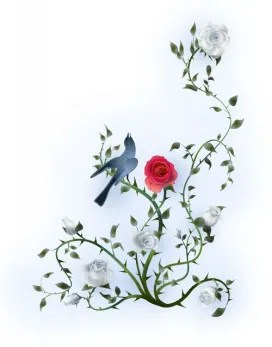
Image: The Nightingale and the Rose, used here to symbolize the Persian love of literature.
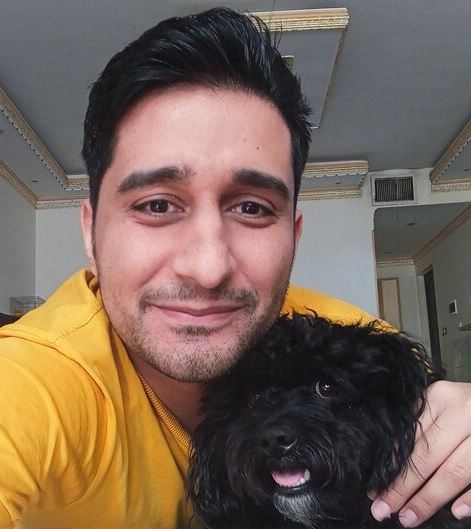
Iranian Author, Translator, Curator Sam Kandej

Writer friend Sam Kandej has a “top five” story on the venerable site, Fiction on the Web. Here is his BIO:

Hello! My name is Maysam Najafi Kandej, but I prefer to be called Sam Kandej in English. I was born on October 6th, 1988, in Tehran, while my mother was only seventeen.

As Iran is a vast country home to people of different races, languages, and religions, I’d like you to know that I’m a dark-skinned Persian Muslim, grown up in a relatively poor but respectable family.

English classes were the only summer classes my father could afford when I was a teenage boy. I liked the colorful books and the comic stories.

I was an average but hardworking student in high school. Through hard work, I was granted permission to study English Language and Literature at Kharazmi University for free, from 2009 until 2013. In some classes, I was among the top students, and in most of them, I wasn’t.

To be honest with you, I’ve been unsuccessful in almost all aspects of my life. But that doesn’t mean I haven’t had my own good, memorable days. I’ve lived, cried, smiled, wept, and dreamt for better days.

I’ve been a teacher for the last sixteen years, but unfortunately, I’ve never been able to make good money from this job because of my country’s endless economic and political crises. You could also say that I haven’t been hardworking enough. I cannot disagree with that!

In my free time, I write short, whimsical stories and translate English stories by my favorite authors into Farsi. You can read my latest flash fiction, “An Unforgettable Yalda,” on Fiction on the Web.

My favorite Persian poets are Khayyam, who encourages us to enjoy the moment and not take this world too seriously, and Ferdowsi, who asks humans to be wise, moderate, and thoughtful.

I’m so fortunate to have been born a Persian, to enjoy the rich literature, and then to savor learning English word by word. If Persian is like red wine to me, then English is definitely my white wine. [Sadly, I don’t drink alcohol in real life!]

I’m currently translating fourteen short stories written by seven authors (three by Mitch Toews) for an upcoming book titled ‘Bike Killer’. The book will be available in Iran this summer.

~ ~ ~

Things are scary and unnerving right now, here in the west. Where Sam is, that’s just another day.

Mitchell Toews Biography & Capsule Bibliography

Biography

Mitchell Toews is a Canadian author of literary fiction exploring themes of fairness, rural life, and intergenerational dynamics. Nominated for the Journey Prize and multiple Pushcart Prizes, he is the author of Pinching Zwieback (At Bay Press, 2023). His debut novel, Mulholland and Hardbar (At Bay Press), is forthcoming in spring 2026. A second collection of short stories, Myths and Troubadours, will be published in December 2026.

Bibliography — Primary Sources (Periodicals, Anthologies, Podcasts)

2016

16 publications in total, partial list below:

  • The Fisherman’s Story — Rhubarb (CA)
  • Heavy Artillery  — Fiction on the Web (UK)
  • Nothing to Lose  — Fiction on the Web (UK)
  • Encountered on the Shore  — CommuterLit (CA)
  • A Vile Insinuation  — CommuterLit (CA)
  • Without Reason  — CommuterLit (CA)
  • Zero to Sixty  — CommuterLit (CA)
  • The Margin of the River  — CommuterLit (CA)
  • Fifty Dollar Sewing Machine  — Literally Stories (UK)
  • Frozen Tag   — Literally Stories (UK)
  • South of Oromocto Depths  — Literally Stories (UK)
  • Our German Relative  — Red Fez (CA)
  • So They All Are  — Voices (CA)

2017

20 in 2017 / 36 publications in total, partial details below:

  • Fall from Grace  — Fiction on the Web (UK)
  • The Beefeater  — Fiction on the Web (UK)
  • The Preacher’s Wife  — Fiction on the Web (UK)
  • Nothing to Lose  — Fiction on the Web (UK)
  • South of Oromocto  — CommuterLit (CA)
  • Winter Eve at Walker Creek Park   — CommuterLit (CA)
  • The Rothman Job  — CommuterLit (CA)
  • The Business of Saving Souls  — Literally Stories (UK)
  • So They All Are  — Literally Stories (UK)
  • City Lights  — Lingo Bites (UK)
  • Schutzengel  — Occullum  (US)
  • The Margin of the River  — Pandemonium Press (US)
  • The Log Boom  — Storgy (INTL)
  • The Peacemongers  — The MOON Magazine (US)
  • The Old Guardsmen  — Lingo Bites (UK)
  • Graperoo  — Occullum (US) 
  • The Seven Songs  — Fictive Dream (UK)
  • Nothing to Lose — Best of Fiction on the Web (UK): 1996–2017 — anthology
  • I am Otter — The Machinery (India): Fauna — anthology

2018

13 in 2018 / 49 publications in total

  • Fall From Grace — Literally Stories (UK)
  • Of a Forest Silent — Alsina Publishing LingoBites (UK/ES)
  • City Lights — Literally Stories (UK)
  • The Bottom of the Sky — Fiction on the Web (UK)
  • In the Dim Light Beyond the Fence — riverbabble (US)
  • Nothing to Lose — riverbabble (US)
  • Shade Tree Haven — Doorknobs & Bodypaint (US)
  • Sweet Caporal at Dawn — Blank Spaces (CA)
  • Sweet Caporal at Dawn — Just Words Vol. 2 Anthology (CA)
  • Away Game — Pulp Literature (CA)
  • Groota Pieter — River Poets Journal “The Immigrants” Anthology (US)
  • The Narrowing — Scarlet Leaf Review (CA)
  • Wide Winter River — Not Ready for Prime Time podcast (US)

2019

14 in 2019 / 63 publications in total

  • The Fifty Dollar Sewing Machine — Literally Stories (UK)
  • The Toboggan Run — The MOON Magazine (US)
  • Peacemongers — The MOON Anthology (US)
  • Cave on a Cul-de-sac — Doorknobs & Bodypaint Issue 93 (US)
  • Din and the Wash Bear — Doorknobs & Bodypaint Issue 95 (US)
  • Died Rich — Fabula Argentea (US)
  • I Am Otter — Short Tales (Iran)
  • Away Game — Short Tales (Iran)
  • Concealment — Me First Magazine (US)
  • Groota Pieter — Pact Press “We Refugees” Anthology (AU)
  • Fast and Steep — Riddle Fence (CA)
  • Holthacka’s Quandary — Lunate Fiction (UK)
  • Shade Tree Haven — (mac)ro(mic) (US)
  • Our German Relative — Xmas Stories (Iran)

2020

14 in 2020 / 77 publications in total

  • The Business of Saving Souls — Literally Stories (UK)
  • The Log Boom — River Poets Journal Anthology (US)
  • Encampment — Tiny Seed Journal (US)
  • Regrets de Foie Gras — Literally Stories (UK)
  • The Grittiness of Mango Chiffon — Agnes and True (CA)
  • My Life as a Corkscrew — Blank Spaces (CA)
  • Piece of My Heart — Pulp Literature (CA)
  • Away Game — Quail Bell Magazine (US)
  • Interview — Maysam Kandej Talks (Iran)
  • My Life as a Corkscrew — Just Voices Anthology (CA)
  • The Sunshine Girl — Cowboy Jamboree (US)
  • Died Rich — Fiction on the Web (UK)
  • Baloney, Hot Mustard and Metal Filings — WordCity Monthly (Intl)
  • Our German Relative — WordCity Monthly (Intl)

2021

10 in 2021 / 87 publications in total

  • Interview — Blank Spaces (CA)
  • So Are They All — Literally Stories (UK)
  • Fast and Steep — CommuterLit (CA)
  • The Grittiness of Mango Chiffon — Literally Stories (UK)
  • Fast and Steep — Fiction on the Web (UK)
  • Featured Artist — Winnipeg River Arts Council (CA)
  • The Log Boom — WordCity Monthly (Intl)
  • In the Dim Light Beyond the Fence — The Twin Bill (US)
  • Sweet Caporal — Rivanna Review (US)
  • Fast and Steep — Fenechty Anthology (UK)

2022

12 in 2022 / 99 publications in total

  • Hundred Miles an Hour — Rivanna Review (US)
  • Piece of My Heart — Miramichi Flash (CA)
  • Downtown Diner — Cowboy Jamboree (US)
  • Winter Eve at Walker Creek Park & Shade Tree Haven — Guernica Editions Anthology (Intl)
  • I Am Otter — Lintusen Press Anthology (CA)
  • Sanctuary Quandary — WordCity Monthly (Intl)
  • New War — Old Technology — The Fieldstone Review (CA)
  • No Strings — Bell Press Anthology (CA)
  • The Spring Kid — Macrina Magazine (US/Intl)
  • A Cultivated Halloween — CommuterLit (CA)
  • Sweet Caporal — WordCity Literary Journal (Intl)
  • The Sewing Machine — Rivanna Review (US)

2023

7 in 2023 / 106 publications in total, plus reprints on Toews.ir online blog (now defunct)

  • The Margin of the River & I Am Otter — D.A. Cairns Anthology (AU)
  • Piece of My Heart — Literally Stories (UK)
  • All Our Swains Commend Her — Pulp Literature (CA)
  • Pass It to Freddie — The Other Journal (US)
  • Angel and the Craigflower Bus — Hawkshaw Press Noir Anthology (US)
  • Piece of My Heart — Mennotoba (CA)
  • The Seven Songs — Rivanna Review (US)
  • Multiple reprints — toews.ir (Iran)

2024

2 in 2024 / 108 publications in total, plus reprints on Toews.ir online blog (now defunct)

  • The Sunshine Girl — Prine Primed Anthology, Cowboy Jamboree (US)
  • Essay — “Why I Wrote This Book” Miramichi Reader (CA)
  • Multiple reprints — toews.ir (Iran)

2025

16 in 2025 / 124 publications in total, plus reprints on Toews.ir online blog (now defunct)

  • The Seven Songs — Fiction on the Web (UK)
  • Our German Relative — 7th-Circle Pyrite (US)
  • Bouncing Baby Boy — Lothlorien Poetry Journal (FR)
  • The Preacher’s Wife — Rivanna Review (US)
  • Shade Tree Diplomacy — Literary Heist (CA)
  • The Margin of the River — Literally Stories (UK)
  • All Our Swains Commend Her — Chiron Review (US)
  • Pass It to Freddie — CommuterLit (CA)
  • Schutzengel — 7th-Circle Pyrite (US)
  • Blank Spaces Interview (CA)
  • This Older Dude… — Manitoba Writers’ Guild Tagore Competition (CA)
  • Night Bandits — SBLAAM (US)
  • Shade Tree Haven — Grit Quarterly (US)
  • Ahead, Go — CommuterLit (CA)
  • The Light Pool — Pulp Literature (CA)
  • Review of Pitfall by Terry Kirk — Literary Heist (CA)

2026

11 in 2026 / 135 publications in total, plus reprints on Toews.ir online blog (now defunct — 18 pieces, from 2023-2025)

  • Mitchell’s Flash Fiction Tip is included by Curator/Editor Karen Schauber in Vancouver Flash Fiction’s “Flash Fiction Writing Tip” Series Collection. Available NOW in eBook and a print-on-demand paperback through KDP Amazon.
  • The poem Limitless June Mornings will be published in the 2026 edition of The Corpus Callosum (CA), early March. This year’s theme is Dreams & Nightmares, Managing Editor Eric R. Tucker.
  • Second Helping at Conchita’s DinerPulp Literature (CA) March 2026, Editors-in-Chief Jennifer Landels and Mel Anastasiou.
  • The Feeling of Running — to appear on Editor Charlie Fish‘s chart-topping UK lit site, Fiction on the Web, March 20, 2026. This story was previously one of five national finalists (then titled “Saskatchewan”) in the Nona Macdonald Heaslip Award in 2023. Sponsored by Exile Quarterly, the prize awards winners with $15,000.
  • The flash fiction, Turquoise Heaven, is on its way to Sky Island Journal and their 160,000 readers on April 25, 2026. My thanks to Co-Founders and Co-Editors Jason Splichal and Jeff Sommerfeld.
  • I am Otter/Fast and Steep/The Seven Songs and an author interview — translated into Farsi on the Iranian literary site Taaghche.com in the anthology “Bike Killer” curated and translated by Maysam Kandej, in June 2026
  • Our German Relative will be reprinted (first published inRed Fez, Canada, 2016, Editor: Leopold McGinnis) in the June release of Mennonite Life 2026. My sincere appreciation to Co-Editors Peter Goerzen and Trent Voth.
  • Last Call at the Warman will be published by Close to the Bone, an online literary magazine and small-press publisher based in Northampton, UK. Publisher-EditorCraig Douglas has published 921 short stories since 2011 and is a reliable source of gritty literary fiction from around the world. Look for this story of rural depopulation and the “hollowing out” of Canada’s Main Streets in August.

Bibliography — Secondary Sources (Reviews, Profiles, Criticism)

  • Featured Artist Profile — Winnipeg River Arts Council (CA, 2021)
  • Interviews in Mennotoba, Blank Spaces, South Branch Scribbler, Maysam Kandej Talks, My (small press) Writing Day, and others.

Bibliography — Awards

Major Awards & Wins

  • “So Are They All” — Second Place, Write on the Lake Adult Fiction, 2016
  • “Cave on a Cul-de-sac” — Winner, Hayward Fault Line / Doorknobs & Bodypaint Flash Contest, 2018
  • “The Lunker Jack” — Third Place, NOWW Bill MacDonald Prize (Short Fiction), 2025
  • “Second Helping at Conchita’s Diner” — First Runner-up, Pulp Literature Raven Contest, 2025

Shortlists

  • “The Spring Kid” — Shortlist, J.F. Powers Prize for Short Fiction, 2022
  • “Luck!” — Shortlist, Pulp Literature Hummingbird Flash Contest, 2022
  • “Winter in the Sandilands” — Shortlist, Pulp Literature Bumblebee Flash Contest, 2023
  • “Saskatchewan” — Shortlist, Nona Macdonald Heaslip Award, 2023
  • “This Older Dude Over at Conchita’s Up North Main This Morning” — Shortlist, Rabindranath Tagore Poetry Competition, 2025

Longlists

  • “Winter in the Sandilands” — Longlist, Pulp Literature Hummingbird Flash Contest, 2022
  • “Saskatchewan” — Longlist, Dave Williamson National Short Story Competition, 2023
  • “Mr. R” — Longlist, NOWW Bill MacDonald Prize, 2023
  • “Parade Day” — Longlist, Pulp Literature Raven Contest, 2024
  • “The Light Pool” — Longlist, Pulp Literature Bumblebee Flash Contest, 2025
  • “This Older Dude Over at Conchita’s” — Longlist, Pulp Literature Hummingbird Flash Contest, 2025

Finalists

  • “The Phage Match” — Finalist, Broken Pencil Deathmatch, 2016
  • “Fetch” — Finalist — TWUC Short Prose Competition, 2020
  • “The Rabid” — Finalist, Pulp Literature Bumblebee Flash Contest, 2022
  • “The Spring Kid” — Finalist, J.F. Powers Prize, 2022
  • “The Mighty Hartski” — Finalist, Humber Literary Review / CNFC CNF Contest, 2022

Honourable Mentions

  • “Fall from Grace” — Honourable Mention, Writers’ Workshop of Asheville Memoirs Contest, 2016

Editors’ Choice & Other Distinctions

  • “I am Otter” — Runner-up, CommuterLit Flash Feature, 2018
  • “Piece of My Heart” — Editors’ Choice, Pulp Literature Bumblebee Flash Contest, 2020
  • “Fall from Grace” (Pinching Zwieback) — Mentor Text selection, moving writers, 2024

Nominations

  • “Sweet Caporal at Dawn” — Pushcart Prize nomination (Blank Spaces), 2019
  • “The Margin of the River” — Pushcart Prize nomination (Blank Spaces), 2020
  • “Sweet Caporal” — Pushcart Prize nomination (Rivanna Review), 2021
  • “All Our Swains Commend Her” — Pushcart Prize nomination (Pulp Literature), 2023
  • “All Our Swains Commend Her” — Journey Prize nomination (Pulp Literature), 2025

Mitchellaneous Redux

For years, I’ve kept a blog at Mitchellaneous.com. Now, with a new site — mitchtoewsauthor.com — it’s time to bring everything under one roof.

Not a diaspora, not a forced march — just a subtle shift.

The new site provides me with a single platform to share my work and, in 2026, to host my debut novel and any subsequent projects. Everything is here: links to buy books or read published stories, a calendar of events, reviews, and more.

You’ll still find me on FacebookInstagramThreadsBlueskyLinkedIn, and X, as usual.

Thanks for reading. I’ll keep posting, and I hope you’ll keep stopping by. As before, my big mouth snookery pairs well with caffeine and is best taken with a grain of salt.

Quiet writing in a noisy era

REVIEW—Linda Rogers Van Krugel

PINCHING ZWIEBACK, Made-up stories from the Darp, Mitchell Toews, At Bay Press, 2023, paper, pp 253 Review by Linda Rogers Van Krugel, Victoria, BC

On child birthdays we toss the kids in the air, make wishes and offer a “pinch to grow an inch.” Pinching Zwieback is a gathering of pinches as a young man, dough in the hands of powerful albeit diminished women that rises in the oven of cultural expectation to a better understanding of his place in the world beyond the kitchen of his creation.

That is the substance of Pinching Zwieback, rhymes with Steinbach, the town of Toews’ awakening. The linked stories in this premier collection from a senior writer describe the apostate Christian community he is growing into and out of now that the skin he was born in no longer fits. This was always true for the narrators born as outsiders in an outsider religion.

The earliest stories in the Bible tell us of exile and that is the status of boys born into an immigrant community, two degrees of separation from their historical selves. For this writer and others, new flesh pyjamas are neologisms that chafe their doctrines of faith. Belonging, at once the impetus for diaspora is the difficulty when it is achieved.

The Steinbach cohort learn in increments and their baby steps are measured in short stories, especially those written when expectation has been replaced by wisdom. Mitch Toews is a grandfather, his voice sifted through grizzle, the grey beard that bears witness to a lifetime of experience, and his coming-of-age collection is a double entendre, panis angelicus and little devils growing into the bodies of angels who challenge the status quo.

His stories, small anxieties, grow out of fear, children afraid of the dark, longing for the light. The transforming narrator has grown up through the three stages of man to a realisation that every effort to rise into a paradigm is the stuff of comedy because there is no perfect fit. Skin is woven by DNA and the declared DNA of Mennonite boys is kindness, pacifism, precepts often lost when religion becomes political, something, we suspect, Toews is noticing in the world his boys long to be part of, but on their own terms.

Pacifism, a precept of Mennonites often lost in the noise of struggling to fit outsiderhood, rises to assert itself in critical moments. This book is a double bun, doughy anecdotes from a spirited childhood coupled with the realisation that manhood is a more complex goal than just being strong, especially when strength translates into bullying, especially of women, the archetypal bakers of the author’s imagination.

One such moment arrives in the story where two friends are expected to fight because one commits an indiscretion by revealing a secret of vulnerability. The boys are expected to duke it out, neither of them comfortable with that resolution. A deeper language speaks in the half-hearted skirmish where blood knowledge informs them that friendship is deeper than difference and indiscretion is often more apocryphal storytelling than moral betrayal.

In “Fall From Grace,” a beautiful story of risk, we learn once again that moral challenges require more courage than mindless forages into physical danger, a temptation that leaves too many young men in graves and wheelchairs, and even more silenced young women subject to the violence menacingly referenced in the drowned silence of “Breezy.”

“Sunday school principles were discarded when the blood ran hot.” In the Steinbach world, a sensitive boy needed armour, regalia with spikes to deflect the shibboleths that kept him static within the social order, thou shalt nots pouring like molten proverb from the mouths of prophets and schoolteachers.

Mennonites were/are a hierarchy, men on top, some pigs better than others in the language of George Orwell. And sows are barely pigs, Adam’s rib, let us guess a penis, dedicated to stirring the pot, with the secret provision for rebellion when the kettle boils over.

In the story “The Grittiness of Mango Chiffon,” Matt describes his mother’s feminist rage against an elitist bully of a schoolteacher who would have her teenaged daughter expelled for wearing pants to stay warm in winter. “For this she used her secret weapon—a large English vocabulary. A second lexical ordnance to complement her mastery of Low German.” It is a small rebellion, albeit over the phone not person to person, but it is women talking, the beginning of revolution against the norms that constrain.

It is control of language that determines cultural survival. That is what so many colonial societies are learning as they search for elders and text to explain themselves. Toews’ struggle between the desire to know himself and find himself is the key to comedy and pathos in his quest for definition. Perhaps this is an easier task for the women who stick to making bread and remember the recipes.

Making bread is women’s work in patriarchal society and it takes a voyeur like Toews to notice strength in forearms that pinch and shape dough and the character of children with muscle memory.

We come out of these stories with sympathy for both sides, but, in the end, bread wins and by the time the boys grow up, the women are in positions of power their grandmothers never dreamed of.

The arc of every story in this collection is a micro-battle against expectation, the status quo, as the three main recurrent boy/man characters—Matt, Lenny, and Diedrich—struggle to understand their legacy, the being of their Mennonite heritage, in the context of a language they barely understand (and kindly provide a glossary) and a hierarchy that makes them less, so that in some senses they are women, or are at least aware of the life sentences handed down at birth.

Just as the three male protagonists are uncomfortable with their ancestral language and the inference that it reduces their status in a patriarchal culture, the reader experiences dis/gravitas as Low German is sprinkled like itching powder in the text. Pain is the father of humour and humour is relief.

I remember being invited to dinner at a forest haven, populated by privileged tourists, all of whom spoke High German, in the BC Interior. Our host, of Mennonite extraction, warned us not to let on that he understood the language. “The minute I respond in my dialect, they will treat us badly,” he said. I had to wonder what we were doing there, reliving pain even a diaspora could not cure.

Only writing can do that, my friend is discovering.

“…he still felt the old resentment, as stinging as tears, being in this place and reliving the old thoughts again.” So what is Toews doing here, outing himself by juggling unfamiliar speech, the language of his ancestors? Just as it is for the mothers and guardian aunts who care for Matt, Lenny, and Diedrich, everything depends on the energy of conviction. The outrider needs to signal danger otherwise we all run off the cliff into the valley of discrimination.

Baseball is the metaphor in this coming of great age book. As we sit back and watch the game: hits, runs, errors, we understand both rules and surprises, and girls can play too. In “The Narrowing” a story about facing fear, Matt, now a grandfather, urges his grandson Tim to confront the knife’s edge of living dangerously, playing chicken with a train. This is a man playing a boy’s game and, although the boy wins by surviving, the grandfather is left to confront his hubris and the greater wisdom of his daughter.

In the final story “In the Dim Light Beyond the Fence,” Matt’s death experience lovingly recalled in the context of baseball, the Mennonite game of recognition is played out: “…the past shunnings, social stigmatization. Institutional misogyny. All of it, the good and the bad. Dad was so proud of the pacifism, though that was tainted in some ways, but so what. They tried.” Life is reaching for the light, which never falters even as the human characters flicker and fade.

As these stories rise in Toews’ proverbial oven they grow away from the fire of creation, the same fire that has tempted and driven notable female voices from the Mennonite community. This time it is men talking. Both sides now.

Pinching Zwieback Compendium

Cover shot of a rooster in a day coat for the book Pinching Zwieback (At Bay Press, 2023)

JUST FOR FUN, I fed every review and comment about my collection of short stories, Pinching Zwieback into the free ChatGPT kitchen and asked ol’ Chatty Cathy to make me an omelette. Here’s what was served. . .

First of all, WHO AM I?

“Author Mitchell Toews is a Canadian writer whose work has been nominated for the McClelland & Stewart Journey Prize (Pulp Literature, 2025) and four Pushcart Prizes.

His debut collection, Pinching Zwieback (At Bay Press, 2023), explores fairness, faith, and voice in rural and urban communities. His fiction has appeared in more than fifty journals across North America and Europe and a novel is forthcoming.

Mitch and his wife Janice live in a 75-year-old cottage in the Canadian Boreal forest, just north of the 50th parallel.

Here are the actual reviews or links to them: https://mitchellaneous.com/2023/10/11/early-praise-for-pinching-zwieback-2/

See the book, Pinching Zwieback on the At Bay Press website here: https://atbaypress.com/books/detail/pinching-zwieback

And here is how ChatGPT summarized the reviews and commentary:

Pinching Zwieback – Consolidated Critical Reception Overview

Notable Reviewer Highlights and Quotes

  • Armin Wiebe: “Mitchell Toews’ stories range from Tom Sawyer-like tales of boyhood squabbles to the heartbreak of family dysfunction… From 1874 Russia to 21st-century Manitoba and British Columbia, Mitchell Toews’ linked stories present a boisterous and poignant family saga unlike any other in Mennonite literature.”
  • Donna Besel: “Mitch’s debut collection pays homage to Mennonite language, food, history, and culture… but he does not shy away from sharp insights into the limitations of a closed and controlled way of life.”
  • Ralph Friesen: “Mitch Toews speaks from the margins of small-town society, claiming a space for the underdog and the undervalued… His rare talent touches your heart and is funny, too.”
  • Linda Rogers Van Krugel: “The linked stories describe the apostate Christian community he is growing into and out of… narrators born as outsiders in an outsider religion.”
  • Alanna Rusnak: “Moves like a tide through visceral daily experiences—quintessentially Canadian, some heart-wrenching, each powerfully evocative.”
  • Leslie Wakeman: “His stories allow us to hold space for challenging our notions on life.”
  • Rachael Friesen: “…snapshots from each character and how the stories flow from one generation to the next were fantastic.”
  • Zilla Jones: “Mitchell Toews’ stories ask universal questions about belonging, conforming, and dissenting… ostensibly Mennonite, but the themes… are universal.”

General Reception

  • Pinching Zwieback has been widely praised for its authentic depiction of Prairie Mennonite life, skillfully blending humour, moral reflection, and cultural specificity.
  • Reviewers note that while stories often begin with playful or whimsical setups, they carry significant emotional, moral, or physical stakes, as seen in Swimming in the Bazavluk (near-drowning) and Fall From Grace.
  • Toews’ prose is consistently praised for its precision, clarity, and warmth, making the collection accessible while engaging deeply with culture, heritage, and interpersonal dynamics.
  • The collection has received repeated coverage from sources including the Winnipeg Free Press, McNally Robinson, Anabaptist World, Literary Heist, and Blank Spaces Magazine, as well as multiple interviews and discussions with the author, demonstrating broad literary and cultural recognition.

Key Themes Highlighted by Reviewers

  1. Coming-of-Age and Moral Growth
    • Stories frequently focus on adolescents navigating ethical dilemmas, social pressures, and family dynamics.
    • Humour and adventure are balanced with serious lessons about resilience, responsibility, and morality.
  2. Cultural Heritage and Mennonite Identity
    • The collection emphasizes Mennonite traditions, work ethic, and community norms.
    • Historical and ancestral connections, e.g., settings in Ukraine or Russia (Swimming in the Bazavluk), link characters to generational memory.
    • Commentary by Armin Wiebe and others notes Toews’ ability to explore aspects of Mennonite life that other writers have largely avoided: class, racism, small-town hypocrisy, and intergenerational conflict.
  3. Humour and Emotional Range
    • Stories oscillate between the hilarious and the tragic, reflecting real-life complexity.
    • Humour illuminates character insight and cultural observation rather than serving purely as comic relief.
  4. Community, Belonging, and Individuality
    • Stories examine social pressures, conformity, and dissent, as well as family and community relationships.
    • Zilla Jones emphasizes that although the stories are ostensibly Mennonite, themes of belonging vs. alienation and individual vs. family are universal.
    • Ralph Friesen and Leslie Wakeman note Toews’ attention to marginalized voices and underdogs, highlighting emotional stakes alongside comedic elements.
  5. Generational and Interconnected Storytelling
    • Multiple reviewers, including Rachael Friesen, highlight the linked generational narratives that follow characters across decades and locations, from 19th-century Russia to contemporary Manitoba and British Columbia.
    • Armin Wiebe observes that recurring family threads (e.g., the Zehen family and a family bakery) allow stories to explore love, rivalry, moral tests, and both physical and emotional peril.
  6. Universality and Canadian Identity
    • Alanna Rusnak describes the stories as “quintessentially Canadian,” moving through daily experiences, with heart-wrenching and evocative moments.
    • Linda Rogers emphasizes Toews’ exploration of outsider identity and personal transformation, connecting the Prairie Mennonite context to broader human experience.

Overall Critical Consensus

Strengths

  • Exceptional authenticity and cultural fidelity, capturing Prairie Mennonite life across multiple generations and geographies.
  • Skillful blending of humor, moral reflection, and narrative tension, often with life-or-death stakes.
  • Character-driven stories that resonate emotionally while reflecting ethical and social dilemmas.
  • Universality: While rooted in Mennonite experience, stories explore human themes of belonging, identity, and resilience.

Summary

Pinching Zwieback is celebrated as a groundbreaking and multifaceted collection in contemporary Mennonite and Canadian literature. The stories balance playfulness, peril, humor, and moral insight, while creating a linked generational tapestry from 19th-century Russia to present-day Canadian Prairies. Critical and public reception highlights Toews’ literary craft, emotional depth, and cultural insight, establishing the collection as both an entertaining and thought-provoking work.

At Least a Three Coffee Read

Filled with thought-provoking and empowering ideas, quotes, and wish-I-had-thought-of-thats, and followed by a close re-read with a tri-colour pen for annotations.

A Mennonite Life Essay by Jeff Gundy:

Gundy, Jeff. “Truth, Poetry, and Power, or Said Samatar and the Sayyid.” Mennonite Life 79 (2025): https://ml.bethelks.edu/2025/07/10/truth-poetry-and-power-or-said-samatar-and-the-sayyid/.

Juuuuust puttin this here for now

Subscribe to continue reading

Subscribe to get access to the rest of this post and other subscriber-only content.

Market Copy—Metaphor in the Making

The wheels of literature turn slowly, but they produce without rest, grinding out the vast quantity of grist, meal, and fine flour that create the broad imaginative canon that is Canadian fiction.

My personal grindstones have turned out plenty of words—maybe even more than I ever thought I would create. My milestone map looks something like this:

Early Submissions to literary periodicals, anthologies, and contests, Jan/2016-Oct/2023. I began submitting in 2015; however, I was not a Duotrope subscriber until August 28, 2015, so I don’t have accurate submission records for that period, except that my acceptances were zero. 2016-2023, I submitted 501 stories, essays, and interviews with 121 acceptances. Note: Duotrope does not record stats for every market I submitted to, so the submission totals are lower than the actual number sent. I used actual acceptance numbers.

Launch of Debut Collection, Pinching Zwieback “Made-up Stories from the Darp” Oct/2023-Present. With a book out, I continued to submit work for publication in periodicals, etc, but also spent time at launches, other literary events, and Open Mics. I made 123 submissions, with 21 acceptances, and attended 45 in-person events. I’ve had the honour of receiving four Pushcart Prize nominations in the years since I began my imaginative writing life in fiction, creative non-fiction, and poetry.

Launch of Debut Novel, Mulholland and Hardbar (At Bay Press) Spring 2026. Having another book forthcoming with my wonderful publisher, At Bay Press, I will once again shift gears in my writing practice. I still hope to maintain a steady stream of short story submissions, so 2026 is sure to be an interesting and busy year.

Mulholland and Hardbar: “Like ‘Fargo’ with a Low German accent, Mulholland and Hardbar follows the four seasons in the boreal: friendship, mistrust, deceit, and violence.”

Here’s an IDEA BOARD look at some of the market copy drafted to date concerning my career and including my short story publication work and Pinching Zwieback. New work, including as-yet unpublished short stories, flash fiction, verse and the 2026 novel will inform these sketchbook ideas with more detail.

Mitchell Toews – Author Profile & Literary Positioning

“One chair, one cracked teacup, one quiet sigh”

Overview:
Mitchell Toews is a seasoned Canadian writer whose stories explore the human experience through the lens of Mennonite life, small-town society, and intergenerational dynamics. Across his work—from Pinching Zwieback to his periodical publications—Toews blends humour, pathos, and cultural insight, offering a layered portrayal of community, identity, and moral complexity. His work is distinguished by its balance of comic observation, emotional resonance, and attention to social hierarchies, family dynamics, and the struggles of outsiders within tightly knit communities.

Themes & Motifs:

  • Coming-of-age & growth: Stories frequently track male protagonists (such as Matt, Lenny, & Diedrich in Pinching Zwieback) navigating the transition from boyhood into adulthood, then into grandparenthood, exploring moral, emotional, and cultural challenges. This trend continues in his upcoming Bildungsroman novel, Mulholland and Hardbar.
  • Cultural heritage & outsider perspective: A recurring focus on Mennonite traditions, language (including Low German), and religious hierarchies, showing both the richness and constraints of cultural identity.
  • Family & community dynamics: Examines intergenerational relationships, the role of women as moral and cultural anchors, and the tension between individual agency and societal expectation.
  • Humour & pathos: Humour often arises from the clash between expectation and reality, offering relief and insight while maintaining the gravity of cultural, ethical, and emotional stakes.
  • Power & agency: Stories explore institutionalized hierarchies, gender roles, and moral courage, often highlighting the overlooked strength of women, the in-between world of children, and the ethical struggles of men.
  • Symbolism & recurring motifs: Bread-making, baseball, and local traditions serve as metaphors for growth, resilience, and cultural continuity.

Style & Technique:

  • Short stories: Each story functions as a “micro-battle” against expectation, building toward broader narrative and thematic arcs.
  • Narrative voice: Experienced, reflective, often balancing insider knowledge with a playful, empathetic eye.
  • Language play: Incorporates Low German and cultural vernaculars to enrich authenticity, convey identity tension, and provide a foreground for the politics of language.
  • Emotional layering: Combines intimate, personal observation with social commentary; uses juxtaposition of comedy and tragedy, physical risk with moral choice.

Critical Highlights (Summarized):

  • Armin Wiebe: Toews explores facets of Mennonite life others avoid; combines comedy and tragedy; portrays multi-generational sagas with depth.
  • Donna Besel: Gives sharp insights into the limitations of closed communities; parallels with Miriam Toews in examining cultural clashes.
  • Ralph Friesen: Steinbach’s Mitch Toews champions the underdog; balances humour with heartfelt engagement; moral courage and love as central outcomes.
  • Zilla Jones: Asks universal questions of belonging, conformity, and dissent that emerge in vividly local settings; metaphorically rich prose.
  • Linda Rogers Van Krugel: An author skilled in exploring outsiderhood, moral complexity, and intergenerational growth; offers mastery of language, humour, and cultural nuance.
  • Winnipeg Free Press: Mitch Toews writes with grit, humour, and tenderness, elevating everyday prairie life into unforgettable art. He’s an authentic storyteller—rooted in Mennonite prairie life, yet speaking to the universal. He captures the rhythms of small-town life and renders them with warmth, wit, and lasting resonance.

Positioning:

  • Strengths: Skilled storyteller bridging cultural specificity and universal themes; adept at linking humour and emotional depth; strong voice for intergenerational and small-town narratives.
  • Unique points: Mennonite cultural insider-outsider lens; layered humour; complex portrayals of gender, hierarchy, and morality; recurring motifs (bread, baseball) anchor stories in tangible, evocative imagery.
  • Audiences: Readers of literary fiction, Canadian prairie literature, “Mennolit” and other cultural heritage narratives, coming-of-age sagas, and intergenerational stories; fans of Miriam Toews, Armin Wiebe, Patrick Friesen, and Andrew Unger.
  • Framing line: “Mitchell Toews writes with wit, wisdom, and heart, turning the intimate worlds of Mennonite family life into universally resonant stories of growth, moral courage, and the humour inherent in navigating the expectations of community and self.”

Artistic Ethos:

“I come to writing fiction from the storyteller’s places: the campfire, the backseat on a long drive, the bar stool.”

Presidential Dicktionary* (Visiting Americer)

Trigger warning: satirical anti-rapist, anti-child molester, anti-national annexation, anti-school shooter, anti-alligator opinions expressed in this humourous/not-so-humourous PSA. If you have contrary beliefs in these areas, please be advised.

*This Presidential Dicktionary (Visiting Americer) is for Canadians who may be confused by the dissonance of their neighbour as they scramble around, saying “Sorry-not sorry,” and looking for the off switch on the “Canadian Wildfire Smoke” machine . . .

This is an abridged dicktionary, it offers a selection of words ending in “or” and “er,” including words ending in “a” when pronounced with an affected Queens accent, as in “Russier, if you’re listening . . .”

Alligator: n, deputized reptilian ICE officer in Florider “Not a lotta people know this, but it’s totally legal, it’s BEAUTIFUL! Trust me.” (Makes chomping motion with arms and flashes dentalwork)

Arnold Palmer: i.) n (pro golfer), as in, “Palmer, he’s all man, trust me;” ii.) n, beverage (when they’re out of Diet Coke)

Bloviator: n, the 45th and 47th POTUS

Californyer: n (place), as in, “a shithole Dem state run by a weak—he’s weak like a dog—governor”

Canader: n (place), a nasty place, “basically commie, they have speed limits on the golf courses, and JUSTIN, (sucks teeth audibly) . . . not that good looking, trust me.”

Deporter: n, armed, deputized, masked umm . . . “terrorist-patriots” who “relocate illegals” and by so-designating them, remove the American constitutional right that says if the government keeps a person in jail, it is obligated to explain why. This is the habeas corpus talk. So: Your 17-year-old, dark-haired, well-melanated daughter happens to be out in the fields at harvest time, before she heads over to cheerleader practice (Go! Huskers!), when a U-haul filled with anonymous armed gunmen pulls up and takes away every person there. Those captured in the round-up, including your daughter, are summarily chained and deported to a foreign jail that has essentially bought them, like livestock. A well-botoxed FOX News anchor declares “another victory in the war on U.S. Border invaders,” and your daughter—now an illegal invader—is not permitted to contact you. We are told that millions of American citizens voted in support of this.

Draft Dodger: n, 45th and 47th POTUS (see also, Bone Spur, in the words ending in ‘ur” Presidential Dicktionary)

Epsteiner: adj, degenerates who appear on the pre-redacted Epstein list, synonyms: frequent flier; island hopper; Molestor in Chief

Farm Worker: (archaic) n, persons once employed in agricultural occupations in the U.S.A. see also deporter and invader

Florider: n (place), a “great place to be rich;” also good for incarcerating the poor and storing Top Secret files

Gerrymander: n/v, what is done in Texas when waiting for wall-building supplies and illegally reallocated funding

Gud Speller: n, someone who spells gud, synonym: “very stable genius”

Imaginary Accordian Player: n, (see image) one who plays the imaginary accordian whenever they lie (reference: Pinocchio, Pants on Fire)

Invader: n, the target of deporters. (Pro Tip: don’t forget to toss out that apple in the cupholder before you attempt to cross the border in Abbotsford—it could get you a free trip to El Salvador!)

Minor: n, a person molested by degenerates without any blow-back from MAGA or “Christians”

Never-Trumper: n, lucid individual

Obamer: n, person accused of being born outside America, despite indisputable evidence to the contrary

Oranger: adj, (an angry, shouted command) instruction to the make-up team; to darken; “Make it oranger, damn it!”

Payer: v, (command) “when she threatens to expose your crimes, you pay her,” see also “NDA”

Prayer: v, what some people, “even if they are terrific Christians,” don’t have to do because, “they are perfect, trust me”

Pushover (Pussies): n, golf clubs that allow gimmes in their club championship, synonym: cheater

Schutzstaffel Reichsführer: n (title), White House Deputy Chief of Staff

Shooter: i.) n, individual who shoots a weapon, including Thomas Matthew Crooks, who has mysteriously been forgotten since killing and critically wounding audience members on July 15, 2024, at a political rally in Pennsylvania ii.) n, a person firing an AR-15 or similar weapon in a public place (there’s a new one every few days) “Guns don’t kill people, low water pressure in the shower kills people . . . “

Trumper: n, as in, “SCOTUS has a Trumper majority”

Vaginer: n, “the place they let you grab when you’re famous”

Viler: adj, measurement, as in, “Who is viler, Marjorie Taylor Greene, FLOTUS, or Ghislaine?”

Voter: n, what “radical Dems” are accused of stealing; what may disappear in future U.S. politics

Younger: adj, a certain Epstein island-hopper’s openly stated preference in companions, as in, “Great guy, Epstein . . . like me, he likes ’em younger” (also see Epsteiner, Minor, Payer, Vaginer, Viler)

Presidential Dicktionary