How to Win Friends & Influence AI

What does your AI Overview say?

Here’s mine:

AI Overview

(Beep… boop, whirl, crackle!)

Mitchell Toews is a Manitoba-based fiction writer whose debut short story collection, Pinching Zwieback, was published in October 2023: 

  • Background Toews grew up in Steinbach, Manitoba, in his parents’ Mennonite bakery. He’s been published in over 125 literary journals and anthologies, and has been nominated for a Pushcart Prize four times. He’s also been a finalist in several major contests and prizes. 
  • Pinching Zwieback Toews’s debut collection is a blend of memory, fable, and trauma that explores life experiences in the fictional Mennonite prairie town of “Hartplatz”. The book has been well-reviewed, appeared on several local bestseller lists, and is being discussed in book clubs. 
  • Other work Toews is currently working on a second collection of short stories and a novel. He’s also collaborating with Phil Hossack on an ekphrastic prose/photographic art book. 
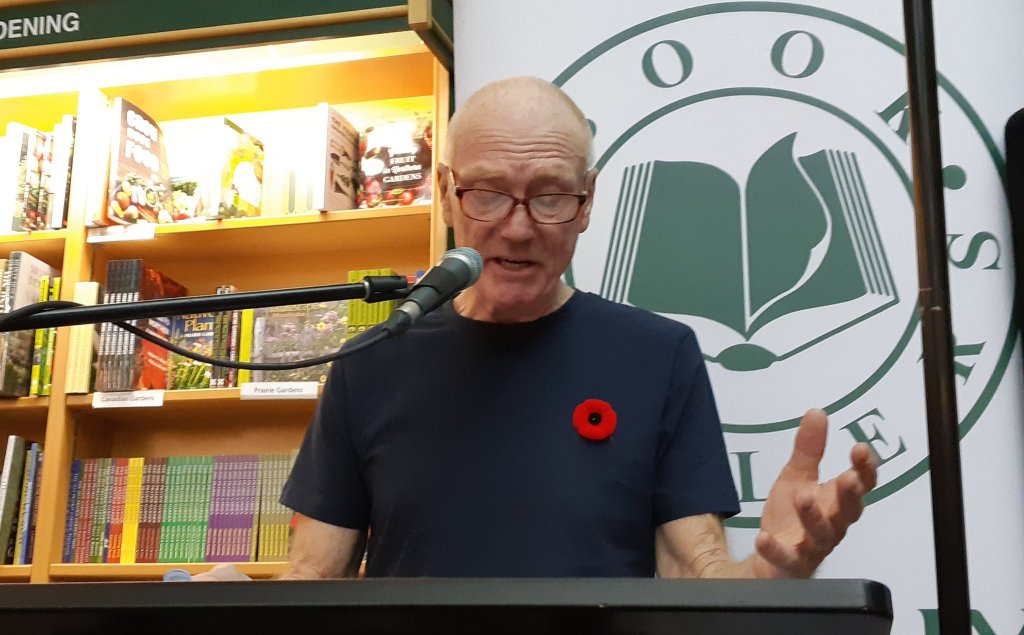
  • Engagement Toews reads at libraries, bookstores, and open mics, and also leads a workshop called “Writing Your Culture”. You can find him on:

So that’s it, then? A writer, a Manitoban. No mention of the rest of my life, including living in Chilliwack, my 47-year marriage to Jan, our kids and grandkids (who will change the world, if they have not already), starting and running a manufacturing business, working in advertising for 20 years and being an active sort… out cursing and getting bruised and exhibiting “warning track power” no matter which sport—a trait that includes a highly selective memory when it comes to skills, courage, and accomplishments. (“Still,” I pout, “at least I always got my uniform dirty.”)

I think AI is right to focus on what it has—I use the internet primarily to promote my writing because, dammmit Jim, that’s just what a writer has to do these days!

I am en grade: AI may suddenly turn on me. Why? Well, I often make fun of the AI that runs my daughter’s refrigerator (“Here’s today’s weather for Zanzibar” it says, after I hack the geo-locator in the settings—hee-hee!). I also throw shade at her snooty 3D printer, and my n’er-do-well regular printer (whom I call “O, Brother, where for art thou?” when it fails to print). These bad relationships may colour AI’s appraisal of me. I am courting AI revenge! I need to let AI feel more seen, be more inclusive to AI, and give them/they/it the benefit of my human capacity to be empathetic, even if they are incapable of emotions. (Does AI get my “O, Brother… ” joke? I think it does, on an intellectual level. Does it laugh? Is AI ticklish? Does AI have a weakness for old Carol Burnett Show vids?)

My other question is, “Has AI read my book? Has AI read all of my published work? Does AI like my Menno-Grit style or are they/is it more inclined towards Sci-fi or Fantasy? (I do get a kind of D&D vibe off of AI, don’t you?)

Anyway, do a search for “AI Overview Your Name” and see what my daughter’s refrigerator thinks of you, you Zanzibarian, you.
Festival Abstract

My attendance at literary meetings is rewarding (and nerve-wracking). From a coffee shop tête-à-tête, a living room get-together, a workshop, or a formal literary festival, I advocate these gatherings despite their introvert-daunting nature. 🙂 The blend of writers, published authors, publishers, readers, editors, librarians, booksellers, critics, literary academics, and educators can take many forms, all invigorating,

Here is a summary of my experiences based on my professional journey and what I can offer as a literary speaker, panelist, or workshop presenter for literary events.

(March 30, 2024) Parable Addendum: “An enterprising individual is on a Trans-Atlantic ocean crossing, heading for Halifax. The ship strikes an iceberg and sinks. The entrepreneur survives by floating atop a wooden grand piano lid and immediately upon being rescued and reaching Canada, opens a grand piano lid floatation device manufacturing company. . . “

What I’m saying is that my experiences are just that: my experiences. I am—like raccoons, cockroaches, and many entrepreneurs—a born survivor. Survival instincts ain’t always pretty and depend on circumstances: what you encounter and the resources you can use to overcome your challenges. As in the story of the piano lid, I’m not advocating you follow my specific path. I’m only saying that I did what I felt was best at the time and in my circumstances. I sought as much, and the best professional assistance I could get. Craft is not everything but it is a huge component. The way I approached my literary career as a writer was—and is—constrained by, among many things, talent, location, my age, time, and financial resources.

(Thanks to writer-friend Doug Hawley for his note reminding me to explain the underlying truths of my “curriculum.”)

Mitchell Toews: A Grass Roots POV

  • Background in advertising and corporate communications. Persuasion, copywriting, ad copy, marcom: a perspective on the differences and the similarities vis à vis creative writing and fiction.
  • Writing practice grounded in Canada, small towns, the prairies, the boreal, and the Canadian Mennonite community.
  • Bootstrap artistic journey: shifting from corporate and marketing communications to creative writing—keeping the good, identifying the irrelevant (and the problematic).
  • Returning to early ambitions to write professionally and facing the difficulties of an “Act II” existence.
  • Overcoming ageism and the bias against older emerging writers in CanLit: staying positive and stoic in a challenging environment and resisting the slide into victimhood.
  • Journeyman’s approach: over 800 submissions to the “slush piles” of literary periodicals, contests, and anthologies. (With over 120 resultant publications.)
  • Self-promotion within the context of the small press and independent (non-agented) landscape within Canadian literature.
  • The importance of independent bookstores, libraries, and museums.
  • The Open Mic for writers: more than just a chance to hang out with musicians.
  • Book launches, readings, panel discussions, and book club author nights.
  • Workshops and critique groups.
  • Working with freelance editors (*see Sidebar), press editors, publishers, and publicists.
  • Working with Writers in Residence.
  • Social Media vs. “Shut up and write.”
  • Acquiring blurbs and reviews.
  • Literary and Arts organizations: Guilds, Unions, Councils.
  • Grant writing. Keep it short.
  • Professional development for the rural writer.
  • Creating a personalized workshop topic: seeing your strength. (Mine is “Writing your Culture.”)
  • Paying it forward: building your allyhood, being an artistic comrade.
  • AI: the dog that bites its owner.
  • Wealth: the unspoken truth.
  • Thoughts on “tarnishment” and the personal authorial voice.

*Sidebar. Early on, I was introduced to a young, male author from England with an impressive resume. We struck a deal and he instructed, mentored, and edited me for two years. I invested over $2000 in our online interactions (about 900 emails!!) and this was a transformational step for me—both the commitment and the results.

The right person and work arrangement are critical; James Mcknight was the appropriate choice for me. After our engagement ended, I extended my reach to study with other instructors and mentors, but James was a true lifesaver in my case.

Mitchell Toews: Proud member of The Writers’ Union of Canada

Characters: What It’s All About

IMAGE: Jackson Pollock at the MoMA, by joansorolla Creative Commons site

“I respond to character-driven material, regardless of its origin. I fall in love with the characters and generally respond to stories featuring ordinary people who succeed in overcoming extraordinary challenges.”Producer Gale Anne Hurd

If I had a mantra while writing Pinching Zwieback, it could have been this.

During the Morden library reading on November 28, an astute reader commented that in a normal short story, the reader can be frustrated because the story ends so soon, unlike a novel where characters receive more development. By using recurrent characters and a narrative arc that goes from beginning to end, much as a novel does, the readers get to know the main characters in PZ quite well. 

These observations are true for readers and I can comment that it’s true for the author too! I learned a lot about these characters from the structure of the storytelling and by “letting them tell the story” as they developed personality and definition during the writing of the book.

My expert editors, including Matt Joudrey, Alana Brooker, Nina McIntyre, and Priyanka Ketkar did a lot to bring these distinct characters out and let them fulfil their roles as individuals in the larger story told by the collection as a whole.

This aspect of writing Pinching Zwieback was one of the most enjoyable—and cathartic—for me as I did an emotional freefall and let my imagination go, using the characters as the vehicle to rewrite life events from my past and explore alternate outcomes.

I didn’t always use the outcomes I imagined, but just the act of creating them allowed me to think more freely about my own history without being bound by what “really” happened. My job as a storyteller benefitted from this exercise, particularly with the help of my expert team of editors.

In addition, I tried to let the characters come alive and to have them think and sound in the genuine way I imagined they would.

[…] I like the rawness of the pure untarnished colloquial voice in the reading. Having something to say is essential to me. That is to say, I’m not impressed with a great volume of rarely used words thrown together to impress the reader with the vast knowledge of the writer on command of English, tricks of writing, ancient history, or the places they’ve travelled.”—An excerpt from an interview by writer, editor, publisher Judith Lawrence in, “Six Questions For…”

“Pinching Zwieback:” Book, Author, Publication Details

Last UPDATE: Nov 4, 2023

Barn: Guide Meridian, Lynden, Wa.—mjt

Author Mitchell Toews

After eight years in creative writing, 120 prose pieces placed in periodicals and anthologies (and over 650 rejections 😊) Mitch is launching his first book, a collection of short fiction published by At Bay Press of Winnipeg.

So who is this guy, Mitchell Toews?

Mitchell James Toews is the great-great-grandson of Mennonite Delegate C.P. Toews from Molotschna, Russia; the grandson of C.F. (“Roy,” “Schusta”) and Rosa Toews of Steinbach; grandson also to former “Jantsieda” (residents from the “other side” of the Red River) Diedrich and Marie Harder of Steinbach; and son of the Steinbach Bakery family: Norman “Chuck” and Jessie Toews. He is married to Janice Kasper of Steinbach and they have two married daughters.

Among his stop-overs and occupations: a year (1973/74) at UVIC in Victoria, two years at U of W in Winnipeg and (much later) a Master’s Certificate in Marketing Communication from York U. Mitch founded—with his father and uncle Earl Taves—and operated a small overhead door manufacturing company. In 1996, the now solely-owned business, Hanover Doors, was sold by Janice and Mitch and Mitch’s advertising and marketing career began. In 2016 after time well-spent with companies like Smith, Neufeld, Jodoin Law (Steinbach), Loewen Windows (Steinbach), Yarrow Sash & Door (Winnipeg), and Lynden Door (Abbotsford), Mitch devoted himself entirely to creative writing—a lifelong and much-delayed passion.

Janice and Mitch live in their 1950 lakeside cabin at Jessica Lake in the Manitoba territory that is part of Treaty 1 & 3 land and home to the Métis Nation, just north of the Fiftieth Parallel in the Winnipeg River basin. Their daughters Megan and Tere live in British Columbia and trips to see the families, particularly grandkids Ty, Hazel, James, and Floyd are as frequent as circumstances permit.

Mitch is an avid windsurfer, rower, and cross-country skier and the lifelong rigours of climbing ladders and swinging hammers, along with baseball, volleyball, basketball, and golf all contributed in past days to the current sorry state of his joints.

Book Synopsis

Pinching Zwieback comprises stories that recount events and conflicts from the “Mennosphere”—inwardly oriented communities that can generate wonderful characters and practical, often beautiful, solutions to life’s confusion. Other times, a solution may be elusive.

Hartplatz is the imaginary home for many of the recurrent characters. (Also Winkler, Aldergrove or fictive places like them—a small town pastiche.) These are rural Canadian junctures where vectors intersect: faith and doubt; pacifism in a world at war; honour and temptation; fervour and absurdity; the temptations of the wide welt, and of course, humour. Often gritty, it’s K-mart fiction or maybe better yet: schmaundtfat fiction. (A Low German glossary is provided!)

“God causes it to rain on Chevs and Fords alike,” as Diedrich, the main character in three* of the 20 stories puts it. It’s in this context that the characters resist, pitting their will against that of their foe—the foe they seek to love.

*Other main characters include Matt Zehen, his mother and father, Hart and Justy Zehen, Matt’s grandmother Rosa, and Matt’s close friend, Lenny Gerbrandt. A family tree provides a guide to the cast for readers.

Where to Purchase Pinching Zwieback

“Pinching Zwieback: Made-up Stories from the Darp” 2023 ISBN 9781998779055 by Mitchell Toews (At Bay Press, Wpg). Publication Date October 24, Release Date November 7, Launch Date Nov 8. Contact us for assistance: check with Mitch or Matt on where to buy and also about how to receive signed copies or for information concerning special situations, author appearances, writing workshops, and more.

Requesting “Pinching Zwieback” by Mitchell Toews (At Bay Press, Wpg) at your favourite bookstore or library will get you a copy. Coming soon to libraries in Kenora, ON and Manitoba locations in Brandon, Lac du Bonnet, Pinawa, Altona, Winkler, and Morden. More to follow.

“Pinching Zwieback” 5″X8″257-page quality paperbacks may be purchased:

From At Bay Press: “Individual orders are placed through our website by adding books to your cart and then checking out with our secure online payment. Orders may also be placed over the phone by calling 204-489-6658 and payment will be taken over the phone. You may send an email with any questions or concerns to atbaypress@gmail.com.”

McNally Robinson Booksellers (Pre-order available) all locations.

The gift shops at both Mennonite Heritage Village (Steinbach) and Mennonite Heritage Museum (Abbotsford).

CommonWord Bookstore and Resource Centre in Winnipeg, MB

Misty River Books in Terrace, BC

Manitoba Made Events & Shop in Lac du Bonnet, MB

Shop in person: Canadian Bookstore Map

Virtually all ONLINE book sources WORLDWIDE including Amazon, Barnes and Noble, Thriftbooks, etc.

Libraries and booksellers in Canada and the U.S. may purchase books from At Bay Press’s distribution partners:

Canada: http://www.litdistco.ca/
U.S.: https://www.casemateipm.com/9781998779055/pinching-zwieback/
Aus/NZ: https://peribo.com.au/

For other countries: Please see https://atbaypress.com/ordering or contact Matt Joudrey atbaypress@gmail.com

Events

https://mitchellaneous.com/2023/10/20/pinching-zwieback-events/

Coming Soon

A first REVIEW of “Pinching Zwieback” by the eminent Canadian author, Poet Laureate, and literary leader, Linda Rogers van Krugel of Victoria will be placed shortly. Several other reviews, from Canada and the U.S., are underway.

Early Praise

“Pinching Zwieback Observations” from Canadian literary notables Zilla Jones, Ralph Friesen, Alanna Rusnack, Armin Wiebe and more.

Follow Mitch & Pinching Zwieback

Follow Mitch’s FaceBook page and this blog (Mitchellaneous.com) for unboring updates, news, and other crumbs and chicken feed as “Pinching Zwieback” struts in wider and wider circles around the coop.

Prosetry 22

Simplicity.

A summer night, where the thunderheads fist-bumped and parted ways, leaving our skies more Prussian blue than ash grey. Mosquitoes too were deported, sent elsewhere to do their whining — we think they all rented tiny jet-skis and rode off across the river.

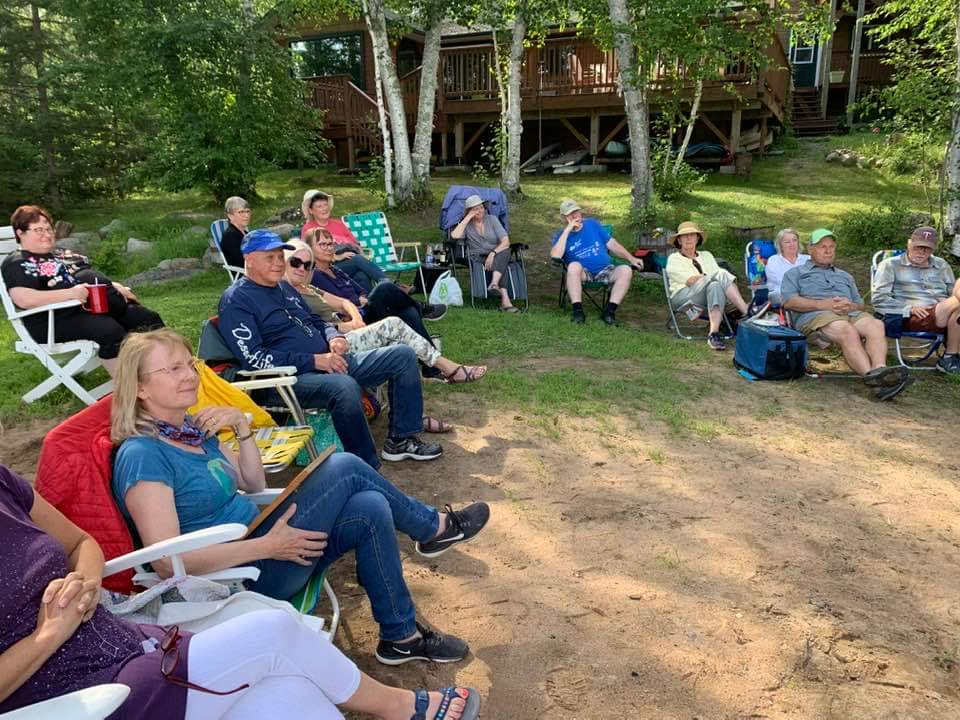
Friends arrived just as the make-shift stage (soon to be returned to its rightful duty as a dock — rather than doc. — segment) was commissioned into service and we chatted and snacked and popped open bottles and cans and congratulated ourselves on being capable of being in such a place… in space and time, on Earth, today.

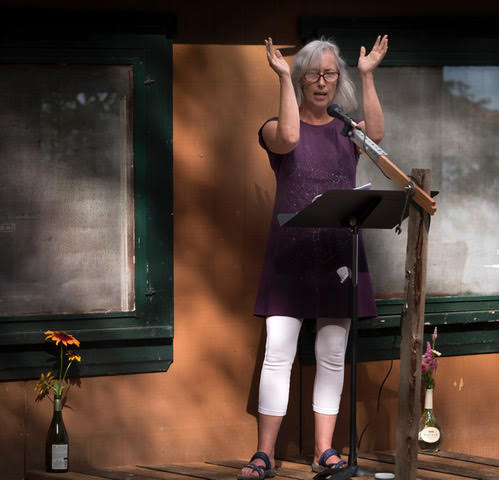
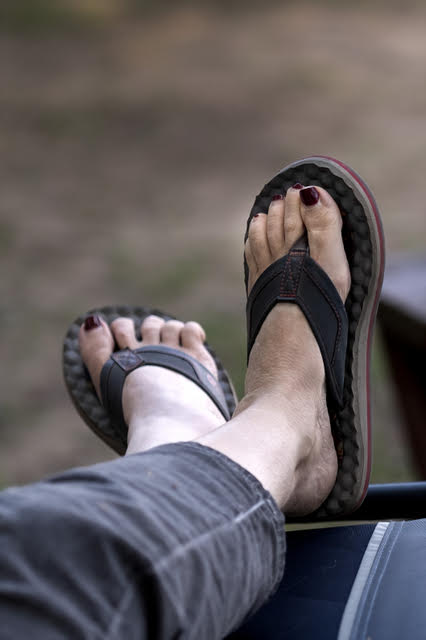
The loaner mic in friend & neighbour Jack Schellenberg’s hand-crafted and skookum-engineered mic stand crackled and away we went, led with panache by author Roger Groening. Knuckleball is Roger’s novel. (The author’s legs appear above, royalty-free; they’re the stems to the right.) He read a recent WIP excerpt that had us reaching for our decades-ago-discarded DuMauriers and l-o-l-ing and giggling through his vivid description of a wry woman tasking a man in a room without solutions.

Next came Leslie Wakeman who brought so much: snacks, wine, a beautiful quilt, handmade cards and her story, “The Goddess Cup.” We were gradually drawn in as her character’s embarrassment grew and our appreciation for Leslie’s deft, humourous-and-so-human touch led us along.

And then it was my sister Marnie Fardoe’s turn with a reading of a diary entry she had repurposed for us, for this perfect evening. She called herself a novice but we knew better. In addition, we got the family discount as Marnie gave us a quiet and moving performance of our sister Char Toews’ powerful poem, “Schedules are subject to change without notice”

[...] If the weather's that shitty it's kind of iffy
You're better off in the air or on the land

Or living or dead, which is what my Dad did
And me with a number of things planned

Then home in May, cutting the grass that first day
Mowing and crying and thinking about worms and their dirt [...]

Vid by Bonnie Friesen: https://www.facebook.com/580948274/videos/800154487823298/
.

The perfect lead-in to Wes Friesen and his soulful playing and singing. Two beautiful Leonard Cohen songs following by a fascist-killing presentation of Deportee/Plane Wreck at Los Gatos, by Woody Guthrie.

Vid by Bonnie Friesen: https://www.facebook.com/bonnie.friesen.9/videos/1403462673497989/

.

More poetry, from Winnipeg poetess Phyllis Cherrett who wowed and dazzled, showing us her calm control over word and emotion, ending with the perfectly-suited dent de lion

Phyllis Cherrett also gave a truthfully written acknowledgement of PLACE.

I offered a pair of flash fictions, “New War — Old Technology” and “Luck!”, bookending our great friend Christiane Neufeld’s spelky delivery of poet Ceinwen Haydon’s Gooseberry, a repeat-performance from Prosetry 2019.

It should be noted that Chris’ hub Hans Neufeld (aka John E. Neufeld) was present but chose not to present this year. Hans was, without doubt, the most prolific writer on the property at Prosetry 22, him being the daily author of THE MEANDERER http://themeanderer.ca/: a most profound and enjoyable gathering place, enjoyed by many online.

Two best-selling and truly masterful authors closed out the evening. MaryLou Driedger (Lost on the Prairie) offered us the first chapter of her WIP SEQUEL novel, set in 1936.

.

Writer, memoirist, author, instructor and warrior-woman Donna Besel did not disappoint, giving us a thematic reading about a boathouse construction job set at nearby Brereton Lake. The story was a piece from her hit collection of short stories, “Lessons from a Nude Man.”

MaryLou Driedger as Gustave Flaubert would have seen her https://maryloudriedger.com/
Donna Besel https://www.mcnallyrobinson.com/9781926710303/donna-besel/lessons-from-a-nude-man

Through all of this, photographer Phil Hossack was doing his quiet and unobtrusive professional best, circulating among us, taking pictures that caught mood and feeling as much as light and dark.

Phil Hossack https://philhossackphoto.ca/workshops/

Cheers to local artists Janice Toews, Gale Bonin, and Allison Rink whose brushwork filled the SheShed with brightness and colour.

NEXT YEAR: Book the day, slot it in and make it sacrosanct… we want you here to read and listen, to watch the clouds part, to smell the woodsmoke and taste the wine, to read, to hear and experience. We’ll make it more of an afternoon event — we’ll start at 1 PM and make it possible to leave without rushing before the sun goes down.

For those who stay, maybe we can set the boreal ringing with this unforgettable folksong refrain:

Wes Friesen

…Goodbye to my juan, goodbye, rosalita,

Adios mis amigos, jesus y maria;

You won’t have your names when you ride the big airplane,

All they will call you will be “deportees”

🎶
Janice Toews
Showtime minus 90 minutes
2017 U.S. Inauguration crowd
Ruth & Roger Groening
2019 Prosetry (July 20)
MaryLou Driedger reading at Prosetry 2019
Yet more Toews
Leslie, Marnie, Bonnie
SEE YOU NEXT YEAR! “Daj Boże!”
Janice and I reside in the boreal forest just north of the Fiftieth latitude in eastern Manitoba on Treaty 1 and 3 lands. Our property is situated on Métis land: Anishinabe Waki ᐊᓂᔑᓈᐯᐗᑭ  http://www.anishinabek.ca/ 

The Morning After Nothing

Image: Cover, “Strange Weather” Becky Hagenston Press 53

Most mornings… in fact, most mornings as long as I can remember, I wake up happy. It’s a trait I would not trade. I am a cheerful morning person with a positive outlook. However, I must admit that some mornings are more of a poutlook. Soo gohne daut; so goes it.

Pouty mornings I sometimes call, “The Morning After Nothing.” A kind of bitter hollowness, apropos of nothing, with nothing left to lose, and nothing is more true than that you still have to get up and make the bed and get going. There is no cancel button for this illness.

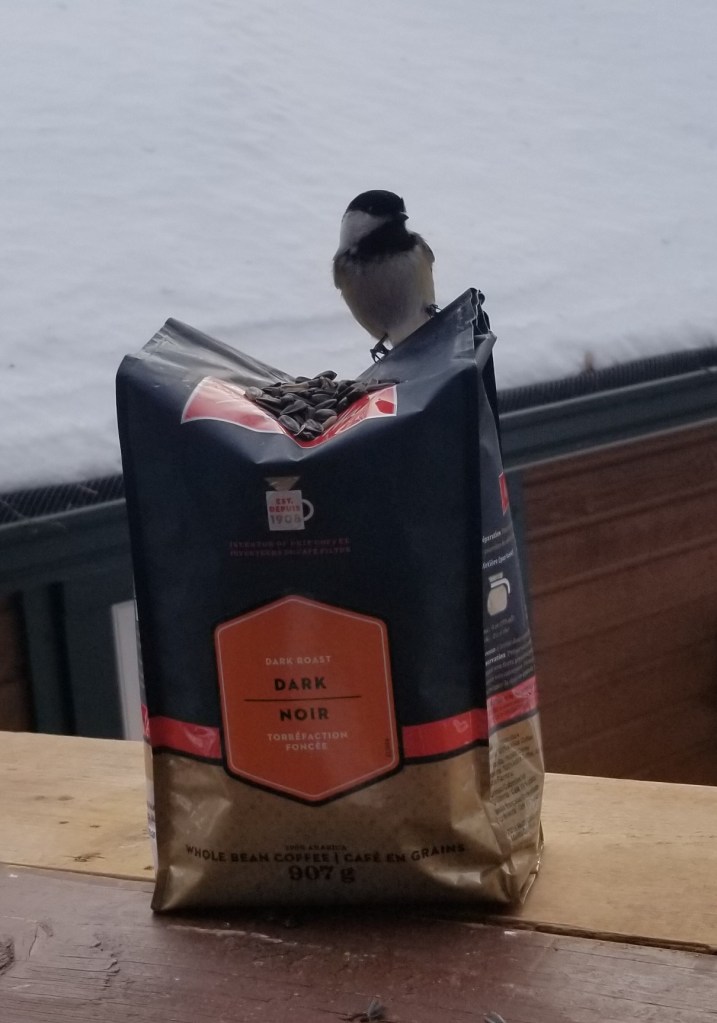
“Cancel” starts with a C. What else starts with C are the things that conquer the dog-breath stench of waking up on a Morning After Nothing: coffee, chickadees, and creativity. My go-to fixes, respectively: Medium C, Little Cs, and Big C.

Coffee and the antics of our neighbour chickadee pals are self-explanatory cheer-bringers. Creativity is the third great remedy because it takes you away from the grumbly place and puts you far on the other side of Nothing. This last C takes you straight to Elsewhere: rapping at a keyboard, pushing wood through a saw, trying to learn a new move on the windsurfer. Painting something for a friend or for one of our pog grandkids. (That’s my wife Janice’s usual way out.)

“Dee-dee-dee!”

Today, I found the coffee less than stimulating and the chickadees were their usual acrobatic and fearless 15-gram selves but I still had the look of the guy at the back of the longest line at the grocery store… the guy with the dripping container of ice cream.

But, C-ing is believing, as the saying goes, so I moved on to Creativity: “C’mon Creativity, papa needs a new toque!” I wound up considering a difficult short story I’ve been working on for a long time. It’s an outside-your-comfort-zone story, with nary a Mennonite in sight. The story is dark and harsh, and carries a gut-shot of implicit violence. Well, if you’re gonna write about toxic masculinity, I guess you gotta break a couple of… Uhh, scratch that—sounds too glib, and not a little.

Cal Rhinehart. Big and mean. Damaged goods and all about the booze and the dope. Everyone else’s fault but his. Maybe his dad beat the shit out of him or maybe one fight too many or maybe he just had bad chemicals in his head; got dealt a rotten hand, Fiona thought, sad and furious and terrified all at once. Maybe understanding too well. Maybe even feeling a sort of mongrel kinship. But she shook that thought away. Positive thinking, Doctor Tracewski always says.

—Main Character, Fiona Hewel, in “Four Baths, Great View, Bank Owned Mountain Home”

This is the story that started up in my head after reading an incredible story by the super-pog Becky Hagenston, “Midnight, Licorice, Shadow.” I was determined to jump outside of my skin—that old, wrinkly bag of derma—and take on the many risks attendant for an older man who writes a story that contains difficult passages; violence both emotional and physical and violence against both men and women.

Violence is real. Violence towards women happens. Violence is at the heart of the topic I wanted to broach, and yet, how could I, “go there?”

Would it be best to just bail-out? Let someone else handle this topic? Did you just shout, “Hell yeah?” I understand, and yet, I have an indelible memory; something that happened to me, in real life, in the real world on the #1 Highway just west of the Bow Flats, at the feet of Big Sister, Middle Sister, and Little Sister.

“What in the world? Look at that!” Joe said, straightening his back and shifting his attention to the road ahead. A red SUV accelerated along the merge lane of an intersection. Behind the speeding car, a tattooed, bareback man ran in a dead sprint.

“Is he chasing them?” Fiona said.

Tall and broad shouldered, the man had an athletic build and long dirty blonde hair. The white drawstrings of his grey sweatpants fluttered and snapped behind him like kite tails as he ran after the vehicle. His bare feet pounded on the gravel strewn pavement.

The bizarre drama played on and Joe slowed the car as they closed on it. A white, flatdeck truck, “Rhinehart Well Drilling” in bold letters along the side, sat parked at a cockeyed angle near the intersection—driver door open, blinker on.

The running man slowed and hopped a few strides on one leg, then staggered to a lame halt. He bent at the waist to inspect his foot. The SUV sped away on the highway.

—”Four Baths, Great View, Bank Owned Mountain Home”

As you can see, I choose to go ahead with the story. The early iterations were the cause of some “Morning after Nothing” feels, but “vann aul, dann aul,” as is said in the Plaut: “if already, then already,” or “if you’re going to do it, go all the way!”

So I did.

Ugh. The result was more than one editor, I fear, not seeing the Red Badge of Courage in my choices, but instead feeling triggered and put upon. More than one editor who might have stroked me off a list or two. For good, or longer.

Still, this the way of it, is it not? If there’s no risk, then I will stay forever in the safe-feeling place—potentially a moribund state for my writing—where I just write happy, little stories about wise Mennonites. Where grey-bearded Opas nod knowingly and open their mouths to release a dazzling, atmospheric river of axiomatic truths and cornpone savviness. Savvy like, “vann aul, dann aul.”

But… many rewrites and tough critiques later, I feel as though the story has evolved and now comes closer to the way I want it. Consider: I am a male writer, someone who grew up in times and places where even the worst acts of wanton male violence were sometimes forgiven—forgiven (or given up) even by those who suffered the violence. Forgiven by those whose job is was to police this violence: pulpit, patrol car, politician. I lived this condition, directly and indirectly. Is that not a story worth considering? Is it not important to write from a point of view that—without absolution and without friendly framing—tells a human story in all of its unsettling truth?

I vote yes.

There’s a part near the end of “Midnight, Licorice, Shadow” where the author describes something being thrown into a dumpster, “with a thud,” and your heart sinks, and you feel a bit sick to your stomach. Without that passage the story is still wonderfully strong, but when you read it… when you read, “with a thud,” you are moved in a way that will last.

That! That result is the big prize, the one worth taking some risks to attain. It’s how a story can make a difference. It’s certainly one way to beat the Morning After Nothing blues!

Besides, as some wily Mennonite Oma must have said, to some future author on some far shore: “the best way to catch fish is to keep fishing!”

So I will.

Jus’ Noodlin’

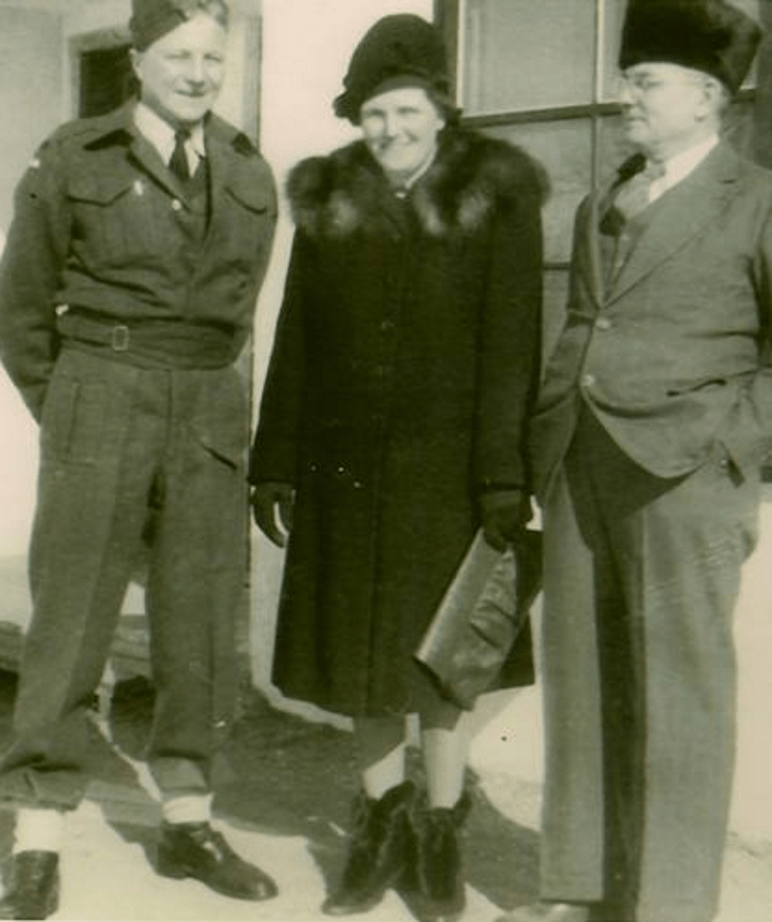
Image: My grandparents and my uncle Ken in Steinbach, MB during the 40s; Mennonites hiding in plain sight.

As I idle down the back lanes of my brain’s daydream centre, procrastinating before my session on the rowing machine, I imagine what the logline might look like for a collection of my short stories. Note that I’m idling along the back lanes—where windmills and cobwebs exist in perfect harmony—on a brand-new, electric Ural sidecar motorcycle. Hey… if you’re gonna daydream, go carbon-friendly or go home!

Mitchell Toews’ collection of insightful short stories, “Pinching Zwieback – Prairie Stories,” reveals the confines of small-town life in a Mennonite community. Vivid characters demand to be heard and recognized. The book’s mixture of the iconoclastic and the nostalgic delivers reality through the little-seen lens of an outsider—but one with a deep insider pedigree. Toews’ heartfelt expression of lives lived captures the conflict and the contradictions that are unavoidable in these insular Jemeend*.

Pulling apart the clockwork of the axiomatic Mennonite profile, Toews probes for what is common to all and what is beautiful and what is problematic within faith, culture, domestic life, commerce, and interaction with the wide world beyond.

“Out of patience, I stood up and began angrily shouting down the ridiculous, muddled stereotypes coming from the lecturer in my ‘Introduction to Geography’ course. I was at the University of Victoria in 1974 and we were discussing Canadian Mennonites. At almost the same time a tall, blonde woman from the Interior rose to protest, and also another; a young Albertan from La Crete who was on the men’s J-V basketball team. All of us disavowed the reckless, almost comical blending of Amish, Mennonite, and Hutterite tropes. At that moment, I saw myself and my ‘brethren’ in the way others must and furthermore, I saw the confusion within our own ranks.”

Mitchell Toews

__

*Or Gemeinde: Communities or congregations

Place and Time

foc flannery place and time quote only

Ah, eternity.

My stories—and everyone else’s—spring from life. Life lived, life observed, life imagined. Life reconstructed.

A vital part of each story—and each life—is place and time. Truths from one era or one location or one moment in a given journey alter and define the future.

Driven by my own curiosity, here is a roll-call of Place, Time, and basic protagonist context from my stories:

i — “Encountered on the Shore” A university student makes an unsettling discovery in downtown Winnipeg, in the fall of 1973.

ii — “A Vile Insinuation” During the summer following, the main character from “Encountered on the Shore” considers fate and blessings at a baseball tournament in Vita, Manitoba, near the US border.

iii — “Without Reason” Now retired, the MC from “Encountered” and “Vile”, is diagnosed with cancer and he considers his plight and that of others like him. Set in his small Mennonite prairie hometown, current day.

i — “Zero to Sixty” A retired man is attacked, near Christmas in Chilliwack, BC, current day.

ii — “The Margin of the River” and the audio except, “Wide Winter River” The MC from “Zero to Sixty” considers what happened the day before and sees first hand the inequity and sorrow that is built into life. All life.

“The Rothmans Job” An odd couple set out on a dubious nighttime caper during a fierce winter blizzard in Winnipeg, during the 1970s.

“South of Oromocto Depths” A teenage boy gets into a foolish skirmish with his father on the Victoria Day long weekend in 1971 New Brunswick.

 “Nothing to Lose” A former hockey player looks back on his life and his regrets in rural Manitoba during the dusty heat of summer, in the Sixties.

“Heavy Artillery” A young baseball fan in 1962 becomes embroiled in adult suspicion and prejudice in a small prairie town — predominantly Mennonite. (The imaginary, recurrent town of “Hartplatz, Manitoba”.)

“A Fisherman’s Story” In 1970, on the Mexican Pacific coast, an elderly woman and her young daughter are dealt an unfair hand. (P.S. — the prequel and the sequel to this story appear in the trilogy “The Bottom of the Sky”. See link below.)

“Winter Eve in Walker Creek Park” A trio of females on a wintery night in St. Catherines, Ontario, near Christmastime, current day.

“Breezy and the Six-Pack Sneaker” A rainy, beery night in Hartplatz in the Sixties is the scene for a tangled yarn of deception.

“The Fifty Dollar Sewing Machine” A straight-laced Mennonite husband and wife take on danger in a dark Winnipeg alley in 1934. (Rerun on Literally Stories, Feb 17.)

“Frozen Tag” A man encounters a strange reprise from his past (at the Minneapolis Athletic Club in 1980) in the Chilliwack Leisure Centre, current day.

“The Business of Saving Souls”  A youth pastor in the fictitious city of Tribune, in the northern US Midwest meets challenges in the sanctuary of a gleaming megachurch, current day.

“The Preacher and His Wife” Palace intrigue, Harplatz style, throws a family into an untoward uproar in the 1960s.

“I am Otter” A shunned congregant discusses culture, power, and enfranchisement with a stranger near a lake in Manitoba, current day.

“The Beefeater and the Donnybrook”  A mild-mannered Halifax, NS tourist is mistaken and mistook in drizzly London, current day.

“The Log Boom” Poignant points of view — a father, son, and grandfather in the Lower Mainland of BC, current day.

“The Peacemongers” War, bullies and knuckle justice from the perspective of a boy in Hartplatz, circa 1965.

“Fairchild, McGowan and the Detective” Recalling employment, both the good and the bad in Hartplatz and Winnipeg, 1970-80.

“Graperoo” A piece of Graperoo bubblegum experiences the four seasons in rural Manitoba in the Sixties.

“So Are They All” It’s September 1961 and a young boy receives an education in loyalty and courage in his grandmother’s country raspberry patch.

“The Seven Songs” A middle-aged Canadian man meets a local contemporary at a resort in Mexico, current day.

“Fall From Grace” A boy gets stuck in a fraught adventure and learns about his father through it in the heat of a prairie summer in Hartplatz, 1963.

“Away Game” A 50-something man meets with an older family member at the side of a dreamy, summery lake in Manitoba’s boreal forest, current day.

“In the Dim Light Beyond the Fence” The reader travels back into Canadian small-town hardball with the MC, reliving a fateful doubleheader from the Fifties.

“City Lights” A small-town “up-and-comer” gets in over his head in Toronto, current day.

“Groota Pieter” Spring softball in small-town Mennonite Manitoba is described, from the Sixties to current day.

“Sweet Caporal at Dawn” On a moody Manitoba morning near a spring lake, a youngster and an older confederate fish for pickerel during the mid-Seventies.

“The Bottom of the Sky” A trilogy that follows a “pinche” cabin-boy and the ship’s captain on a fishing charter boat from 1955 Acapulco to the future in a fishing village in the Seventies. (P.S. – If you’re inclined, give this story a read and tell me if you think it could be adapted into a screenplay. I see it in flickering snatches of film in my head and just wonder if that occurs to anyone else. If you’re a screenwriter or in film, I’d love an opinion — tough love included. —mjt)

“Shade Tree Haven” An adult remembers more than he cares to as he thinks back to summers at a favourite swimming pool in the early 1960s.

“The Narrowing” A sensitive boy and his straight-ahead grandfather go through a harrowing experience in the Manitoba wilds, current day. An important secondary character in Abbotsford, BC is part of the story.

“The Phage Match” In a surreal radio broadcast from somewhere in Canada, current day, the evils of drug addiction are the backdrop for some strange characters.

“Died Rich” A high school freshman in a frigid southern Manitoba winter in 1961 struggles to endure.

“Concealment” A fledgling Manitoba business traveller gets more than he expects on a springtime trip to the Atlanta Zoo in the 1980s.

“Mulholland & Hardbar” (Novel WIP) A troubled youth experiences the four seasons in the Canadian Shield: love, friendship, deceit, and violence. 1972.

Drama: From the Greek, “to do” or “to act”

The Bottom of the Sky

Hi everyone!

I have a new story.

It is a prequel to the story that first appeared in Rhubarb Magazine, “A Fisherman’s Story”. This piece becomes a Part 1 to that original tale of a family on the shores of the Pacific Ocean.

Part 1 is in 1955, in Acapulco and tells of one of the original characters, when he was a younger man, captaining a fishing charter boat. The original piece is Part 2 and is told primarily through the experience of the wife; the mujere.

I have re-named it, “The Bottom of the Sky” , comprising Part 1 Acapulco 1955 and Part 2 Puerta Vallarta 1975.

Here are a few excerpts:

Avelino walked the tourist beaches. His officina, as he liked to joke with the Americans who lay like white cordwood in neat rows, toes pointing at the sun. He had a photo album with pictures of the azul boat; fish strung on the scale at the Acapulco dock; smiling American faces, sun-tanned with movie-star sunglasses and drinks in hand. He was charming and good looking and he hooked many gringo fish.

[Snip]

After a quiet half-hour of trolling they came to a feeding fish. In the split second before it happened, Jose could feel the strike. Then the rod bucked in the holder and the line peeled out in a persistent zazzzzz sound like fingernails on nylon. The pinche yelled and the woman named Angel clapped her hands, her red fingernails looking like spattered blood against the bright horizon.

[Snip]

“Senor Bart! Por favor,” Jose strode rearward with the rod harness, its buckles jingling, passing it to the large man. Then he hurried to the transom where the fishing line danced and swung like a kite tail above the bubbles in the wake of the boat.

[Snip]

The boat rocked in silence at the wharf, next to the scales. Jose sat on the dock staring down into the dirty water. The American had shouted something, cursing as he climbed into a taxi with the women. Doris stared at Jose from the car, her eyes dark and hateful – not the fairy blue they were when she reached over and touched his arm with hers.

[Snip]

YOU KNOW HOW IT IS, RIGHT? You create something that you feel good about – it’s honest, or you believe it to be so. You love it. Shitface drunk love. Then you slowly get to know it – you see it age like a child – and you recognize flaws that you were earlier willing to ignore. You work on it over and over until it is the best you can do; things become stale and the edits you make just become a false shuffle of the deck – nothing really changes.

Then a month goes by (or six) and you read it again. You see things and maybe after a sleep – waking up at three A.M. – you figure out what to do.

And then you love it again the same way it was when it was born, except maybe it’s a more mature love – maybe you accept it in a way you could not before, including the things that you could still change, but, you don’t. The story, like the characters in it, is partly good and partly bad – flawed but capable of splendor.

Blah-blah-blah. 🙂

I am a proud father today and maybe this will find a publication home. I’ll send it to a few “early readers” in the meantime and will report it here if it does get picked up.

Another day in the life — I better get down to the beach before my wife becomes certain that I have lost my mind.

allfornow – mitch

Copyright Mitchell Toews ©2017


Am I a Writer?

FRIENDS, THAT IS NOT my butt in the image above. It is one more famous than mine will ever be. It belongs to a writer who, like me, prefers to write standing up.

He is a writer – no dispute there.

In my case – it is more fudgy. See…when people ask what I do, I SOMETIMES say *it*. That is, I reply, “I’m a writer.” But I tend to say it quietly. With dissonant caveats – “Not making a damn cent doin’ it tho’, har-har…”. You know. Kinda sneakin’ up on it. Like when someone says, “Are you quitting smoking?” and you answer, “Trying to!” It’s a yes, with built-in wiggle room.

So, let’s go to the Tale of the Tape as Cossell used to say before a big fight:

Writing for how long?  

Well, now. Let’s define that a bit more: writing to a deadline + writing for public consumption. In those bounds, since 1997. Mostly damnable propaganda for my Mennonite employers along the way:

“Why close your jacket with BUTTONS when HOOKS are so much better? See us today for Hiebert’s Handy Hooks!”

I have been writing FICTION on the other hand – for about the last four years. Early in 2016, I achieved a kind of orbital altitude — since that time I have managed to write every day, several hours a day — between two and six hours. Mostly in the morning.

Training? 

The weak link for me. Besides a relentless English prof at the University of Victoria – complete with a proper, tweedy London accent – I have little formal training. My BA in Sociology and a certificate in Marketing from Schulich do not qualify me. I live at the far end of the wild woods and so I have neither a nearby course to take or a group to join. Otters and pine grosbeaks do what they can for me, but I am a Googling fool, on the shores of Jessica Lake, where modifiers dangle and MCs are MCs.

How much have you produced?

Again, some definition – like Papa’s shapely calf muscle. Without adding bulge via photoshop or any other form of exaggeration, I have written 100,000 words in 2016.

Blog: Core page content plus around 50 posts. The posts run from 200 to 1000 words apiece. Maybe 10,000 words in total.

Short Fiction: 30,700 words unpublished…36,000 published. Many – oh so many – rewrites and editing scans.

Novella: 16,000 words.

Paid Content: Propaganda and “the truth with attitude” for employers – 5000 words or so.

Milestones?

Using Duotrope and Submittable, I reckon I have submitted about 120 times or so. I have had 16 stories accepted and have had two other stories find success in contests.

I submit to big, well-known print journals – mostly Canadian. They have so far (almost) uniformly rejected my work. I also send stories to smaller print/online reviews; to online-only literary ezines and literary sites; and to writers’ groups and publishers that produce journals or contests. I have 18 unpublished short stories that I am sending out as slush pile fodder as well as my sci-fi thriller novella, “Tafelberg”, which will receive a rigorous adverb-ectomy this winter. Three new stories near completion.

I am actively seeking chapbook and anthology collections for my published works.

A few of the bigger journals to whom I have submitted my shabby shorts have offered sympathetic replies of the, “don’t give up” variety. Sometimes these are genuine. Other times they are intended to cajole me into shelling out another $15 for their next “opportunity for new Canadian voices”. Yeah, right. More like, “so I can buy another jar of beard wax, you hopeless bottom-feeder!”

Either way, I usually do shell out, so next time see you see a youngish MFA with a fine, shiny beard or a new plaid shirt — think of me, brethren. (To be accurate, my observation is that there seems to be far more female readers and editors, than male. Furthermore, literary journals do not appear to be a get rich quick scheme. So, respect; I’m happy to shell out a little, here and there.)

Anyway, to answer the question, after adding it all up, I`m gonna say yes. I`m a writer.

Now who wants to fight me?

allfornow – Mitch

IMAGE — Hemingway: “Damn fine legs for a dead guy.”