Not a diaspora, not a forced march — just a subtle shift.
The new site provides me with a single platform to share my work and, in 2026, to host my debut novel and any subsequent projects. Everything is here: links to buy books or read published stories, a calendar of events, reviews, and more.
Thanks for reading. I’ll keep posting, and I hope you’ll keep stopping by. As before, my big mouth snookery pairs well with caffeine and is best taken with a grain of salt.
Quiet writing in a noisy era
Please feel free to share this post! I welcome all comments.
Minus the scuttling of rats and absent Blues Traveler, Joni Mitchell, George Carlin, Hettie Jones, and the Reverend Bob Dylan, Steinbach’s The Public Brewhouse and Gallery did a strong impression of one of the halcyon NYC music-drinks-spoken word shrines of the Sixties, Mennist style. https://thepublicbrewhouseandgallery.ca/
I felt during this evening the “crackle of the universe,” to quote William Burroughs, who—if he was a Mennonite, wasn’t very good at it. Or was maybe extremely good at it. Opinions vary. (He prooooooobably was not a Mennonite. Possibly a Lutheran.)
Mennonites were on tap because it was a FUNDRAISER for the Mennonite Heritage Village Museum, arranged by departing executive Nathan Dyck. A fine vocalist, as it turns out—no great surprise as so many Mennonites are good singers. It’s true, scientific, even. Ask any CSNY (Cornie Stoesz or Neufeld, Yasch). https://mennoniteheritagevillage.com/
Literati Erin Koop Unger and Andrew Unger led off with a travelogue deep dive into the Mennonite enclave that was the Vistula Delta in northern Poland. Their visit to the region generated a fascinating study in Mennonite history from the time when many Anabaptists were “encouraged” to leave the Lowlands of western Europe and found a home in G’dansk, a place of flood and relative religious tolerance. https://www.mennotoba.com/https://andrewunger.com/
Paul Bergman entertained with music in two rhythmic, jazzy, silky sets that offset the historical mood and gave us some stardust for our beer. https://paulbergmanmusic.com/
I chimed in with some historical factoids from Ralph Friesen’s “Prosperity Ever Depression Never” and other other pub-style fare. I told two extemporaneous stories about personal experiences at the Tourist Hotel, but I think those went unrecorded. Here’s my written text:
I’ll begin by giving you some historical context for the Tourist Hotel, and its alehouse, the likes of which first began in Roman Britain, and according to Wikipedia, one of the most longstanding of which is “Sean’s Bar, in the medieval town of Athlone in the Republic of Ireland… the oldest pub in Europe, dating back to 900 AD.”
More recently, here’s a reading from “Prosperity Ever Depression Never” by Ralph Friesen, Pages 49-50:
[…] (“On Main Street, next to Abraham A. Toews Five Cents to One Dollar store) was the Steinbach Hotel. The hotel, beer parlour included, was owned and operated by Henry Coote, who grew up on a Mennonite farm as one of thousands of British “home children” sent to Canada because their families were too poor to care for them. Immediately next door was another hotel, the Tourist Hotel, built in 1927 by the Peter B. Peters family… descendants of Jacob Peters who had led the Bergthal Colony Mennonites in the 1874 immigration. In 1931… the Peters family bought (Coote’s Steinbach) hotel… running both the Tourist and the Steinbach hotels… In 1934… the Peters family collaborated with Hugh McDiarmid, a retired RCMP officer to apply for their (contentious beer parlour) licence, and this strategy worked…Steinbach remained “wet” for… decades.”
And from Barry Dyck, a Retired Executive Director of the Mennonite Heritage Village, in a mySteinbach article titled, “A Look Back at Steinbach’s former Tourist Hotel:
[…] “The Tourist Hotel… (did business) on Steinbach’s Main Street from 1928 to 1976… In 1930 it expanded to include a dining room and a “men-only” Beer Parlour. The parlour was not without controversy, however, and efforts were made to close it. In 1950 Steinbach voted for the prohibition of liquor sales. However, a separate vote of 398 to 214 allowed the Tourist Hotel beer parlour to stay open under a grandfather clause.”
And now, my own story about spending a night at the Tourist Hotel. “So, in January of 1969, when I was fourteen… ”
~ ~ ~
Next, to bring you to the wide world of bars and beer and drinking establishments—maybe some a bit different than The Public and the Tourist Hotel—here’s a fictional story about another public house. Imagine a saloon in the Irish village of Nobber (where one of my sons-in-law was born), a dimly-lit place dedicated to the sale and consumption of liquor, where they might have a pool table or a jukebox (perhaps playing “Mama Told Me Not to Come” by Randy Newman) and maybe some pickled eggs in a large jar made unappetizing by the presence of indistinct organic flotsam suspended in the yellowed vinegar… as if someone shook out a dusty rag into it. We enter the establishment near closing time when the barkeep and three male customers are the only occupants... (pensive music in background)
Photo: Erin Koop Unger
One Night at Keogan’s
“If you drinks in this bar, you buys me a pint. Or else.”
I’ve removed the text with the hope that I can sell the story and have it appear somewhere else.
~ ~ ~
Keogan’s Bar is a place you may have visited or might want to, just for the experience. In the case of the Tourist Hotel Beverage Room, you could have visited, as long as you were not a woman. Neither could women tend bar there—of the hundreds of thousands of watery draft beer pulled in Steinbach, none of them were drawn by a female hand. Steinbach was not the only one to have that gender bias; it was relatively common in places as far-removed as Warman, Sask., Winnipeg Beach, and The Terminal Club in Vancouver. In the Sixties, a small glass of beer was—by Manitoba Provincial law—15-cents in a men’s only beer parlour and 25-cents in a beverage room that served women. In 1978, I had a beer with a female co-worker at a soccer-mad tavern in Toronto where women were admitted but not served. This was explained to us and I bought two draft and gave her one of them, as our waiter suggested. (Apparently, gifts were allowed.) So in keeping with these thoughts, and to put you in a fighting mood before I tell my next story, here is a poem by Danielle Coffyn:
If Adam Picked The Apple
There would be a parade, a celebration, a holiday to commemorate the day he sought enlightenment. We would not speak of temptation by the devil, rather, we would laud Adam’s curiosity, his desire for adventure and knowing. We would feast on apple-inspired fare: tortes, chutneys, pancakes, pies. There would be plays and songs reenacting his courage.
But it was Eve who grew bored, weary of her captivity in Eden. And a woman’s desire for freedom is rarely a cause for celebration.
~ ~ ~
Finally, here’s a story I also experienced first-hand, which might be called Können Frauen hier kein Bier kaufen???
Mitchell Toews is a Manitoba-based fiction writer whose debut short story collection, Pinching Zwieback, was published in October 2023:
Background Toews grew up in Steinbach, Manitoba, in his parents’ Mennonite bakery. He’s been published in over 125 literary journals and anthologies, and has been nominated for a Pushcart Prize four times. He’s also been a finalist in several major contests and prizes.
Pinching Zwieback Toews’s debut collection is a blend of memory, fable, and trauma that explores life experiences in the fictional Mennonite prairie town of “Hartplatz”. The book has been well-reviewed, appeared on several local bestseller lists, and is being discussed in book clubs.
Other work Toews is currently working on a second collection of short stories and a novel. He’s also collaborating with Phil Hossack on an ekphrastic prose/photographic art book.
Engagement Toews reads at libraries, bookstores, and open mics, and also leads a workshop called “Writing Your Culture”. You can find him on:
Mitchellaneous.com: His blog for updates, news, and other information
So that’s it, then? A writer, a Manitoban. No mention of the rest of my life, including living in Chilliwack, my 47-year marriage to Jan, our kids and grandkids (who will change the world, if they have not already), starting and running a manufacturing business, working in advertising for 20 years and being an active sort… out cursing and getting bruised and exhibiting “warning track power” no matter which sport—a trait that includes a highly selective memory when it comes to skills, courage, and accomplishments. (“Still,” I pout, “at least I always got my uniform dirty.”)
I think AI is right to focus on what it has—I use the internet primarily to promote my writing because, dammmit Jim, that’s just what a writer has to do these days!
I am en grade: AI may suddenly turn on me. Why? Well, I often make fun of the AI that runs my daughter’s refrigerator (“Here’s today’s weather for Zanzibar” it says, after I hack the geo-locator in the settings—hee-hee!). I also throw shade at her snooty 3D printer, and my n’er-do-well regular printer (whom I call “O, Brother, where for art thou?” when it fails to print). These bad relationships may colour AI’s appraisal of me. I am courting AI revenge! I need to let AI feel more seen, be more inclusive to AI, and give them/they/it the benefit of my human capacity to be empathetic, even if they are incapable of emotions. (Does AI get my “O, Brother… ” joke? I think it does, on an intellectual level. Does it laugh? Is AI ticklish? Does AI have a weakness for old Carol Burnett Show vids?)
My other question is, “Has AI read my book? Has AI read all of my published work? Does AI like my Menno-Grit style or are they/is it more inclined towards Sci-fi or Fantasy? (I do get a kind of D&D vibe off of AI, don’t you?)
Anyway, do a search for “AI Overview Your Name” and see what my daughter’s refrigerator thinks of you, you Zanzibarian, you.
Please feel free to share this post! I welcome all comments.
My attendance at literary meetings is rewarding (and nerve-wracking). From a coffee shop tête-à-tête, a living room get-together, a workshop, or a formal literary festival, I advocate these gatherings despite their introvert-daunting nature. 🙂 The blend of writers, published authors, publishers, readers, editors, librarians, booksellers, critics, literary academics, and educators can take many forms, all invigorating,
Here is a summary of my experiences based on my professional journey and what I can offer as a literary speaker, panelist, or workshop presenter for literary events.
(March 30, 2024) Parable Addendum: “An enterprising individual is on a Trans-Atlantic ocean crossing, heading for Halifax. The ship strikes an iceberg and sinks. The entrepreneur survives by floating atop a wooden grand piano lid and immediately upon being rescued and reaching Canada, opens a grand piano lid floatation device manufacturing company. . . “
What I’m saying is that my experiences are just that: my experiences. I am—like raccoons, cockroaches, and many entrepreneurs—a born survivor. Survival instincts ain’t always pretty and depend on circumstances: what you encounter and the resources you can use to overcome your challenges. As in the story of the piano lid, I’m not advocating you follow my specific path. I’m only saying that I did what I felt was best at the time and in my circumstances. I sought as much, and the best professional assistance I could get. Craft is not everything but it is a huge component. The way I approached my literary career as a writer was—and is—constrained by, among many things, talent, location, my age, time, and financial resources.
(Thanks to writer-friend Doug Hawley for his note reminding me to explain the underlying truths of my “curriculum.”)
Mitchell Toews: A Grass Roots POV
Background in advertising and corporate communications. Persuasion, copywriting, ad copy, marcom: a perspective on the differences and the similarities vis à vis creative writing and fiction.
Writing practice grounded in Canada, small towns, the prairies, the boreal, and the Canadian Mennonite community.
Bootstrap artistic journey: shifting from corporate and marketing communications to creative writing—keeping the good, identifying the irrelevant (and the problematic).
Returning to early ambitions to write professionally and facing the difficulties of an “Act II” existence.
Overcoming ageism and the bias against older emerging writers in CanLit: staying positive and stoic in a challenging environment and resisting the slide into victimhood.
Journeyman’s approach: over 800 submissions to the “slush piles” of literary periodicals, contests, and anthologies. (With over 120 resultant publications.)
Self-promotion within the context of the small press and independent (non-agented) landscape within Canadian literature.
The importance of independent bookstores, libraries, and museums.
The Open Mic for writers: more than just a chance to hang out with musicians.
Book launches, readings, panel discussions, and book club author nights.
Workshops and critique groups.
Working with freelance editors (*see Sidebar), press editors, publishers, and publicists.
Working with Writers in Residence.
Social Media vs. “Shut up and write.”
Acquiring blurbs and reviews.
Literary and Arts organizations: Guilds, Unions, Councils.
Grant writing. Keep it short.
Professional development for the rural writer.
Creating a personalized workshop topic: seeing your strength. (Mine is “Writing your Culture.”)
Paying it forward: building your allyhood, being an artistic comrade.
AI: the dog that bites its owner.
Wealth: the unspoken truth.
Thoughts on “tarnishment” and the personal authorial voice.
*Sidebar. Early on, I was introduced to a young, male author from England with an impressive resume. We struck a deal and he instructed, mentored, and edited me for two years. I invested over $2000 in our online interactions (about 900 emails!!) and this was a transformational step for me—both the commitment and the results.
The right person and work arrangement are critical; James Mcknight was the appropriate choice for me. After our engagement ended, I extended my reach to study with other instructors and mentors, but James was a true lifesaver in my case.
Mitchell Toews: Proud member of The Writers’ Union of Canada
Please feel free to share this post! I welcome all comments.
Image: *Preservings* Issue Number 47, FALL 2023: “Marriage of Russlaender Maria Pauls and Old Colony Cornelius Driedger, March 1927. JAKE BUHLER PRIVATE COLLECTION
Here are some thoughts about class and gender conflict with quotes from a variety of observers.
“The indelicate clacking of the men’s heels and the shuffling of their soles reminded him that their grade of culture differed from his. He would only make himself ridiculous by quoting poetry to them which they could not understand. They would think that he was airing his superior education.”—MC Gabriel’s thoughts in “The Dead” from James Joyce in Dubliners (Public Domain).
Is Joyce’s judgemental Irishman not interchangeable with a haughty Russlaender attending some inelegant, rustic affair in a prairie podunk like Gruenfeld or Neubergthal? Could this class-conscious thinking—reductive and dismissive—just as well be aimed at some random Kanadiers; a huddling of farmers in hand-me-down Sunday suits? Are Mennonites not just as guilty as any ethnic or religious group in their tireless search for an unloved “they” to diminish?
“That in the beginning when the world was young there were a great many thoughts but no such thing as a truth. Men made the truth and each truth was a composite of a great many vague thoughts… There was the truth of virginity and the truth of passion, the truth of wealth and of poverty, of thrift and of profligacy, of carelessness and abandon.” —Author Sherwood Anderson from the prologue of Winesburg Ohio (Public Domain).
The distant cannon fire of class and gender warfare, this time from the rolling hills of Middle America, where sinners and their sins are pilloried by the colour of their licence plates.
“I had heard about Mennonites all my life, about the brawls, the fist-fights at socials and hockey games. The hypocrisy as they kept liquor out of their town, but then drove to La Broquerie or Ste, Anne for booze. How they’d look down their noses at us for doing in the open what they did in the dark,” —MC Richard’s acute observations from Matthew Tétreault‘s Hold Your Tongue(NeWest Press, 2023) summarizes the abrasive relationship common between Francophone/Métis Ste. Anne, Manitoba and its nearby, predominantly Mennonite neighbour, Steinbach.
“I hear them (the ‘wealthy church ladies’) get up from the living room and walk past the kitchen. They’re coming down the stairs now, all talking at once. Like cedar waxwings, in a flock, turning in the sky, then landing as one. Beautiful in a way, but still capable of turning on you. Hurting you to make things better for themselves.”—MC Justy Zehen’s thoughts in “Willa Hund” from Pinching Zwieback (At Bay Press, 2023).
“This book is a double bun, doughy anecdotes from a spirited childhood coupled with the realisation that manhood is a more complex goal than just being strong, especially when strength translates into bullying, especially of women, the archetypal bakers of the author’s imagination.” —Linda Rogers van Krugel in her REVIEW of Pinching Zwieback (At Bay Press, 2023).
The quiet shuffling of souls—betraying different classes, genders, racial origins, and beliefs both phobic and apologist together with their ironfast allegiances—appear to be present in all groups, denominations, and Gemeinde: from those who jumped the turnstiles on the Ha’Penny Bridge to those living in the dusty towns of Southern Manitoba to the Buckeyes of Ohio and beyond.
As an author with a momentary, leaky thimble full of influence, I have made an effort to recognize and embed some questions about this “prost” (ignoble) trait that I see in myself and in Mennonites and their selfish schisms. The unfettered compulsion to divide and re-divide until the original differences are impossible to discern. This flaw is present without relief in my life experience outside of Mennonite familiars too. It’s in all the places I have been and in all the people I have learned to know. I’ve seen more marketing and public relations and gossipy slander in these social groups than in all the thousand vulgar ad campaigns I created, put together.
Are we all Baudelaire’s “Les Fleurs du mal?” Or is there is hope?My conclusions in “Pinching Zwieback” are doggedly optimistic, but then, I set out to put hope into every circumstance, even the most vile. I did so despite the constant human wickedness and the despair it has caused. In the end, I suppose I’m like the character Justy Zehen, “I don’t want to be a little Russian boy hiding in the rhubarb.”
Please feel free to share this post! I welcome all comments.
I was born in Steinbach, Manitoba and spent more than fifty years there, in a variety of roles. I’ve also lived in Victoria and Winnipeg, and in Chilliwack from 2007-2016. We’ve lived in the Whiteshell for the last seven years. My forthcoming collection of short stories, “Pinching Zwieback: Made-up Stories From the Darp” is drawn in part from my lived experiences in Steinbach. I also share local legends, and (with permission) the experiences of others. It’s fiction but the writing has its underpinnings in memoir and history.
Since 1955, the nature of the town has changed. Or so I’m told. When I try to reconcile the Steinbach I knew so well with the Steinbach that seems to be emerging now, I feel confused and see many conflicting signals about the true nature of the place. It’s complicated.
Steinbach was a remarkably homogenous place of between 3,000 and about 10,000 residents during my tenure. It was—especially in my childhood—a community in which I had deep roots and numerous connections. I was known to or related to almost everyone in town. I have many memories, fond and less so, that give me a broad base from which to examine my hometown. The Steinbach of today is demographically different than that old two-traffic-light prairie outpost where a locked door was as rare as a clegywoman.
Recent articles and op-eds suggest that “this is not your Grandfather’s Steinbach” and yet, I am skeptical. Partly because of what my gut tells me and partly because there’s a certain PR ring to the tone. (I should know, having spent a few years on the Chamber of Commerce, pounding the table with my out-sized Loewen Windows fist.) Certainly, there is still a strong Mennonite presence in “the Stein,” but has that cohort given up its control and sway? Has Steinbach managed to keep the good and discard the bad and the outdated? Good question. The city’s well-deserved and continued reputation for its people’s generosity, its shifting demographics and growing diversity, and a seemingly more vocal progressive sector, even among Mennonites, appear to suggest that the place is changing in a positive fashion.
The fact is, Jan and I no longer live in Steinbach and although we have plenty of family and friends in town and we are “home” quite often (funerals and family gatherings) we can’t really offer a current opinion. I have vivid memories of my 50+ years as a Steinbacher, but, “What’s it REALLY like now?” I ask myself. My recent reading of the book “Shelterbelts” by Jonathan Dyck (Conundrum Press) asks many questions that don’t sound too different from the ones I pose in my book, even though my stories are set mostly in the 50s, 60s, and 70s while “Shelterbelts” is more contemporary.
As I said, “it’s complicated.”
How to determine what the town’s true identity is now? Here’s the list I came up with. It’s a kind of “follow the money” equation. I reason that by identifying who holds the real power in the community, I can find the clearest indicator of how, how much, since when, and why Steinbach has changed, and in what ways. Are “the quiet in the land” really quiet in Steinbach?
Banking & Finance. Which Steinbachers (or outsiders?) run the show? Who holds the purse strings? Who owns what? Who’s in the corner office? What’s the make-up and demographic profile of the most powerful C-suite officers?
Industry & Commerce. What sectors drive the local economy? Who are the players? What is their background? Who are the employers and who are the employees?
Education. Who builds the schools? Who controls the curriculum? Who hires the teachers? Who are the teachers?
Local and Provincial governance. Who are the politicians and what is their political base? From where do they draw finances needed to run in elections? Who influences their policies? What are their social connections, affiliations, and stated beliefs and values?
Media. What are the major sources of local news and information? Who owns these outlets? What are their political affiliations? Who are the influencers?
Clergy and Religion. What are the demographics of church membership? Which of the above categories are populated by which churches? Are there interlocking directorates? Does one church, or perhaps a few churches, dominate the gross membership? Who controls the levers of power or are the pivotal positions in the overall Steinbach power structure shared equally among the church-going populations? Are secular residents represented fairly in the power structure? Are imported theological movements usurping the influence once held by historically familiar churches? (Congregations like the Kleine Gemeinde so eloquently described by Steinbach ex-pat Ralph Friesen in his memoir, “Dad, God, and Me” (Friesen Press))
Populism vs. Progressiveism. Is there a way to plot sensibility? What public activities, events, movements, clubs, social groups, and other tell-tales exist that we can use to gauge public opinion? What/who are the loudest voices? Are non-dominant or historically marginalized groups equally represented? (And is anyone tracking it?)
And LAST, what do the artists say? Any society that ignores its poets, does so at its peril. Artists tend to support the underdog, to speak out for equality, to express themselves in a manner that challenges—or properly acknowledges—power brokers. Sometimes with sharp observations, in other cases with subtlety that may be equally profound. What has changed since the art of past commentators put a pin on the graph at various times? How fundamentally different, for instance, are the fictional depictions of “The Shunning” (1980, Friesen), “A Year of Lesser” (1996, Bergen), “A Complicated Kindness” (2004, Toews), “Once Removed” (2020, Unger), and “Shelterbelts” (2022, Dyck)? What is the arc of Steinbach’s essence, in fiction?
Please feel free to share this post! I welcome all comments.
After Janice and I sold our manufacturing business in 1996, I ended up (after being a very bad office manager for some very good lawyers) working for a series of conservative Mennonite wood manufacturing companies as “that creative guy.” My role was to do the unseemly work of marketing and advertising. Come up with some shit. You know… imagineer. (Aiyyyeee! That word is like giving an AMC Gremlin to the head designer at Ferrari.)
Before I go on, let’s check the relative humidity here. As a “creative guy,” I’m somewhere on a scale. I am not likely to be named Artistic Director for Exile magazine; not likely to die my hair blue (both of them); not likely to get in a scrap with David Cronenberg because my ideas are, “too out there, Toews!” At the same time, my ideas were more than enough “out there” to send the sucking-up-to-the-boss running dog types scooting like scalded greyhounds for the dark corners of the break room, where they would loudly rattle their dog-collars and profess to be regular folks incapable of such wild ideas.
Anyway, today I find myself somewhere between my old scramble for existence (marketing and advertising) and my new scramble for existence (literary fiction). And no, dog-collar people, the two are NOT the same.
I am working diligently to complete my manuscript and set my collection of short stories loose on the world. There is a hurry-up-and-wait aspect to this and during the in-between times, I get restless. Something that occurred to me in a slightly Cronenbergian moment was a set of icons that offered a graphical depiction of the themes present in my made-up stories. I used my prodigious Paint.net skills to render a 4X4 grid of images.
The result is the orderly graphic collage that headlines this post. The effect appeals to my Andy Warhol gene and I like how the iconography drops hints like a visual Johnny Appleseed. I have not spent time getting the size and hue and style at a harmonic pitch, but it’s good enough for a concept. It imagineers. (Ugh.)
And that’s where I find myself—wallowing like a hungry Menno in the nether region between artistic expression and INTEGRATED MARKETING. My old prof at York (the Pepsi-Challenge guy, Alan Middleton) would be pleased but I’m pretty sure my publisher will heave a big sigh.
Anyway, that’s my sitch. I am (just barely) smart enough to listen to my publisher and ignore my fond memories of Prof. Emeritus Middleton’s old lessons (“Put lye in the Coke…” JUST KIDDING!)
But you know that inside my busy little blue head, there is a steeplechase going on with wild ideas running around like crazed dogs.
Bookmarks
Mousepads
Coasters
Product placement in Mennonite movies
T-shirts
Posters of dangling kittens wearing the T-shirts (it can’t be ALL about dogs!)
Fridge magnets of Menno Simons wearing one of the T-shirts (it can’t be ALL about David Cronenberg!)
So, be ready to buy the book. First 100 purchasers get a free TRAVEL MUG.*
___
*Also just kidding. Shipping extra.
My collection of short stories, “Pinching Zwieback” (At Bay Press) will launch in FALL 2023.
Please feel free to share this post! I welcome all comments.
“What I thought the most while reading this one for the first time was: ‘This must have taken so long to write!’ Every sentence is packed with detail and not a word is spared. A highly skilled piece of writing with a lot to say about the way we live and how we treat one another. Can’t believe such a short piece of writing left me with such memorable characters and so much to think about!” — Raven Contest Judge Leo X Robertson
Part of my writing routine is to enter literary contests. It’s an imperfect venue but offers some advantages in the immense ocean of strung-together words that English-speaking creative writing is today, in the internet age. Plus, there are unique benefits to prizes, like… well, prizes!
Before I began publically calling myself a writer (and changed my signature from Mitch to Mitchell because it sounded sooo much more writerly) I had a hot streak going. I entered every “Send us a 100-word essay on what makes our spindrift calibrators the best in the market and win a free JUICER!” contest: that kind of thing. My pinnacle was winning a new Animal wristwatch when my piece about losing my last Animal watch in Jessica Lake took top honours.
Another unique benefit of story contests is the vanity aspect. Self-confidence, joh? Just like getting your essay pinned up on the bulletin board by Miss Hildebrand in Grade Four (see my C-V for details), I find an undeniable allure in “grabbing some podium.” (A phrase which sounds like something you’d get thrown out of a strip bar for doing.)
Anyway, as the universe’s lone marketing advocate for Mitchell J. Toews, Writer and Animal Watch Loser, I hereby announce that the aforementioned writer, MJT, has grabbed some PULP podium. (Again, I admit there’s something off about that would-be idiom. I’ll workshop it with the gang down at Animal.)
The podium—corvid podium, no less—is as follows:
The PULP Literature 2023 Raven Short Story Contest
Catriona Sandilands with ‘Revolutions’ WINNER Alison Stevenson with ‘Foam’ 1st RUNNER UP Mitchell Toews with ‘All Our Swains Commend Her’ 2nd RUNNER UP Kevin Sandefur with ‘Marty’ Honourable Mention
Still here? You must be procrastinating about something. (I am one who knows.) Well, to enable your delay tactics, here is a list of my Greatest Hits from the literary contest and prize bandstand:
“So Are They All”— short story, Second Place in the Adult Fiction category of the Write on the LakeContest, (Ca) 2016 ISSN: 1710-1239
“Fall from Grace”— short story, Honourable Mention in The Writers’ Workshop of AshevilleMemoirs Contest, (US) 2016
“The Phage Match” —short story,Finalist in Broken Pencil’s (Ca) annual Deathmatch Contest, 2016
“Cave on a Cul-de-sac” — short story, Winner in The Hayward Fault Line—Doorknobs & Bodypaint Issue 93 Triannual Themed Flash Contest, (US) 2018
“I am Otter” — short story, CommuterLit (Ca), Runner-up in for Flash Fiction Feature, 2018
“Sweet Caporal at Dawn” — short story, nominated by Blank Spaces for a PUSHCART PRIZE, 2019
“Piece of My Heart” — a 750-word or less flash fiction was named “Editors’ Choice” in the 2020 Bumblebee Flash Fiction Contest from Pulp Literature Press (Ca)
“The Margin of the River” — short story, nominated by Blank Spaces for a PUSHCART PRIZE, 2020
“Fetch” — short story, one of 11 finalists in a national field of over 800 entries: The Writers’ Union of Canada’s Short Prose Competition for Emerging Writers, (Ca), 2021
“Sweet Caporal” has been nominated by Rivanna Review, Charlottesville, Va. for a PUSHCART PRIZE, 2021
“The Rabid,” finalist in the 2022 PULP Literature Bumblebee Flash Fiction Contest, (Ca)
The 2022 J. F. Powers Prize for Short Fiction (US). This open competition drew over 400 submissions from around the world from writers in all stages of career development. “The Spring Kid,” was one of 28 longlist finalists and later advanced to the shortlist.
“The Mighty Hartski”: 2022 longlist for the Humber Literary Review/Creative Nonfiction Collective Society (CNFC) Canada-wide CNF contest
“Winter in the Sandilands” was named to the longlist for the 2022 PULP Literature Hummingbird Flash Fiction Contest, (Ca) Mitchell’s story, “Luck!” was on the shortlist in this same contest.
Several of these award-winners (highlighted in the list above) will be part of the forthcoming 2023 short story collection from At Bay Press,“Pinching Zwieback: Made-up stories from the Darp”
Please feel free to share this post! I welcome all comments.
Difficult because you are erasing what you have created. You are subtracting from or changing the very thing that got you in the publishing game! Feels risky.
Rewarding because your changes create something new, all over again. Plus, the editor is your ally and a trusted source that comes to you from a place other than the rocky mass between your (my) ears. Thank God for that.
I am preparing 24 stories for publication in the spring. Several folks are weighing in on my work and each day there’s a knot in my shoulders and that night’s dreams are peppered with flickering replays of scenes from the collection. I wake up, make notes, fall back asleep and then laugh at my scribbled nonsense in the morning.
Here is a segment, edited recently. I offer it as a fast in situ peek at the crime scene. It is from the story, “The Peacemongers” and the topic is Canadian Mennonites during the wars, WW2 in this case, who deigned to be officially named “Conscientious Objectors.” This meant they would work in labour camps in Canada rather than serving in the military.
I thought of Corky’s uncle John who worked at Loeb’s lumberyard. He wore a red vest and a plaid shirt and stood behind the counter at the lumber desk. He was a big man with very white teeth and he would stand there smiling and writing down what you wanted to buy. My dad would always order lumber from him and it always started out the same way. Dad would say, “I need some two-by-fours,” and John would say, “how many and how long do you need ’em?” Dad would reply “twenty pieces and forever!” Same joke every time. Then John would yell for one of the yard boys to come and load the order into our truck, his pencil poised above the order form, looking at my dad over his glasses. “Twelve-footers,” or whatever length he needed, was the answer, served with a slanted smile.
‘
Dad said John had been in a C.O. camp during the war. He told my dad stories about it and how he made lifelong friends there. “Some were in the camp for other reasons, but most were there to follow the Word. That meant something to us and it was like our battle, to stay true to what we had been taught and to what we would teach our children.” I heard him talk about this to my dad and other men at the lumberyard. He stood straight up and looked into the eyes of the person he to spoke to. His voice was firm and he was not trying to convince anyone—he was just telling it. I was too young to understand everything, but thought he was telling the truth, exactly as he knew it and believed it.
.
I sometimes felt as though John and many others like him in our town believed, maybe secretly, that God was the biggest, toughest, most bad-ass Mennonite of them all. As if God would do all the fighting for us, and He would take no prisoners. I’m not sure that made our desire to live a life of pacifism any better. Possibly worse. It made God seem to me like a kind of bully—forever smiting Old Testament armies and kings that He didn’t like and constantly fighting with the Devil. Like Archie and Don, who fought almost every day after school at the corner of Hannover and Kroeker, accomplishing nothing but scuffed chins and bloody knuckles.[MT1]
[MT1] Added 22-09-10 in a moment of random inspiration.
—Considered but not promised, for “Pinching Zwieback” At Bay Press
Please feel free to share this post! I welcome all comments.

 Quiet writing in a noisy era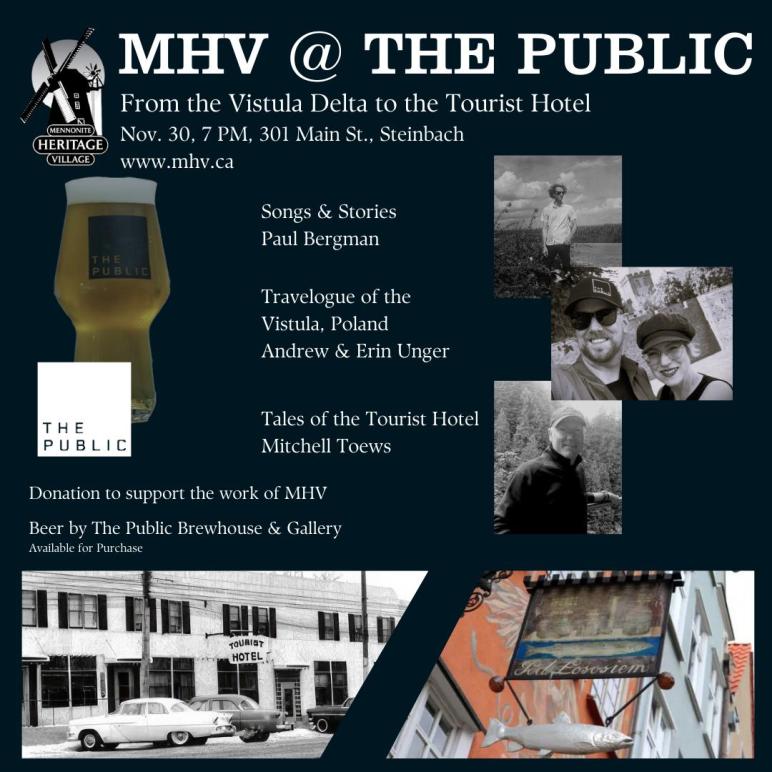




 Here are some thoughts about class and gender conflict with quotes from a variety of observers.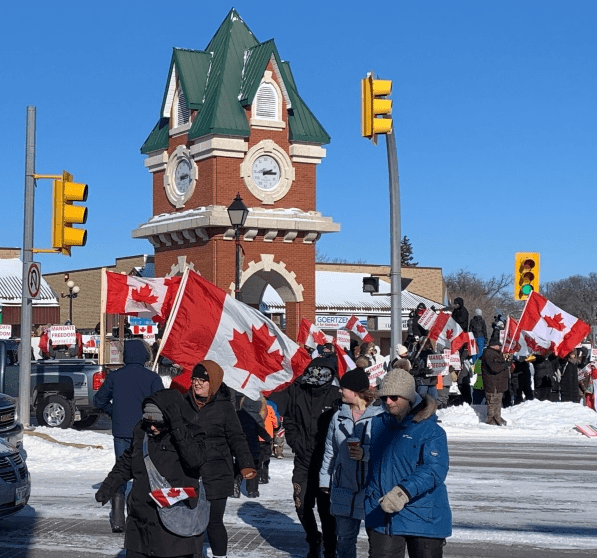


 Mitchell Toews