Not a diaspora, not a forced march — just a subtle shift.
The new site provides me with a single platform to share my work and, in 2026, to host my debut novel and any subsequent projects. Everything is here: links to buy books or read published stories, a calendar of events, reviews, and more.
Thanks for reading. I’ll keep posting, and I hope you’ll keep stopping by. As before, my big mouth snookery pairs well with caffeine and is best taken with a grain of salt.
Quiet writing in a noisy era
Please feel free to share this post! I welcome all comments.
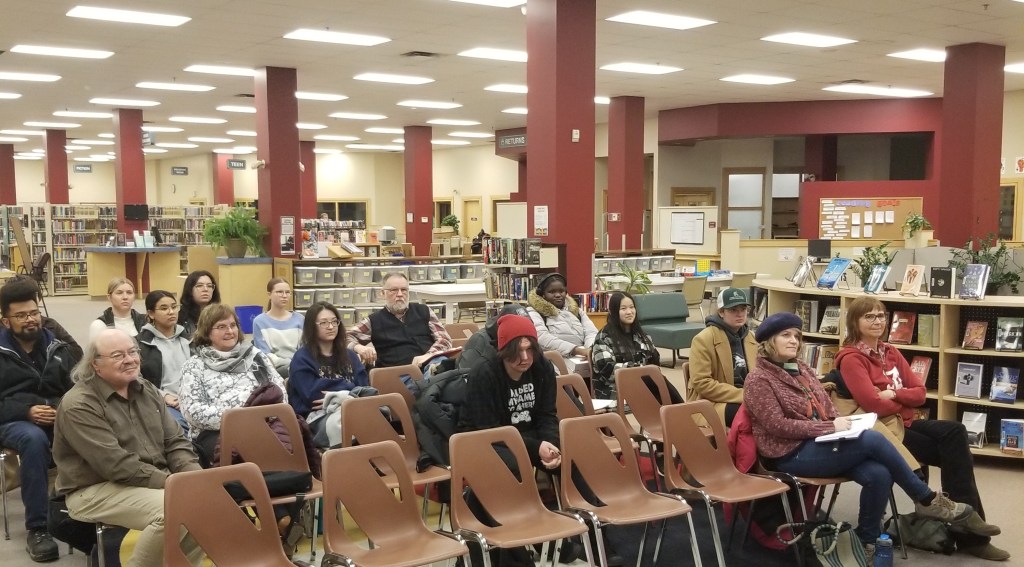
Minus the scuttling of rats and absent Blues Traveler, Joni Mitchell, George Carlin, Hettie Jones, and the Reverend Bob Dylan, Steinbach’s The Public Brewhouse and Gallery did a strong impression of one of the halcyon NYC music-drinks-spoken word shrines of the Sixties, Mennist style. https://thepublicbrewhouseandgallery.ca/
I felt during this evening the “crackle of the universe,” to quote William Burroughs, who—if he was a Mennonite, wasn’t very good at it. Or was maybe extremely good at it. Opinions vary. (He prooooooobably was not a Mennonite. Possibly a Lutheran.)
Mennonites were on tap because it was a FUNDRAISER for the Mennonite Heritage Village Museum, arranged by departing executive Nathan Dyck. A fine vocalist, as it turns out—no great surprise as so many Mennonites are good singers. It’s true, scientific, even. Ask any CSNY (Cornie Stoesz or Neufeld, Yasch). https://mennoniteheritagevillage.com/
Literati Erin Koop Unger and Andrew Unger led off with a travelogue deep dive into the Mennonite enclave that was the Vistula Delta in northern Poland. Their visit to the region generated a fascinating study in Mennonite history from the time when many Anabaptists were “encouraged” to leave the Lowlands of western Europe and found a home in G’dansk, a place of flood and relative religious tolerance. https://www.mennotoba.com/https://andrewunger.com/
Paul Bergman entertained with music in two rhythmic, jazzy, silky sets that offset the historical mood and gave us some stardust for our beer. https://paulbergmanmusic.com/
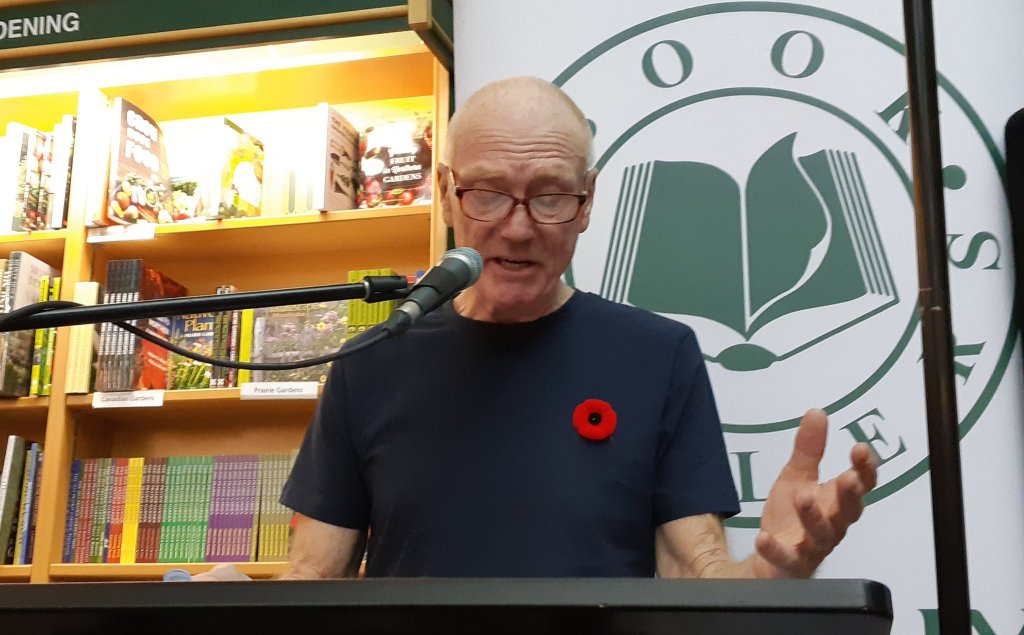
I chimed in with some historical factoids from Ralph Friesen’s “Prosperity Ever Depression Never” and other other pub-style fare. I told two extemporaneous stories about personal experiences at the Tourist Hotel, but I think those went unrecorded. Here’s my written text:
I’ll begin by giving you some historical context for the Tourist Hotel, and its alehouse, the likes of which first began in Roman Britain, and according to Wikipedia, one of the most longstanding of which is “Sean’s Bar, in the medieval town of Athlone in the Republic of Ireland… the oldest pub in Europe, dating back to 900 AD.”
More recently, here’s a reading from “Prosperity Ever Depression Never” by Ralph Friesen, Pages 49-50:
[…] (“On Main Street, next to Abraham A. Toews Five Cents to One Dollar store) was the Steinbach Hotel. The hotel, beer parlour included, was owned and operated by Henry Coote, who grew up on a Mennonite farm as one of thousands of British “home children” sent to Canada because their families were too poor to care for them. Immediately next door was another hotel, the Tourist Hotel, built in 1927 by the Peter B. Peters family… descendants of Jacob Peters who had led the Bergthal Colony Mennonites in the 1874 immigration. In 1931… the Peters family bought (Coote’s Steinbach) hotel… running both the Tourist and the Steinbach hotels… In 1934… the Peters family collaborated with Hugh McDiarmid, a retired RCMP officer to apply for their (contentious beer parlour) licence, and this strategy worked…Steinbach remained “wet” for… decades.”
And from Barry Dyck, a Retired Executive Director of the Mennonite Heritage Village, in a mySteinbach article titled, “A Look Back at Steinbach’s former Tourist Hotel:
[…] “The Tourist Hotel… (did business) on Steinbach’s Main Street from 1928 to 1976… In 1930 it expanded to include a dining room and a “men-only” Beer Parlour. The parlour was not without controversy, however, and efforts were made to close it. In 1950 Steinbach voted for the prohibition of liquor sales. However, a separate vote of 398 to 214 allowed the Tourist Hotel beer parlour to stay open under a grandfather clause.”
And now, my own story about spending a night at the Tourist Hotel. “So, in January of 1969, when I was fourteen… ”
~ ~ ~
Next, to bring you to the wide world of bars and beer and drinking establishments—maybe some a bit different than The Public and the Tourist Hotel—here’s a fictional story about another public house. Imagine a saloon in the Irish village of Nobber (where one of my sons-in-law was born), a dimly-lit place dedicated to the sale and consumption of liquor, where they might have a pool table or a jukebox (perhaps playing “Mama Told Me Not to Come” by Randy Newman) and maybe some pickled eggs in a large jar made unappetizing by the presence of indistinct organic flotsam suspended in the yellowed vinegar… as if someone shook out a dusty rag into it. We enter the establishment near closing time when the barkeep and three male customers are the only occupants... (pensive music in background)
Photo: Erin Koop Unger
One Night at Keogan’s
“If you drinks in this bar, you buys me a pint. Or else.”
I’ve removed the text with the hope that I can sell the story and have it appear somewhere else.
~ ~ ~
Keogan’s Bar is a place you may have visited or might want to, just for the experience. In the case of the Tourist Hotel Beverage Room, you could have visited, as long as you were not a woman. Neither could women tend bar there—of the hundreds of thousands of watery draft beer pulled in Steinbach, none of them were drawn by a female hand. Steinbach was not the only one to have that gender bias; it was relatively common in places as far-removed as Warman, Sask., Winnipeg Beach, and The Terminal Club in Vancouver. In the Sixties, a small glass of beer was—by Manitoba Provincial law—15-cents in a men’s only beer parlour and 25-cents in a beverage room that served women. In 1978, I had a beer with a female co-worker at a soccer-mad tavern in Toronto where women were admitted but not served. This was explained to us and I bought two draft and gave her one of them, as our waiter suggested. (Apparently, gifts were allowed.) So in keeping with these thoughts, and to put you in a fighting mood before I tell my next story, here is a poem by Danielle Coffyn:
If Adam Picked The Apple
There would be a parade, a celebration, a holiday to commemorate the day he sought enlightenment. We would not speak of temptation by the devil, rather, we would laud Adam’s curiosity, his desire for adventure and knowing. We would feast on apple-inspired fare: tortes, chutneys, pancakes, pies. There would be plays and songs reenacting his courage.
But it was Eve who grew bored, weary of her captivity in Eden. And a woman’s desire for freedom is rarely a cause for celebration.
~ ~ ~
Finally, here’s a story I also experienced first-hand, which might be called Können Frauen hier kein Bier kaufen???
Mitchell Toews is a Manitoba-based fiction writer whose debut short story collection, Pinching Zwieback, was published in October 2023:
Background Toews grew up in Steinbach, Manitoba, in his parents’ Mennonite bakery. He’s been published in over 125 literary journals and anthologies, and has been nominated for a Pushcart Prize four times. He’s also been a finalist in several major contests and prizes.
Pinching Zwieback Toews’s debut collection is a blend of memory, fable, and trauma that explores life experiences in the fictional Mennonite prairie town of “Hartplatz”. The book has been well-reviewed, appeared on several local bestseller lists, and is being discussed in book clubs.
Other work Toews is currently working on a second collection of short stories and a novel. He’s also collaborating with Phil Hossack on an ekphrastic prose/photographic art book.
Engagement Toews reads at libraries, bookstores, and open mics, and also leads a workshop called “Writing Your Culture”. You can find him on:
Mitchellaneous.com: His blog for updates, news, and other information
So that’s it, then? A writer, a Manitoban. No mention of the rest of my life, including living in Chilliwack, my 47-year marriage to Jan, our kids and grandkids (who will change the world, if they have not already), starting and running a manufacturing business, working in advertising for 20 years and being an active sort… out cursing and getting bruised and exhibiting “warning track power” no matter which sport—a trait that includes a highly selective memory when it comes to skills, courage, and accomplishments. (“Still,” I pout, “at least I always got my uniform dirty.”)
I think AI is right to focus on what it has—I use the internet primarily to promote my writing because, dammmit Jim, that’s just what a writer has to do these days!
I am en grade: AI may suddenly turn on me. Why? Well, I often make fun of the AI that runs my daughter’s refrigerator (“Here’s today’s weather for Zanzibar” it says, after I hack the geo-locator in the settings—hee-hee!). I also throw shade at her snooty 3D printer, and my n’er-do-well regular printer (whom I call “O, Brother, where for art thou?” when it fails to print). These bad relationships may colour AI’s appraisal of me. I am courting AI revenge! I need to let AI feel more seen, be more inclusive to AI, and give them/they/it the benefit of my human capacity to be empathetic, even if they are incapable of emotions. (Does AI get my “O, Brother… ” joke? I think it does, on an intellectual level. Does it laugh? Is AI ticklish? Does AI have a weakness for old Carol Burnett Show vids?)
My other question is, “Has AI read my book? Has AI read all of my published work? Does AI like my Menno-Grit style or are they/is it more inclined towards Sci-fi or Fantasy? (I do get a kind of D&D vibe off of AI, don’t you?)
Anyway, do a search for “AI Overview Your Name” and see what my daughter’s refrigerator thinks of you, you Zanzibarian, you.
Please feel free to share this post! I welcome all comments.
My attendance at literary meetings is rewarding (and nerve-wracking). From a coffee shop tête-à-tête, a living room get-together, a workshop, or a formal literary festival, I advocate these gatherings despite their introvert-daunting nature. 🙂 The blend of writers, published authors, publishers, readers, editors, librarians, booksellers, critics, literary academics, and educators can take many forms, all invigorating,
Here is a summary of my experiences based on my professional journey and what I can offer as a literary speaker, panelist, or workshop presenter for literary events.
(March 30, 2024) Parable Addendum: “An enterprising individual is on a Trans-Atlantic ocean crossing, heading for Halifax. The ship strikes an iceberg and sinks. The entrepreneur survives by floating atop a wooden grand piano lid and immediately upon being rescued and reaching Canada, opens a grand piano lid floatation device manufacturing company. . . “
What I’m saying is that my experiences are just that: my experiences. I am—like raccoons, cockroaches, and many entrepreneurs—a born survivor. Survival instincts ain’t always pretty and depend on circumstances: what you encounter and the resources you can use to overcome your challenges. As in the story of the piano lid, I’m not advocating you follow my specific path. I’m only saying that I did what I felt was best at the time and in my circumstances. I sought as much, and the best professional assistance I could get. Craft is not everything but it is a huge component. The way I approached my literary career as a writer was—and is—constrained by, among many things, talent, location, my age, time, and financial resources.
(Thanks to writer-friend Doug Hawley for his note reminding me to explain the underlying truths of my “curriculum.”)
Mitchell Toews: A Grass Roots POV
Background in advertising and corporate communications. Persuasion, copywriting, ad copy, marcom: a perspective on the differences and the similarities vis à vis creative writing and fiction.
Writing practice grounded in Canada, small towns, the prairies, the boreal, and the Canadian Mennonite community.
Bootstrap artistic journey: shifting from corporate and marketing communications to creative writing—keeping the good, identifying the irrelevant (and the problematic).
Returning to early ambitions to write professionally and facing the difficulties of an “Act II” existence.
Overcoming ageism and the bias against older emerging writers in CanLit: staying positive and stoic in a challenging environment and resisting the slide into victimhood.
Journeyman’s approach: over 800 submissions to the “slush piles” of literary periodicals, contests, and anthologies. (With over 120 resultant publications.)
Self-promotion within the context of the small press and independent (non-agented) landscape within Canadian literature.
The importance of independent bookstores, libraries, and museums.
The Open Mic for writers: more than just a chance to hang out with musicians.
Book launches, readings, panel discussions, and book club author nights.
Workshops and critique groups.
Working with freelance editors (*see Sidebar), press editors, publishers, and publicists.
Working with Writers in Residence.
Social Media vs. “Shut up and write.”
Acquiring blurbs and reviews.
Literary and Arts organizations: Guilds, Unions, Councils.
Grant writing. Keep it short.
Professional development for the rural writer.
Creating a personalized workshop topic: seeing your strength. (Mine is “Writing your Culture.”)
Paying it forward: building your allyhood, being an artistic comrade.
AI: the dog that bites its owner.
Wealth: the unspoken truth.
Thoughts on “tarnishment” and the personal authorial voice.
*Sidebar. Early on, I was introduced to a young, male author from England with an impressive resume. We struck a deal and he instructed, mentored, and edited me for two years. I invested over $2000 in our online interactions (about 900 emails!!) and this was a transformational step for me—both the commitment and the results.
The right person and work arrangement are critical; James Mcknight was the appropriate choice for me. After our engagement ended, I extended my reach to study with other instructors and mentors, but James was a true lifesaver in my case.
Mitchell Toews: Proud member of The Writers’ Union of Canada
Please feel free to share this post! I welcome all comments.
When I began submitting stories to lit mags in 2016, I noticed a few calls for submissions to anthologies. Some contests published print anthologies of the longlisted stories. Other anthologies were not open to submissions. Instead, they contained stories the editors had hand-picked for their collection.
I wondered if my work would ever be good enough to submit to an anthology, never mind have a story invited for inclusion.
As these things go, there are varying levels of anthologies. My hardcover Norton Anthology text in 1974 at the University of Victoria would be one level. I did not aim quite that high, but I did offer my work to a few and over time, others asked to include stories I had written.
My stories (18 in total) have been in 16 anthologies. I am not as active in pursuing them as I was, but I still greatly respect the form and enjoy being included in an eclectic and far-flung grouping of authors.
Here’s my printed anthology publication list, to date:
Best of Fiction on the Web: 1976-2017, 2017, U.K. The Machinery: Fauna, 2017, India Just Words Vol. 2, 2018, Canada The Immigrants, 2018, U.S. We Refugees, 2019, U.S. The Best Short Stories from the MOON, 2019, U.S. A Fork in the Road, 2020, U.S. Just Voices, 2020, Canada Anthology of Short Stories Summer 2021, 2021, U.K. This Will Only Take a Minute, 2022, Canada Small Shifts: Short Stories of Fantastical Transformation, 2022, Canada Framework of the Human Body, 2022, Canada I Used to be an Animal Lover, 2023, Australia Hardboiled and Loaded with Sin, 2023, U.S. Prine Primed, 2024, U.S. Nona Heaslip (Exile) Best Canadian Short Stories, 2024 (forthcoming), Canada
I hope to continue to contribute to excellent collections like these. Every time I work with an editor, I find I improve as a writer and my work benefits with some lustre or refinement that it might have otherwise missed.
I have been nominated four times for the renowned Pushcart Prize Best of the Small Presses Anthology but so far, no room under that prestigious umbrella for me—so there’s still a lot to aspire to.
Please feel free to share this post! I welcome all comments.
On Thursday, February 29 poet and essayist Ariel Gordon of Winnipeg and I motored to Brandon, Manitoba to present workshops and readings at the Western Manitoba Regional Library downtown branch. We represented our mutual publisher, At Bay Press.
It was an outstanding event, well-attended by an enthusiastic group. Both Ariel and I have posted about it on Facebook, Instagram (prosebytoews), X, and elsewhere. Ariel did a poetry workshop on urban ecosystems and I introduced my break-out session on “Writing Your Culture.” Both of these programs had full classrooms and the reading was also—collectively speaking—pleasingly plump.
We had a Q & A at the “end of regulation time.” (In my imagination, Brian Propp scored the winner, assisted by Ralph Krentz. . . For all you Wheat Kings hockey fans out there.) I really enjoyed the conversation.
One of the questions was concerning “advice for young writers.” Ariel made some valuable suggestions in response. When it was my turn, I held back on expressing my immediate reaction to the embedded inference that all emerging writers are “young.” Of course, many are, but just as we no longer use ONLY male pronouns when discussing a group. . . “If a writer wants to succeed, he must blah-blah-blah,” I find it inappropriate and incorrect to add the fuzzy modifier, “young.” Presumptive gender-fixing (he-him-his) now sounds foreign and antiquated to our ears, and I long for the time when “young” and “emerging” are not used as synonyms for early career artists.
Hot air rises. Heat travels in any direction. When we say “heat rises” in an assured, generalizing, scientific-sounding manner, we become General Wrong of the Wrongsville Army.
Okay, mini-rant over.
I gave several points of advice and I was pleased with the repartee, as John Prine might sing. This morning, over a cup of familiar, at-home coffee, I thought of another way to answer, and it goes a little sumpin’ like this <guitar lead-in>:
“On a business trip to the Green Building Conference in Chicago about 15 Marches ago, my colleague and I stopped in at a pizza restaurant. The place was packed and full of loud hubbub and stratified layers of cigar smoke. We opted for outdoor seating, under the radiant red glare of heaters.
As we waited, we watched a local resident at work. A fat, filthy Norway Rat was trying to free a pizza carton that was wedged beneath a car tire. Grunting, sniffing, scurrying, its pink tail waved and curled and flexed with intense determination.
Pausing for breath, it sat on thick hanches and pondered. Whiskers twitched in a nature-copies-Pixar way. Abruptly, it went to the loose end of the box and, clamping down with white canines, tugged repeatedly like a tow truck trying to jerk a car out of the ditch. Snarling with effort, the noisy activity attracted one of its swarmmates to the scene of the pie.
Without hesitation, Rat Due, as we named the newcomer, immediately joined Rat Uno and in seconds they were pulling in perfect unison, a rodent duet. Outmatched at last, the box lid gave way in ripping surrender. Rats Uno and Due plundered the contents and made good their tail-waving getaway.
My advice to emerging artists: Sometimes you are Rat Uno, and sometimes you are Rat Due, but don’t just sit in the comfort of the mischief and watch.“
CHEERS to playwright and English & Creative Writing Asst. Prof. Dale Lakevold. He brought along a swarm of talented students from Brandon University, and like the Marino’s Pizza he supplied before the event, his contribution made our day. Thanks too to WMRL Mgr. of Programming & Community Svcs., Alex Rogowsky who prepped and managed our twinkly evening.
Please feel free to share this post! I welcome all comments.
IMAGE: Jackson Pollock at the MoMA, by joansorolla Creative Commons site
“I respond to character-driven material, regardless of its origin. I fall in love with the characters and generally respond to stories featuring ordinary people who succeed in overcoming extraordinary challenges.” —Producer Gale Anne Hurd
If I had a mantra while writing Pinching Zwieback, it could have been this.
During the Morden library reading on November 28, an astute reader commented that in a normal short story, the reader can be frustrated because the story ends so soon, unlike a novel where characters receive more development. By using recurrent characters and a narrative arc that goes from beginning to end, much as a novel does, the readers get to know the main characters in PZ quite well.
These observations are true for readers and I can comment that it’s true for the author too! I learned a lot about these characters from the structure of the storytelling and by “letting them tell the story” as they developed personality and definition during the writing of the book.
My expert editors, including Matt Joudrey, Alana Brooker, Nina McIntyre, and Priyanka Ketkar did a lot to bring these distinct characters out and let them fulfil their roles as individuals in the larger story told by the collection as a whole.
This aspect of writing Pinching Zwieback was one of the most enjoyable—and cathartic—for me as I did an emotional freefall and let my imagination go, using the characters as the vehicle to rewrite life events from my past and explore alternate outcomes.
I didn’t always use the outcomes I imagined, but just the act of creating them allowed me to think more freely about my own history without being bound by what “really” happened. My job as a storyteller benefitted from this exercise, particularly with the help of my expert team of editors.
In addition, I tried to let the characters come alive and to have them think and sound in the genuine way I imagined they would.
“[…] I like the rawness of the pure untarnished colloquial voice in the reading. Having something to say is essential to me. That is to say, I’m not impressed with a great volume of rarely used words thrown together to impress the reader with the vast knowledge of the writer on command of English, tricks of writing, ancient history, or the places they’ve travelled.”—An excerpt from an interview by writer, editor, publisher Judith Lawrence in, “Six Questions For…”
Please feel free to share this post! I welcome all comments.
After eight years in creative writing, 120 prose pieces placed in periodicals and anthologies (and over 650 rejections 😊) Mitch is launching his first book, a collection of short fiction published by At Bay Press of Winnipeg.
So who is this guy, Mitchell Toews?
Mitchell James Toews is the great-great-grandson of Mennonite Delegate C.P. Toews from Molotschna, Russia; the grandson of C.F. (“Roy,” “Schusta”) and Rosa Toews of Steinbach; grandson also to former “Jantsieda” (residents from the “other side” of the Red River) Diedrich and Marie Harder of Steinbach; and son of the Steinbach Bakery family: Norman “Chuck” and Jessie Toews. He is married to Janice Kasper of Steinbach and they have two married daughters.
Among his stop-overs and occupations: a year (1973/74) at UVIC in Victoria, two years at U of W in Winnipeg and (much later) a Master’s Certificate in Marketing Communication from York U. Mitch founded—with his father and uncle Earl Taves—and operated a small overhead door manufacturing company. In 1996, the now solely-owned business, Hanover Doors, was sold by Janice and Mitch and Mitch’s advertising and marketing career began. In 2016 after time well-spent with companies like Smith, Neufeld, Jodoin Law (Steinbach), Loewen Windows (Steinbach), Yarrow Sash & Door (Winnipeg), and Lynden Door (Abbotsford), Mitch devoted himself entirely to creative writing—a lifelong and much-delayed passion.
Janice and Mitch live in their 1950 lakeside cabin at Jessica Lake in the Manitoba territory that is part of Treaty 1 & 3 land and home to the Métis Nation, just north of the Fiftieth Parallel in the Winnipeg River basin. Their daughters Megan and Tere live in British Columbia and trips to see the families, particularly grandkids Ty, Hazel, James, and Floyd are as frequent as circumstances permit.
Mitch is an avid windsurfer, rower, and cross-country skier and the lifelong rigours of climbing ladders and swinging hammers, along with baseball, volleyball, basketball, and golf all contributed in past days to the current sorry state of his joints.
Book Synopsis
Pinching Zwieback comprises stories that recount events and conflicts from the “Mennosphere”—inwardly oriented communities that can generate wonderful characters and practical, often beautiful, solutions to life’s confusion. Other times, a solution may be elusive.
Hartplatz is the imaginary home for many of the recurrent characters. (Also Winkler, Aldergrove or fictive places like them—a small town pastiche.) These are rural Canadian junctures where vectors intersect: faith and doubt; pacifism in a world at war; honour and temptation; fervour and absurdity; the temptations of the wide welt, and of course, humour. Often gritty, it’s K-mart fiction or maybe better yet: schmaundtfat fiction. (A Low German glossary is provided!)
“God causes it to rain on Chevs and Fords alike,” as Diedrich, the main character in three* of the 20 stories puts it. It’s in this context that the characters resist, pitting their will against that of their foe—the foe they seek to love.
*Other main characters include Matt Zehen, his mother and father, Hart and Justy Zehen, Matt’s grandmother Rosa, and Matt’s close friend, Lenny Gerbrandt. A family tree provides a guide to the cast for readers.
Where to PurchasePinching Zwieback
“Pinching Zwieback: Made-up Stories from the Darp” 2023 ISBN 9781998779055 by Mitchell Toews (At Bay Press, Wpg). Publication Date October 24, Release Date November 7, Launch Date Nov 8. Contact us for assistance: check with Mitch or Matt on where to buy and also about how to receive signed copies or for information concerning special situations, author appearances, writing workshops, and more.
Requesting “Pinching Zwieback” by Mitchell Toews (At Bay Press, Wpg) at your favourite bookstore or library will get you a copy. Coming soon to libraries in Kenora, ON and Manitoba locations in Brandon, Lac du Bonnet, Pinawa, Altona, Winkler, and Morden. More to follow.
“Pinching Zwieback” 5″X8″257-page quality paperbacks may be purchased:
From At Bay Press: “Individual orders are placed through our website by adding books to your cart and then checking out with our secure online payment. Orders may also be placed over the phone by calling 204-489-6658 and payment will be taken over the phone. You may send an email with any questions or concerns to atbaypress@gmail.com.”
A first REVIEW of “Pinching Zwieback” by the eminent Canadian author, Poet Laureate, and literary leader, Linda Rogers van Krugel of Victoria will be placed shortly. Several other reviews, from Canada and the U.S., are underway.
Early Praise
“Pinching Zwieback Observations” from Canadian literary notables Zilla Jones, Ralph Friesen, Alanna Rusnack, Armin Wiebe and more.
FollowMitch & Pinching Zwieback
Follow Mitch’s FaceBook page and this blog (Mitchellaneous.com) for unboring updates, news, and other crumbs and chicken feed as “Pinching Zwieback” struts in wider and wider circles around the coop.
Please feel free to share this post! I welcome all comments.
“The great thing about a short story is that it doesn’t have to trawl through someone’s whole life; it can come in glancingly from the side.” —Emma Donoghue
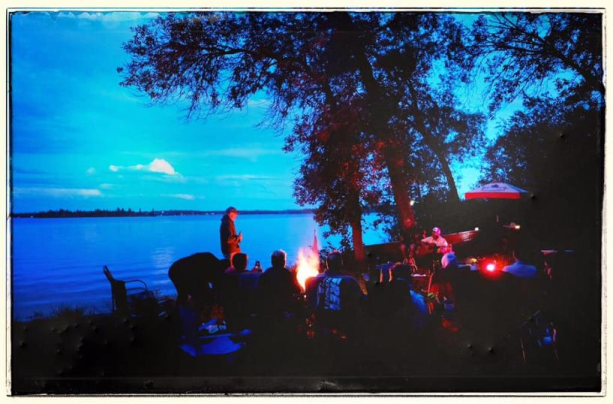
Hear some stories, some songs, some poems, and smore, around the campfire at Jessica Lake, on July 22. Contact me for info whether you wish to perform, listen, or both! Or just show up: via microbus with flowers in your hair, in a flatbed Ford, on a horse with no name…it’s your call.

 Quiet writing in a noisy era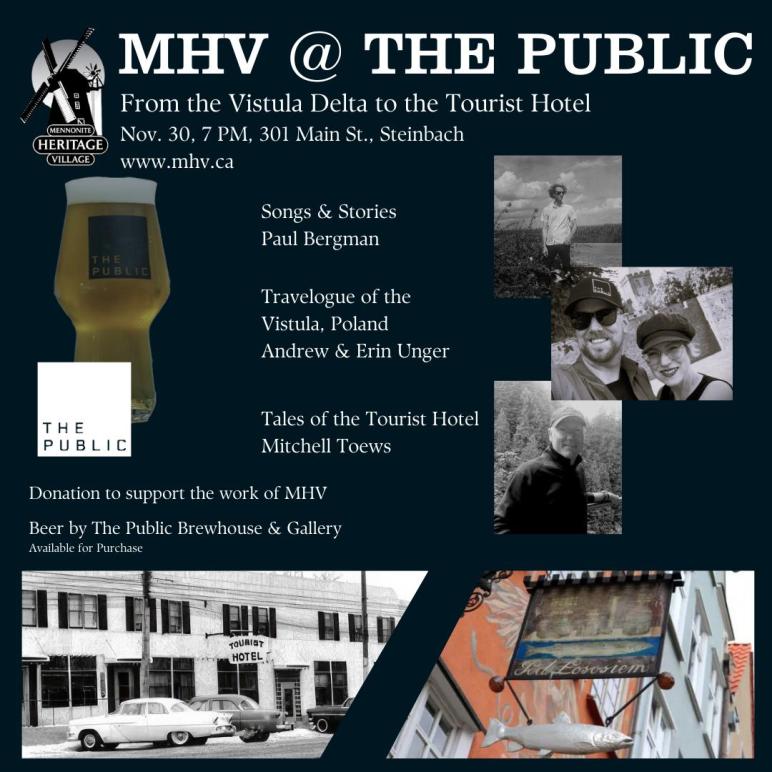









 Mitchell Toews